 Women.
I happen to be one. I know several. I’ve even kissed a few. In general, they are plentiful and varied, all sorts of looks, ethnicities, sexualities, and personalities.
However, the depiction of women in television over the course of decades has been…shall we say, less than adequate, particularly in the case of anything outside of a sitcom, like my favorites, action and police shows.
Ah, yes. It’s going to be one of those posts. Now I’m not claiming to be an expert in any of this; after all, I’m a three-time community college drop out. These are just my observations from the shows I’ve watched. Now stop whining. It’s unattractive.
When I wrote about Magnum PI, I said something to the effect of the women being written by men who’d never met a woman, but had only heard about them from other men who’d never met a woman either. That’s how women were typically written (and still are in some cases). They were usually written as objects: romantic interest, harpy, siren, nanny, etc., convenient plot devices for our male mains, fitted with re-hashed, stereotypical personalities that seldom reflected any actual woman you’d encounter in your own bits of reality.
Going back to Magnum PI, many of the women who showed up in episodes typically filled one of four roles: romantic interest, helpless innocent, duplicitous helpless innocent, or annoying hindrance. I’m not saying that every woman fills one (sometimes more than one) of those roles, but it happens often enough that I feel compelled to comment on it in a blog post. The annoying hindrance is my least favorite (see Kathleen Lloyd as Bridget Archer in “Almost Home”, Annie Potts as Tracy Spencer in “Legacy from a Friend”, and Lee Purcell as Goldie Morris in “Old Aquaintance”). Women who insist on helping and end up creating a bigger mess usually because they don’t listen to Magnum and/or because they’re not being entirely truthful. No offense to any of the actresses involved because they were (and are) excellent at their jobs and did what they could with what they were given, but what they were given were bad Lucy Ricardo impersonations doing a variation of “Why can’t I be in the show?”.
(Given my disliked of I Love Lucy, perhaps I’m being a little more than biased in this case, but the basic assessment of the prevalence of cardboard cutout women stands.)
The Wild Wild West is another example. Every woman Jim West and Artemus Gordon met either needed to be rescued or kissed or sometimes both. Only a few were allowed the personality enough to be villains. And if you’d like to argue with me that the show was set in the late 1800s and so women had limited roles, I’ll just point out that it’s a steampunk Western. If I can suspend my disbelief that some madman has created a device that makes earthquakes, then you can buy into a woman saving herself once in a while and not falling in love with Jim West every time (Artemus Gordon is a different story, of course).
Hawaii Five-O did feature women police officers from time to time, usually for undercover work, and they were mostly competent (and all named Joyce for some reason), though they were typically bailed out of some sticky situation at the very end by McGarrett and cavalry riding in for the final gunfight/arrest, which the ladies rarely seemed to participate in. One Joyce in particular ended up getting hypnotized by Eric Braeden, but I suppose that’s understandable. It wasn’t until the later seasons that they even had female cops not named Joyce as recurring characters (Amanda McBroom played Officer Sandi Wells for four episodes in Season 8; Sharon Farrell played Lori Wilson for ten episodes in Season 12). However, more than one woman passed through Honolulu for a single episode whose sole purpose was to make Steve or Danno feel things. Spoiler alert: dead girlfriends.
Naturally, it could be argued that this is the ultimate purpose of a guest star, to be that plot device for that episode to help propel the story, the fire of the inciting incident. And this is absolutely true.
But that the women were most often only a guest star -not part of the main cast- is part of the problem. Rarely did police or action shows have a woman in the main cast. And on the off-chance that it did, then they were typically relegated to non-action roles if possible.
One shining example of this is Amy Allen on The A-Team. A journalist who begins as a client before becoming addicted to the “jazz” and blackmailing her way onto the team, Amy proves herself to be an asset by not only finding and vetting clients, but by also getting her hands dirty: helping with builds, going undercover, handling firearms, and even blowing up a thing or two. She wasn’t always in the midst of the action, but she was at the very least close by pretty often. However, when Melinda Culea pushed for her character to develop more skills -which would have made sense given the fact that she’s affixed herself to an elite military team, so it stands to reason she SHOULD learn a thing or two- the fellas on the show, in particular George Peppard, loudly disagreed as this was a “man’s” show (just ignore the popularity of Mr. T and the large kid audience, thank you), which resulted in Melinda Culea’s departure. She was replaced by Marla Heasley as Tawnia Baker (a strategically weaker-written version of Amy) to finish out the second season, but once that character was married off at the beginning of the third season (to Barry van Dyke no less!), there wouldn’t be another female member of the cast until Season 5 when Judith Ledford played recurring character Carla, Stockwell’s personal assistant.
Are there exceptions? Naturally. Get Christy Love. Police Woman. Cagney and Lacey. Three women-led police shows. One other notable mention is Sgt. Dee Dee McCall (Stepfanie Kramer) on Hunter, as she was paired with a man who treated her as a partner and didn’t take it as an offense to his manhood that he was working with a woman. The Stargate: Atlantis expedition was led by two smart, kick-ass women, first Dr. Elizabeth Weir (Tori Higginson) and then Col. Samantha Carter (Amanda Tapping), and had Teyla (Rachel Luttrell) as an integral part of Col. Sheppard’s team, often kicking the most ass, but who was also from a race of humans that didn’t consider showing emotion and affection a weakness.
It’s been a slow evolution.
Today, women as people in action and police shows are nearly commonplace. Shows even have more than one! The Equalizer reboot is a fab example of this because not only do you have Queen Latifah as badass justice-getter Robyn McCall (I’m seeing a trend with the last name here) and her super cool sniper bestie Melody (Liza Lapira), you also have Robin’s Aunt Vi (Lorraine Toussaint) and daughter Delilah (Laya DeLeon Hayes), who aren’t necessarily in the thick of the action, but are fully formed humans in their own right. There is an emotional weight to the show that is either absent from many action shows or poorly executed and so much of it’s success is due to the realness of the characters. Robyn McCall isn’t your twenty-something, dainty gymnast action hero running around in belly shirts showing off her perfect abs (not knocking them, but they are the default, aren’t they?). She’s a woman, a mom, who has seen some shit, done some shit, dressed to best you in a fight or an argument, and has an astounding wig collection. She’s that “don’t play me” mom in the carpool who just happens to be able to disarm a man with only a clipboard. She’s a complex human with a complex life who is totally relatable despite the fact that she spends her time taking on the injustices of the world in vigilante fashion.
Even the Magnum PI reboot has gotten onboard with Juliet Higgins (Perdita Weeks) and Kumu (Amy Hill), both of whom are badass, yet also written to be actual people. Kumu is my favorite in regards to this because she could have easily been relegated to the role of the show’s Aunty, dispensing advice and island wisdom, but instead they gave her life experience that she wields like a sword and principles she’ll defend until they put the cuffs on her (am I biased? Yes. She’s my favorite).
The show has had its slips back into the ’80s mindset, though, most notably in the Season 3 finale in which Higgins finds herself separated from her boyfriend and unsure if their relationship will continue. TC and Rick’s answer to her heartbreak is to…try to push Magnum into making his move for her. Because ignoring the fact that she’s an actual person going through an emotionally difficult time in order to get your boy laid is what friends do, right? Yeah. They later doubled-down when she got back together with her boyfriend and the couple was going to Kenya for six months, telling Magnum that he shouldn’t have let her go, as if Higgins had absolutely no autonomy in the situation whatsoever. And Magnum had to be the voice of reason in all of this. Magnum, of all people! He was the only one who even considered Higgins’s feelings and what she wanted. It was obviously written as a way to show how much he loves her because he was willing to let her go be happy with her boyfriend, once again, implying that if he didn’t want her to go then she’d have no choice but to stay and not, say, roundhouse kick him in the face and bounce.
The show conveniently reverted back to the good ol’ ways of reducing a woman to her role as an object of affection in order to push the tried and true het narrative and ignored three seasons worth of establishing Higgins as a person of her own. Because when in doubt, center the male.
He’s a human being, after all.


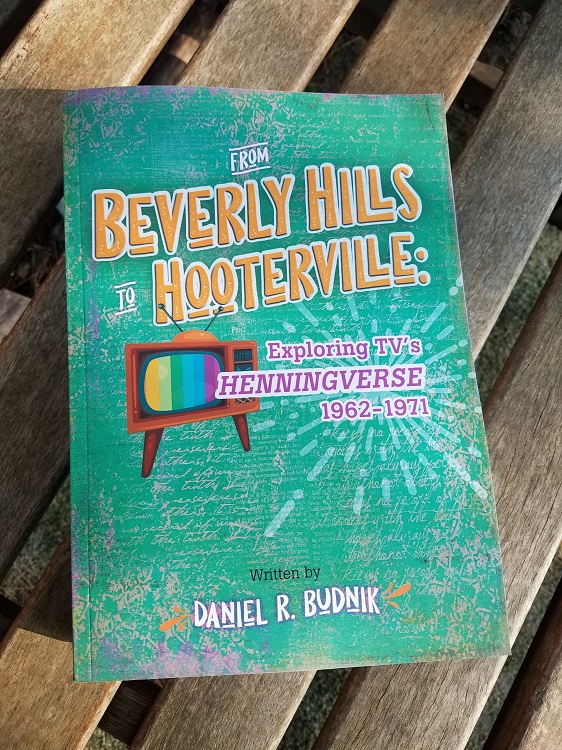 Welcome to the Henningverse!
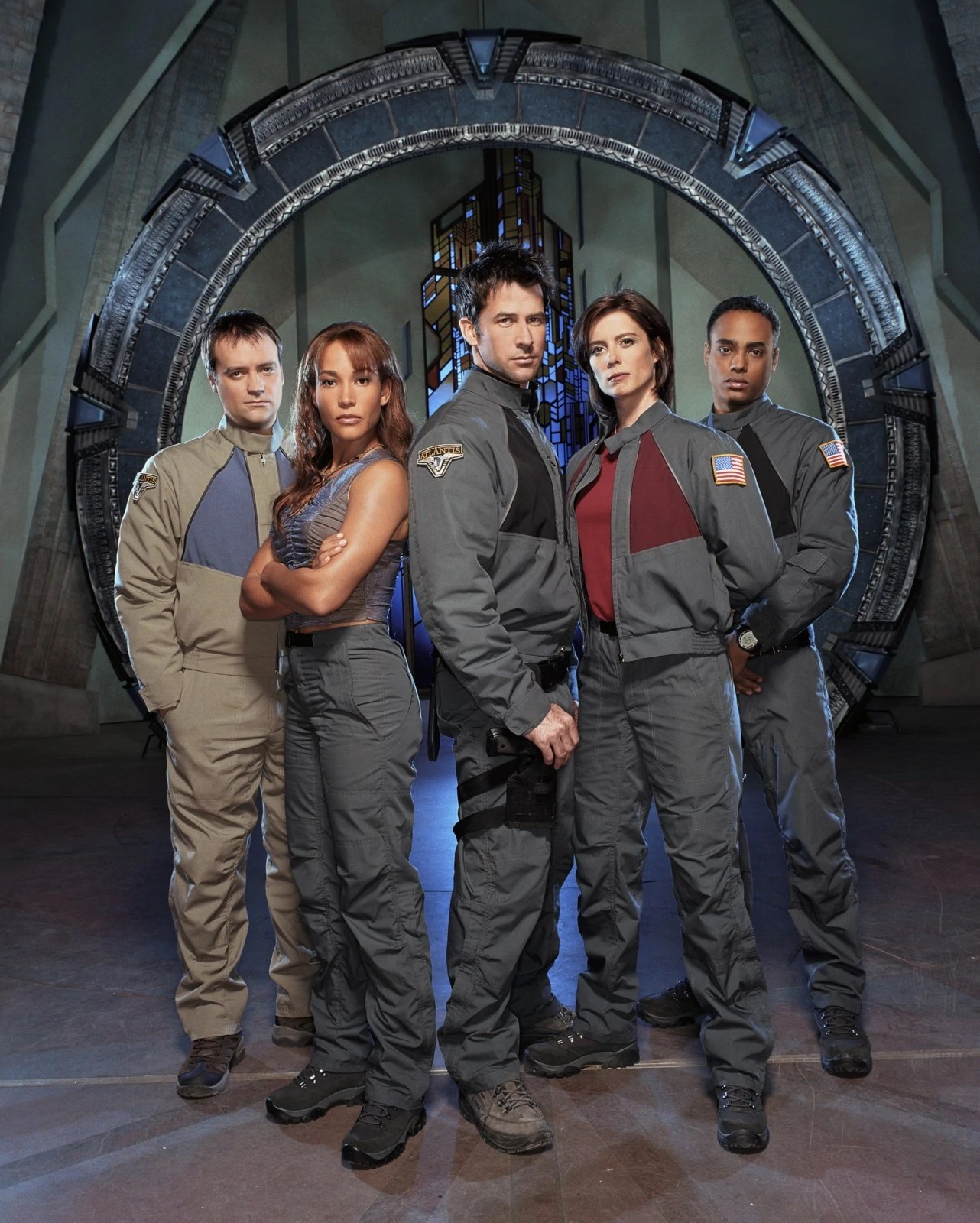 In this series, Stargate Command sends a team through the gate on a potentially one-way trip to the Pegasus Galaxy and the mythical lost city of Atlantis. The expedition is lead by Dr. Elizabeth Weir (Tori Higginson) and includes scientists Dr. Rodney McKay (David Hewlett), Dr. Radek Zelenka (David Nykl), medical man Dr. Carson Beckett (Paul McGillion), and Chuck the Technician (Chuck Campbell). Their military attachment is initially led by Col. Marshall Sumner (Robert Patrick), who unfortunately doesn’t last long, forcing Lt. Col John Shepherd (Joe Flanigan) to assume charge, and whose men include Major Evan Lorne (Kavan Smith), and Lt. Aiden Ford (Rainbow Sun Francks). They’re aided in their exploration of the new galaxy by local Athosian Teyla Emmagan (Rachel Luttrell).
  In the course of five seasons, Dr. Elizabeth Weir is replaced by first Col. Samantha Carter (Amanda Tapping) from SG-1 and then later IOA official Richard Woosley (Robert Picardo). After a tragic encounter with a Wraith, Lt. Ford becomes addicted to Wraith enzyme and goes rogue. His place on Shepherd’s team is filled by Satedan and former runner Specialist Ronan Dex (Jason Momoa). And after a devastating incident, Dr. Beckett is replaced by Dr. Jennifer Keller (Jewel Stait). The expedition is also reconnected with Stargate Command and the Milky Way, sometimes by stargate, but usually by an Asgard ship called the Daedalus that’s commanded by Col. Steven Caldwell (Mitch Pileggi).
 Also, it is no secret that Zelenka is my favorite, so many of my favorite episodes have him in them. I’m biased and I don’t care.
 aka KikiWrites