
Before I get into anything, I should clarify the super long combo title.
As I understand it, the first season of the show aired under the title Baa Baa Black Sheep. The show ended up cancelled, then resurrected, and the title changed for the second season to Black Sheep Squadron. It wouldn’t be the only change, but we’ll get to that.
 The show was based on the real life war exploits of Major Greg “Pappy” Boyington (who would guest star as General Harrison Kenlay in addition to being the show’s technical advisor), a former Flying Tiger who led an unruly bunch of marine pilots known as the Black Sheep during World War II. Pappy earned his nickname because he was at least a decade older than the twenty-somethings he was flying with. Being a fighter pilot is a young man’s game, I guess.
In the first season, we’re introduced to Major Greg “Pappy” Boyington (Robert Conrad and his contractually obligated tight pants) and his Black Sheep, which include Captain James “Jim” Gutterman (James Whitmore Jr) (who didn’t return for the second season; what happened to his character was never mentioned), 1st Lt. Jerome “Jerry” Bragg (Dirk Blocker), 1st Lt. and later Captain Lawrence “Larry” Casey (W.K. Stratton), 1st Lt. Donald “Don” French (Jeff MacKay), 1st Lt. Thomas Joseph “T.J.” Wily (Robert Ginty), 2nd Lt. Robert “Bob” Anderson (John Laroquette), and Lt. Bob Doyle (Larry Manetti), and later joined by 2nd Lt. Jeb Pruitt (Jeb Stuart Adams) in the second season. Their planes are kept in the air by Sgt. John David “Hutch” Hutchinson (Joey Aresco) and Sgt. Andrew Micklin (Red West) with the assistance of Stan Richards (Steven Richmond) in the second season. The nurses at the hospital on the island also got a bigger role in the second season. Led by Lt. Commander Dottie Dixon (Katherine Cannon), they included Lt. Nancy Gilmore (Nancy Conrad), Lt. Susan Ames (Brianne Leary), Nurse Samantha Greene (Denise DuBarry), and Lt. Ellie Kovaks (Kathy McCullen). The chain of command included Colonel Thomas Lard (Dana Elcar), who wanted nothing more to get rid of Boyington and his Sheep, and Brigadier General Thomas Moore (Simon Oakland), who was as vexed by Boyington and his men as he was impressed -and sometimes entertained- by them.
As this show is set in the Pacific during WWII and features a bunch of guys living up to the Black Sheep name and it was made in the ’70s, you pretty much know what you’re getting. There’s a lot of action, a lot of brawling, a lot of carousing, a lot of drinking, a lot of witty lines, and a dog named Meatball. Honestly, it’s pretty great.
Okay, yes, it is a white man’s show. The women are typically underwritten, plot devices, or props and the minorities are almost all the enemy (but that does accurately reflect the segregation in the military at the time). Though the characters have a distinct prejudice against the Japanese because they’re the enemy, the use of racist language isn’t as bad as it could be. For the most part, they’re treated and presented as faceless targets, but there are episodes when the pilots get to see the men they’re fighting up close. Boyington even has a recurring nemesis in the form of Captain Harachi, played by Byron Chung, a Japanese pilot who plagues Boyington and the Sheep.
The episodes have a fairly nice balance of war action, shenanigans, and personal drama and/or peril. Every guy gets his time to shine, which usually allows Pappy a chance to really work that father-figure role. My personal favorite is “Five the Hard Way” in which French struggles to down his fifth plane and make ace, preferably before his newspaper publisher father makes a visit to camp. It seems that French’s father has a tendency to embellish French’s accomplishments, which makes French resentful. The pressure to make ace before and during his father’s visit, which nearly costs another pilot dearly, breaks him and a drunken incident in the Sheep’s Pen earns him a harsh reality check from Pappy, who also delivers one to dear old dad. Am I a little biased for Jeff MacKay reasons? Absolutely. But to his credit, he delivers a rough, emotional performance that reflects perfectly the toll a strained relationship with his father has taken.
For a super masculine show, it didn’t shy away from showing the men’s emotional vulnerability. Gutterman had a major crisis of faith about his ability to fly which nearly ended his time with the Black Sheep. Casey did leave the squad for a time because he felt like the guys didn’t appreciate his skills, which they didn’t and came to realize that pretty quickly after he left. Wiley accidentally shot down Pappy at one point which led to his own battles as well as leaving Gutterman in charge, which he struggled with. Also, this is war. Not everyone made it out alive. And those left behind had to deal with the losses.
 Getting shot down was also a common occurrence. Pappy was shot down more than once. And he wasn’t the only one. Sometimes, the pilot getting shot down was a hefty part of the episode’s story, like when Pappy, Boyle, and Anderson went down on an island populated by nuns, orphans, and the enemy which also happened to be the Allies’ next target. Most of the episode dealt with our three Sheep and their efforts to escape the island with nuns and orphans in tow. However, in some episodes, like one in which Boyle went down alone, we had no idea what was going on with him. We were waiting for information about whether or not he was alive just like the rest of the Sheep.
But just because this is war and an overwhelming male show, that didn’t mean that our guys weren’t falling in love at every given opportunity. They were stationed on an island with nurses, after all. The men all had plenty of chances to have their hearts broken. Casey and Bragg fought over the same girl, who turned out not to be much of a prize. Wiley ended up getting used by a half-Japanese, half-French woman who was used to doing whatever it took to survive due to be abandoned by both cultures. Hell, it took a two-part episode for Pappy to get his heart broken by a nurse who turned out to be married, but her husband was missing, but then he was found and boy, that hurt worse than his burnt hands. French also nearly died in that episode, but what’s near-death compared to a broken heart?
The Sheep also met their match when they were introduced to a group of women pilots called W*A*S*P*S who were flying cargo planes. I was really looking forward to hating this episode, thinking that it was going to be the standard battle of the sexes bullshit, but it surprised me with how equal the ladies were when it came to competing with the men in shenanigans. Of course Wiley had to fall for one of the WASP pilots against orders and ended up coming to her rescue when her plane got shot up, but it was a small price to pay to watch the guys get a taste of their own medicine.
Speaking of shenanigans, there are plenty. Pappy and the Sheep are always on the con, looking to either score something for themselves (booze, food, parts, toilet paper) or finagle themselves out of trouble. And the brawls! Violence is the their go-to way of dealing with any loud mouths from the other military branches. Or with each other. Everybody beat the hell out of everybody. And these aren’t artfully choreographed, well-rehearsed stunt fights. These are full on chaotic brawls. Fake punches, of course, but the dog piles and body tosses are real. I wonder if it wasn’t one of these onscreen clusterfucks that was the reason Jeff MacKay had a cast on his arm for several episodes during the first season. I could be wrong, but if I wasn’t, I wouldn’t be surprised.
A marine base during a war makes for an excellent way to temporarily assign some guest stars to the show, some of which include Tim Matheson, Ernie Hudson, and Sheryl Lee Ralph; Linda Scruggs, Charles Napier, and James Saito; General Hospital vets Leslie Charlson and Kin Shriner; Clyde Kusatsu, Peter Donat, Donald Petrie, and Victoria Racimo; Star Trek stars George Takei and Rene Auberjonois; Andi Garrett, Joel Fabiani, Scott Columby, Dale Ishimoto, and Scotty Highlands; musicians James Darren and Peter Frampton; James T. Callahan, Jerry Hardin, Richard Jaeckel, Sab Shimono, and Lance LeGault; Police Academy franchise vets George Gaynes and Kenneth Mars; Ford Rainey, John Fujioka, Sandra Kerns, and Stewart Moss; ’70s/80s TV faces Gordon Jump, Mills Watson, and Sorrell Booke; James Keach, George Wyner, Richard Narita, and Alex Henteloff; TV cops Ken McCord, Joe Santos, and Sharon Gless; James Luisi, Ernest Harada, Craig Wasson, and Lloyd Kino; and legends Soon-Tek Oh and James Hong
Though this series was created by Stephen J. Cannell, Donald Bellisario worked on it as a writer, director, and producer and many of the stars and guest stars on the show ended up on Bellisario productions later, including Jeff MacKay, W.K. Stratton, James Whitemore Jr. (who directed episodes of several Bellisario series as well), Larry Manetti, John Fujioka, Richard Narita, Clyde Kusatsu, Soon-Tek Oh, and Red West.
As much as I like this show, I have to admit that I like Season 2 a lot less than Season 1. Gutterman is gone from the get go and T.J. and Anderson disappear half-way through. In their stead we get Pruitt, who’s 16 posing as 19 and a gifted young pilot. Emphasis on young. He’s like a little brother to the rest of the Black Sheep and his youthful innocence is striking compared to the rowdy older men. And like a little brother, he grows on you.
As I mentioned, the nurses have a more predominate role in the second season, particularly the second half. And as I figured, it’s great in theory, but lousy in practice, another casualty of men writing women. Two of the nurses, Nancy and Susan, are pretty generic in personality; Ellie is so ditzy that you don’t really trust her with the business end of a syringe; Sam is clearly meant to be the “perfect woman” -a beautiful, 22 year old trauma nurse who is also the general’s never before mentioned daughter and all men instantly fall for her, including Pappy, and the one nurse who has the potential to be the most interesting, Lt. Commander Dottie Dixon -SPOILER ALERT- gets killed off.
For the most part, the nurses are there to worry about, swoon over, and be perved on by the men. The sex pest antics really amp up in the second season with Casey pretending to be a doctor to give newbie Sam a physical, talk of the Black Sheep’s version of slipping the nurses a mickey, and Boyle and French’s preoccupation with seeing the nurses in the shower. Boys will be boys in a battle zone.
Sam, though, is there to bring the drama. She and Pappy have a forbidden romance that’s mostly on ice out of respect for Greg’s friendship with the general. And even though Sam used her mother’s maiden name to enlist to avoid her father from finding out she was in the service and she complains that every man she’s dated is either afraid of her dad or one of his bootlickers, she’s not above using dear old dad for favors. She’s the only one who doesn’t like this one jackass army pilot and she knows the dangers of too much publicity, but also nearly gets Jeb killed because she can’t follow directions in regards to the radio. I think they’re supposed to be portraying her as a wise-beyond-her-years nurse, but she comes off as being a convenient, yet annoying plot device. I really just wanted her to stop sticking her nose into things.
Honestly, it’s a shame that they wasted so much potential to do something different with the nurses. Yes, they were only secondary characters, but they still could have been so much more interesting than the boring, predictable paper dolls they ended up being, and in turn, contributed to much richer character interactions with our pilots, producing even more interesting episodes.
Alas, alack, it wasn’t meant to be.
But the show we do get is pretty great and it’s a shame it only lasted two seasons.
Fly on Black Sheep. Fly on.



 Since I already ran off at the mouth about
 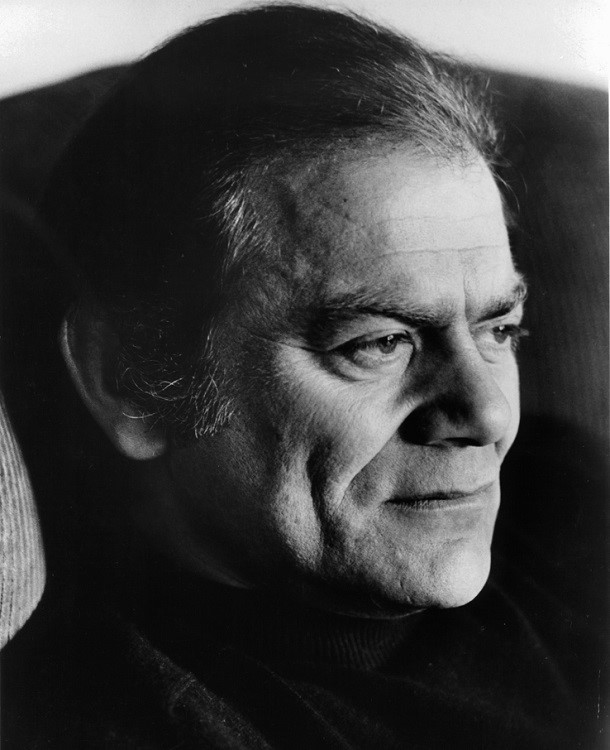 I mentioned George Murdock when I wrote about
 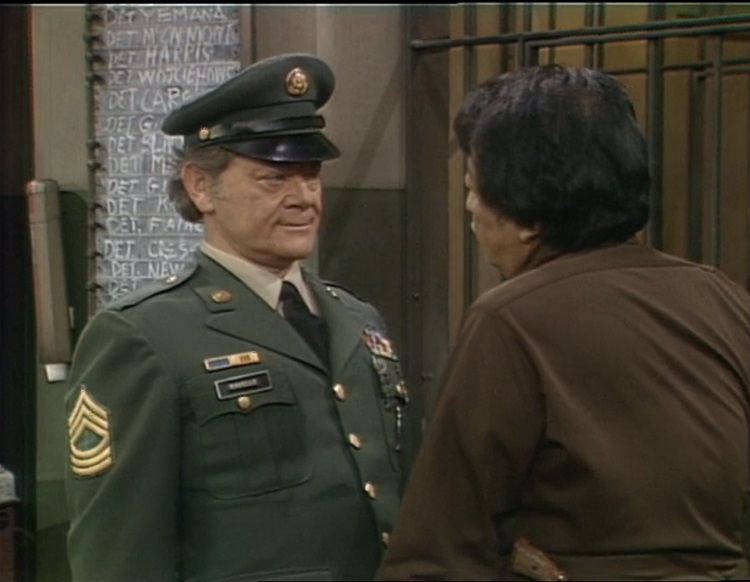 As I mentioned in the Don Calfa and Oliver Clark post, most of Mr. Murdock’s time is spent building up to the entrance of Don Calfa’s character, particularly his rather disgusting cough. He lays the groundwork for the punchline of Calfa’s character and he does so well.
 As someone with a fondness for police shows, I’m familiar with the tropes of the genre. And I admit that I love a frame job.
 aka KikiWrites