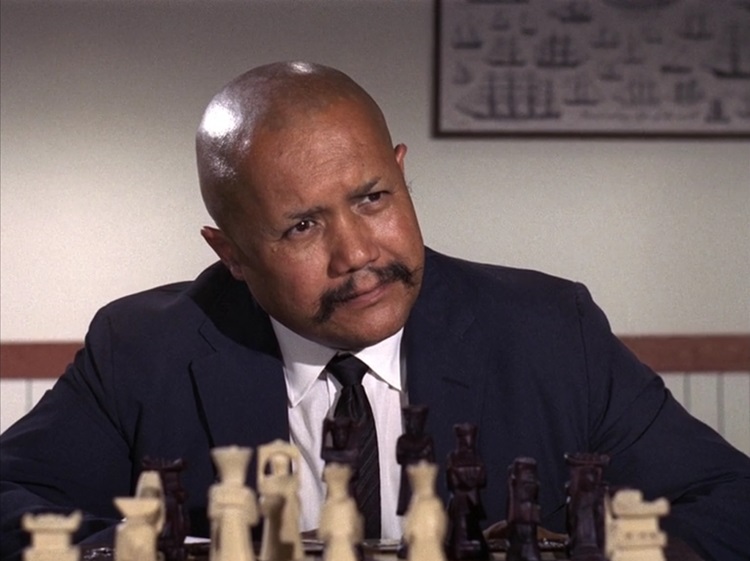
 Police procedurals will sometimes brush their heroes up against the international. However being set in Oahu during the Cold War, it made sense that Hawaii Five-O would feature perhaps more than the average politically based storylines. So, naturally, a recurring villain of this caliber would be a perfect nemesis for the great Steve McGarrett. Enter the most diabolical foreign agent to ever grace the Hawaiian Islands: Wo Fat.
Played impeccably by the wonderful Khigh Dhiegh, Wo Fat is introduced to us in the very first episode of the series, “Cocoon”, as the mastermind who uses sensory deprivation to break people for useful information. The cocoon set-up is something out of a horror film -the victims fitted in a wet suit, their ears and nose filled with a kind of putty, blindfolded, placed in a tank of water, breathing through a tube- and Wo Fat is the perfect man to implement such a horrific torture. He’s dressed in a suit and his almost relaxed demeanor about the horrific psychological torture he’s inflicting on his captive speaks to how comfortable the man is with cruelty in the pursuit of his goals. He’s ruthless, but he’s no brute. Intelligent and sophisticated, Wo Fat sets himself up as a formidable foe from the very beginning.
Unlike other villains who might be motivated by vengeance or the need for power, Wo Fat’s motivation comes from patriotism. Just as Steve McGarrett loves and wants to defend his country, Wo Fat loves and wants to empower his. In a way he’s seeking power, but not necessarily personally. He benefits as his country benefits. It’s an interesting motivation because when viewed through a certain lens, one could say that Wo Fat is merely an employee who excels at and takes joy in his job. We love a person who takes pride in their work.
And Wo Fat puts in the work. What sets him apart from other operatives of the time is his investment in his work. In the two-part episode “The Ninety-Second War”, it was revealed that Wo Fat had spent years investing in a frame job against Steve McGarrett, an elaborate, labor-intensive scheme that necessitated the creation of a doppelganger, a Swiss bank account, millions of dollars of apparent bribes and payoffs accumulated over three years, and a staged car accident to trigger the culmination of this plot -a distraction to divert attention away from a Chinese missile test. With McGarrett occupied with clearing his name, he won’t have time to even realize that Wo Fat has strong armed a scientist by kidnapping his daughter into purposely blacking out the Pacific missile tracking system for ninety-seconds, the time China needs to perform their test.
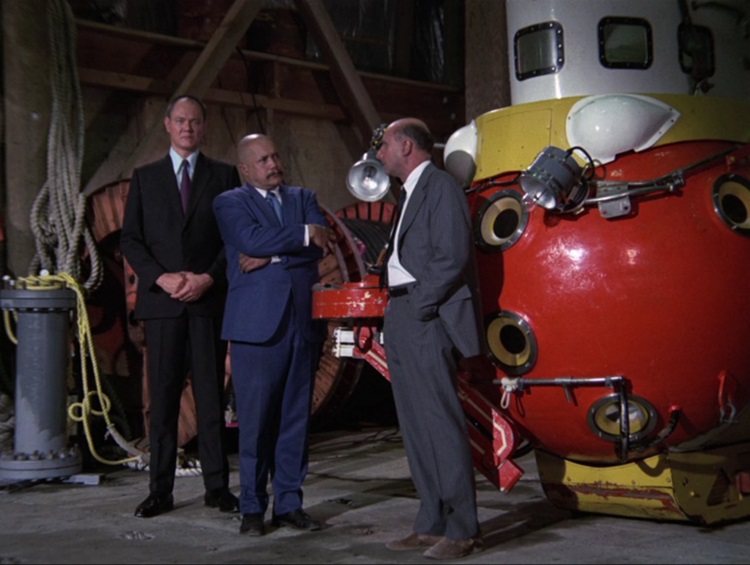 It’s intricate, meticulous planning that proves to be a Wo Fat trademark. The man would rather go big and then go home. Whether it be an elaborate frame, faking a tidal wave, using his spies to brainwash people into murder, kidnapping children as a form of leverage, working with the Russians to obtain counterfeit currency plates, orchestrating two murders to smuggle a device out of the country, stealing deadly toxins, Wo Fat’s flair for the dramatic is on display. What else could you expect from a man with his own submarine and a few doubles of his own?
I think the episode “…And a Time to Die” gives the audience an excellent insight into Wo Fat’s character. In order to guarantee that a man dies on the operating table after a botched assassination attempt, Wo Fat kidnaps the brain surgeon’s daughter, calmly explaining to the agonized parents that it would be in the child’s best interest if the doctor allows the man to die during surgery. It’s such a well done, well-written, well-acted scene because Wo Fat explains this entire heinous act as an unfortunate, but necessary step to gain his objective. At one point, he actually says that he’s as much of a victim as the parents and the child are, insinuating that if the assassin had done his job, then none of this would be happening.
However, my favorite line from that scene is Wo Fat clarifying the trustworthiness of his word.
“You’re wondering if you can trust me to keep my word. I can assure you…you can. I would genuinely hate to harm your child. But more important, in my profession, a man cannot be afforded a credibility gap. He must keep his promises if he wants anybody to believe his threats.”
It is such a good line and it’s delivered so beautifully.
As for the child in question, we learn even more about Wo Fat from his interaction with the little girl, Ellen. He doesn’t want her to be frightened of them and even offers her some lunch. He then tells her how important it is to be brave, telling her a story about a little girl he knew a long time ago, about how he and the child’s mother tried to keep her safe and teach her to be brave during “a time of great war” in his country. He doesn’t finish the story, getting choked up at the unsaid fate of the little girl after she ran out into the street during the fighting. The implication is that Wo Fat’s daughter was killed during the war, and that his patriotism is, at least in part, motivated by her death.
Wo Fat is then delighted to find out that Ellen plays chess and offers to play her a game. When he finds out that she likes chess best when her mother lets her win, he agrees that winning is the most important thing, but after a beat admits he doesn’t always enjoy it, inferring that while Wo Fat is invested in being excellent at his job, he’s not always at peace with what he has to do to accomplish his objectives. I’m guessing kidnapping and harming children would fall into that category.
 That one scene adds so much complexity to an already intriguing character. His actions -his elaborate plots and plans executed over the course of 12 seasons and 13 episodes- take on a new depth when viewed through that framework.
Even though Wo Fat was Steve McGarrett’s greatest nemesis, he wasn’t even in every season of Hawaii Five-O, failing to appear in the 6th, 10th, and 11th seasons. However, in a fitting farewell to the show, as it began, so it ended, with Steve McGarrett facing off with Wo Fat. In the final episode of the series, McGarrett finally gets his man, going undercover as a scientist in order to be kidnapped by Wo Fat, who’s going full Pokemon trying to collect the whole set in order to have the four men create a space-based laser weapon.
Go big and then take it on home.
The series ends with McGarrett finally getting his man, a fitting end to the show and a satisfying conclusion to the relationships between the two men. While Steve has no love for Wo Fat, Wo Fat has a certain amount of admiration and respect for Steve. He sees him as an enemy, sure, but he also sees something of himself in McGarrett, a man motivated to excel in his job. The difference between them lies in the execution. Their differing moral standards allows for weaknesses to be exploited and strengths to be uncovered. The dynamic between the two men is impressive, especially when you consider that there are episodes when they never directly interact. But when they do, Jack Lord and Khigh Dheigh set fire to the screen bringing these two characters to life. These two men going back and forth is something to be savored.
Though Wo Fat was apprehended in the final episode, I find it hard to believe that this cool, sophisticated, intelligent villain would have been kept behind bars for long.
A man like that always has a plan.
 When I watched CSI: Miami first run, I liked Calleigh Duquense, but it wasn’t until I watched the series again more recently that I really came to appreciate her. She’s a fascinating character played exquisitely by Emily Proctor and her evolution across 10 seasons of the show is equally interesting.
  Despite this apparent dissipation in effervescence, her experiences do sharpen certain aspects of her character. Not one given to pettiness to begin with, she outpaces almost everyone except Horatio when it comes to reason and emotional control, particularly in regards to her coworkers. She rarely flies off the handle with any of them and when she does get angry with them, you totally understand it. And even then, she’s not one for dramatics or cheap shots. It might be heated, but it’s direct. She leaves no room for misinterpretation.
  Calleigh has her share of romantic relationships (none of those men are good enough for her, though, not even Eric; I will not be moved on this), and while you get the sense she’d like a happily ever after, it’s not a defining aspect of her life. Neither is having children. She’s at no point reduced to a walking biological clock. What’s interesting is that when Calleigh does show interest in having kids, it’s a specific brother and sister she encounters on a case. She doesn’t just want to have a baby or adopt a child; Calleigh wants those two specific children. She’s bonded with them (particularly the older boy) and she’s willing to alter her life for them. And does, successfully adopting them in what would be the final episode of the series. It would have been intriguing to watch how she coped as a working single mom of two, how that would have changed her character.
  When Sheriff Amos Tupper (Tom Bosley) left Cabot Cove, there were some big law enforcement shoes to fill. Enter Ron Masak as Sheriff Mort Metzger.
 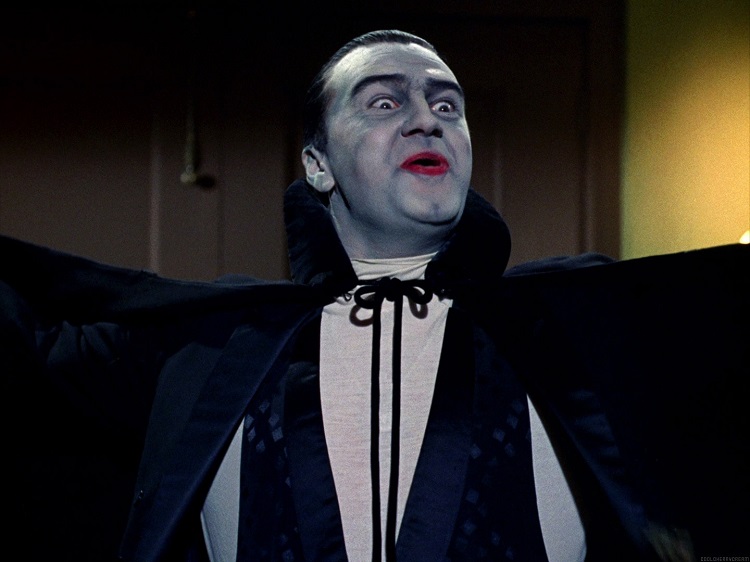 One of my other favorite guest spots is a second season episode of The Monkees called “Monstrous Monkee Mash” in which he plays The Count. Are the Monkees getting into shenanigans with horror characters like a Count Dracula-ish vampire, his niece, a mummy, and a wolfman? Absolutely. It’s a funny episode, bits of which have firmly implanted themselves into my brain. It’s also noteworthy to mention that the Monkees were a little more out of control during the second season, which could frustrate guest actors. However, Ron Masak kept up, kept his cool, and pulled off a fun and funny vampire. He would have made a fitting mentor for Vampire Davy Jones if he hadn’t been vanquished.
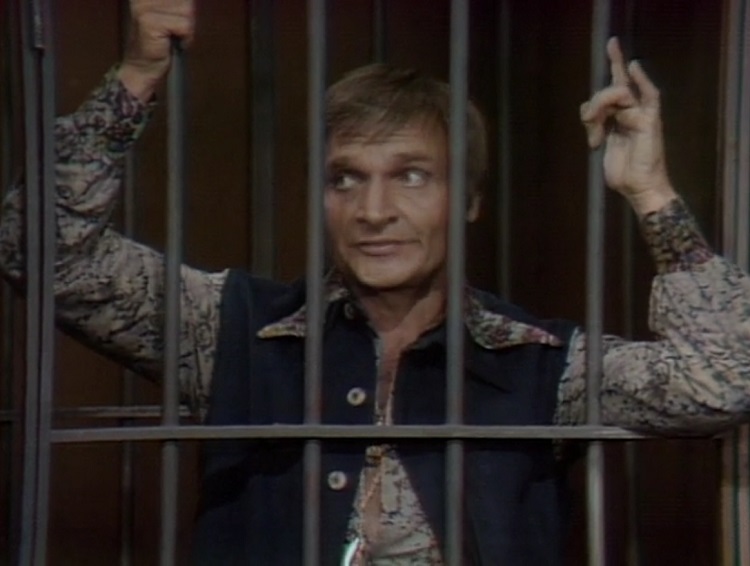 I’ve written a bit about Marty Morrison before when I wrote about
  While the cruelties of Russia were easy for an audience to absorb back in the ’70s, bringing that cruelty closer to home was more effective. In the episode “Discovery”, Marty brings in his friend Darryl Driscoll to get some help from the fellas at the 12th, something that Mr. Driscoll is sure will be their undoing. Mr. Driscoll was accosted by a man claiming to be a 12th precinct detective and had to buy his way out of trouble for $50. It’s only understandable that he’d think he was walking into a lion’s den. But Marty, despite his own frequent law tangles, considers these men to be his friends, and of course, Barney and his men -even Wojo- step up to take Mr. Driscoll’s complaints seriously. Marty, who is accustomed to the insults spit at him by many of the uniformed officers, had no doubt that they’d be treated like human beings by the detectives.
 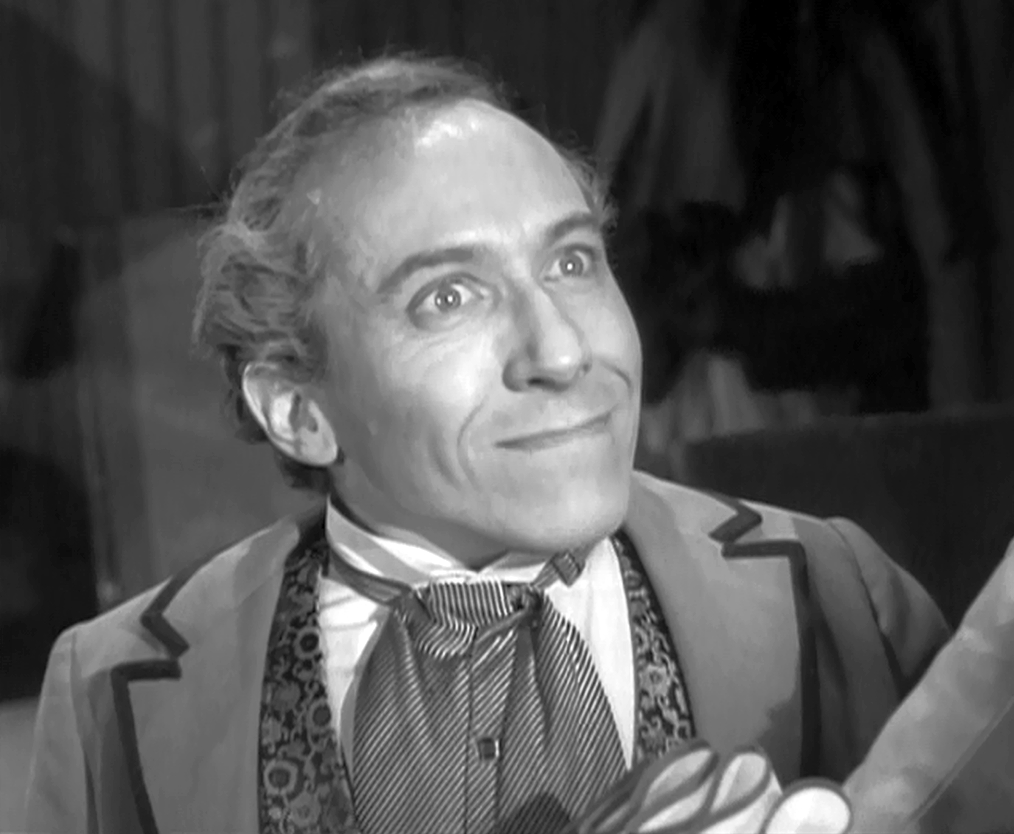 A great hero needs a great nemesis. In the case of The Wild Wild West and its two heroes Jim West and Artemus Gordon, only a true diabolical genius could do.
  His first appearance in “The Night the Wizard Shook the Earth”, the third episode of the series, established Dr. Loveless as a cultured, brilliant man who treats his underlings with an odd sort of courtesy and respect even when he loses his temper, and who loves his saintly mother for many reasons, but mostly for instilling in him a love of music. A nice juxtaposition, given that he’s lying in wait to kill a man. Which he does, of course, right under Jim West’s nose. When Jim finally meets Dr. Loveless in person, he finds the genius inventor in his game room besting three big men in physical combat with the help of his walking stick. A marvelous first impression. He doesn’t greet West as an adversary, but as a guest, serving him tea and chatting about the man he murdered and the explosives he invented before rescuing a fly from his tea. He even sings a song, accompanied by Antoinette. It’s all very gentlemanly. Jim poses as a turncoat and Dr. Loveless tests him by having him deliver a message to the governor of California. You see, the state has taken his family’s land and he wants it back. It’s not much. Just half the state. And he’ll periodically blow up 5,000 people with his powerful explosives until he gets it. A very reasonable request, especially since he does make a few good points about politicians. Anyway, even though Jim West bests him in the end, Dr. Loveless proves himself to be a formidable adversary, a role he takes quite seriously throughout the run of the series.
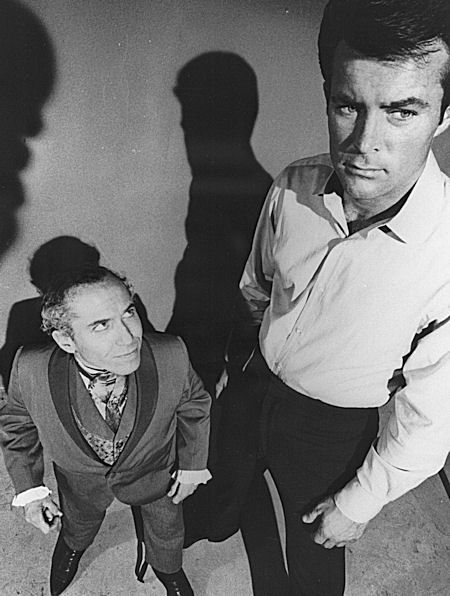 In his last appearance, the Season 4 episode “The Night of Miguelito’s Revenge”, Jim West is lured to a barber shop under the pretense of meeting Artemus Gordon, but his shave turns out to be a close one. The other customer is none other than Dr. Loveless, his face concealed by a towel and using fake legs to give the impression he’s much taller. With West under a towel of his own, Dr. Loveless proceeds to drug him and then deposit him in a funhouse that’s not so fun. At least for Jim. When he comes to after being beaten by the thugs hiding there, he finds himself back in the barber shop and chasing Dr. Loveless as he executes his latest plan: a kidnapping scheme according to an old nursery rhyme. While Dr. Loveless seems to be living his best life in his circus with his captives, Jeremy Pike (this was one of the episodes Charles Aidman stepped in as sidekick while Ross Martin recovered from his heart attack) manages to figure out who the next victim is and takes his place. Dr. Loveless taunting West on stage as the “dummy” in a ventriloquist act leads to Jim being buried at sea, which fails of course, but we all had fun trying. As it turns out, Dr. Loveless is seeking vengeance on those who’d wronged him and his friends and holds a mock trial at his circus with a clowns for his jury and Jim West being the final defendant. West and Pike spoil his plans, but Dr. Loveless naturally escapes.
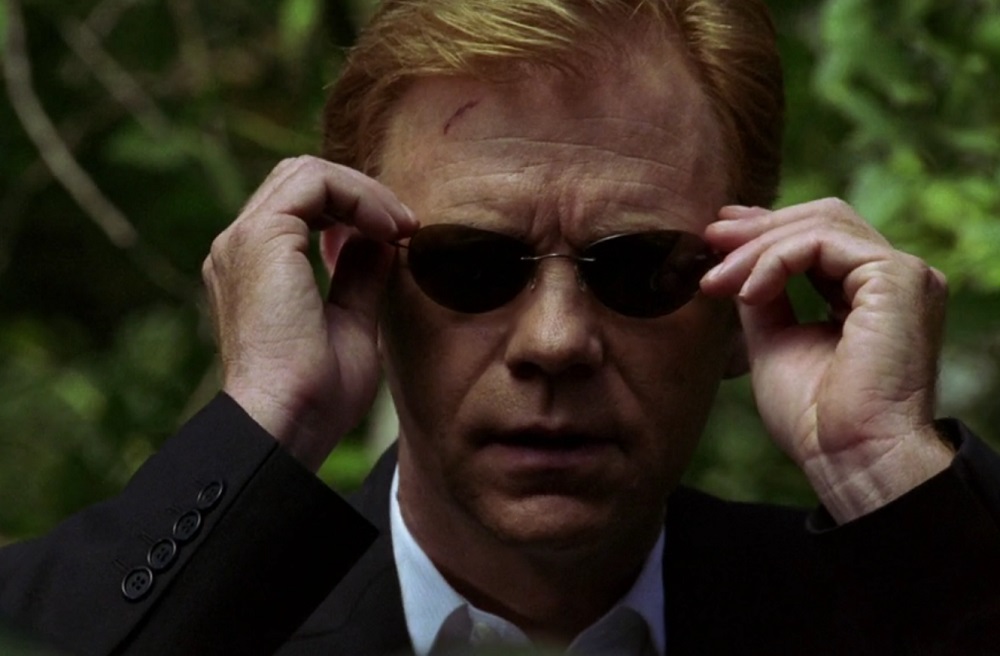 Thanks to Charge! and my habit of leaving the TV on in the background while I work, I’ve been half-ass rewatching CSI:Miami. I watched this show first run back in the aughts (though I was in and out on the final few seasons) and it is just as bonkers as I remember it. Which is absolutely not a bad thing. Of the three CSIs that were running at the time, it definitely trotted into nighttime soap territory while proceduraling and I find that to be good fun.
 There is something very Steve McGarrett about Horatio Caine.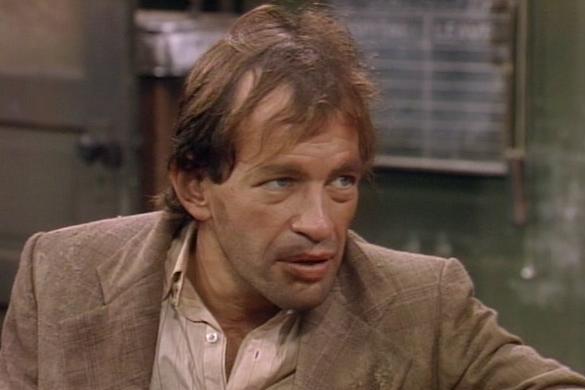


 aka KikiWrites