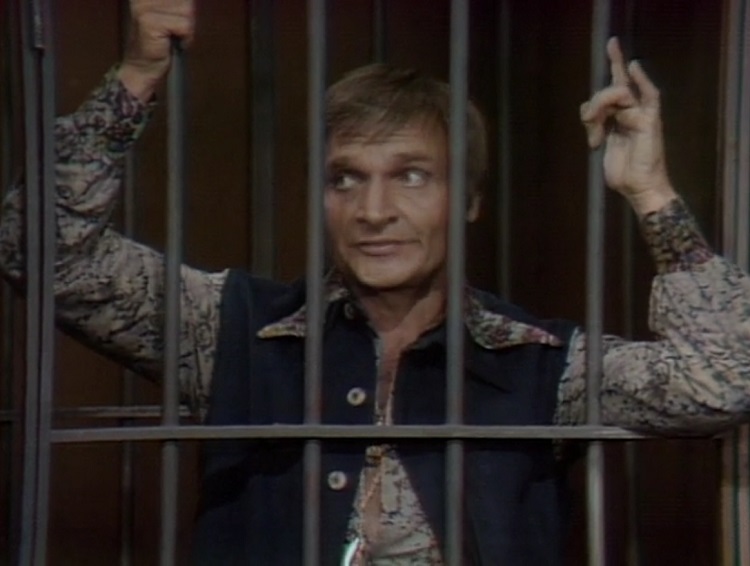
 I’ve written a bit about Marty Morrison before when I wrote about Barney Miller and The Pride of the Ol’ 1-2, but I always knew I was going to dedicate an entire post to the man because as characters go, Marty Morrison is pretty brilliant.
Portrayed by the fantastic Jack DeLeon in eight episodes, Marty Morrison makes his grand entrance in the second episode of the series having been arrested by Wojo for stealing a purse. The entire scene of Wojo booking Marty in front of his victim is nothing but a showcase of Marty’s wit.
Wojo: Okay, Marty. This is the second purse you snatched in a week. Now you’re getting bad habits.
Marty: Kleptomania is a disease, not a crime. Besides, I’ve thrown away better purses than that.
Mrs. Florsheim: I want that man in jail. And I’m not afraid of reprisal.
Marty: Oh, who would want to reprise you?
Mrs. Florsheim: You’re just lucky the police got to you before my husband did.
Marty: Same to you.
Wojo: Mrs. Florsheim, what time was the crime committed?
Mrs. Florsheim: I beg your pardon?
Marty: What he wants to know is when did you buy the purse.
Wojo: Was there anything missing from the purse?
Marty: Good taste.
At a glance Marty is a stereotypical catty, somewhat effeminate gay man. That’s how that first scene with him plays out. A catty, gay thief.
But he makes some good points. He’s had all kinds of jobs, even tried to get on the police force. But at the time, they didn’t allow openly gay men on the force. As Marty points out, “Why can’t there be gay cops? There are gay robbers.”
Later in the episode, he makes a vaguely suggestive statement to a man he’s sharing the lone 12th cell with. Naturally the guy doesn’t take it well. And naturally, Marty responds with his scathing wit.
As funny as the character is, he also does an exquisite job of highlighting the other characters’ prejudices, particularly Wojo’s. In the earlier seasons, Wojo is extremely uncomfortable with the idea of homosexuality. The ultra-masculine former Marine has a tendency to be hostile towards Marty, and Marty has a tendency to throw that hostility back at Wojo in the form of his own clever insults or suggestive comments. Of course, Wojo’s growth over the eight seasons of the show includes coming to some sort of acceptance of Marty. As a plot devices go, he’s pretty great.
But Marty is more than just a plot device for another character’s growth. He’s more than just a token queer character. Marty gets to be a person, which was definitely more than what a lot of queer characters got to be on TV during that time period. In a time in which homosexuality was still viewed as a deviant choice by most, Marty gets to rise above much of that stigma. Why? Because we like him. He’s not like the deranged murderers that show up on other cop shows at the time. He’s a petty thief that’s been known to smoke pot. No different than any of the straight crooks and pot smokers that made their way through the 12th. Marty is harmless.
And being harmless allows Marty to help highlight the injustices that queer people faced. We watch Marty flirt with a Russian pianist seeking refuge in the United States from the oppression of his home country in “Asylum”. He also stands up for the man and offers to help him get to immigration since, according to the State Dept., no one with any official status is allowed to help and by Marty’s own admission, he doesn’t have any status.
 While the cruelties of Russia were easy for an audience to absorb back in the ’70s, bringing that cruelty closer to home was more effective. In the episode “Discovery”, Marty brings in his friend Darryl Driscoll to get some help from the fellas at the 12th, something that Mr. Driscoll is sure will be their undoing. Mr. Driscoll was accosted by a man claiming to be a 12th precinct detective and had to buy his way out of trouble for $50. It’s only understandable that he’d think he was walking into a lion’s den. But Marty, despite his own frequent law tangles, considers these men to be his friends, and of course, Barney and his men -even Wojo- step up to take Mr. Driscoll’s complaints seriously. Marty, who is accustomed to the insults spit at him by many of the uniformed officers, had no doubt that they’d be treated like human beings by the detectives.
He’s been in enough trouble to know the 12th precinct pretty well.
In addition to stealing handbags and possessing pot, he once shoplifted luggage. Walked right out of the store and right into the 12th’s holding cell. It turns out that Marty’s get-rich-minded scheme of marrying a much older woman couldn’t deter his sticky fingers. And in another episode, Marty asks Barney to put in a good word for him with his probation officer as he and Mr. Driscoll are hoping to move to the much more gay-friendly city of San Francisco. Lucky for all of us, though, the duo stayed put in NYC.
Marty mostly cleans up his act by the time the show hits the finale, which is also Marty’s last appearance. Fitting that the man who helped establish the quality of characters populating the mug books of the 12th precinct would stop by to say goodbye to his friends and the place he made a mark on.
In a time when gay characters were scarce and often vilified, Marty Morrison was a funny, charming, likeable character that helped ease the stigma surrounding gay men, at least a little. Even if the character isn’t a perfect representation, he helped pave the way for the depiction of authentic, messy, queer humans that are more frequently (yet not frequently enough) seen onscreen today.


 “I didn’t know Dick Van Patten had a sister,” my roommate said.
 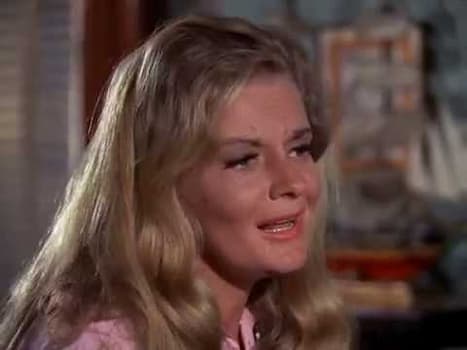 Miss Van Patten made her first appearance in the Season 3 episode “The Payoff”. She plays a woman helping out an old friend that she’s sweet on. The only thing is that her old friend was involved in a kidnapping for ransom that ended in murder and now he’s been gut shot by one of his co-conspirators. She’s desperate in multiple ways –desperate to help Jace, desperate to have Jace feel for her what she feels for him, and desperate to evade the law. Unfortunately, none of it works out for her and the scene in Steve’s office where she spills her guts has you aching for her.
 In case it escaped your attention, I guested on an episode of
  If you asked me what my favorite TV horror is I’d say Kolchak: The Night Stalker.
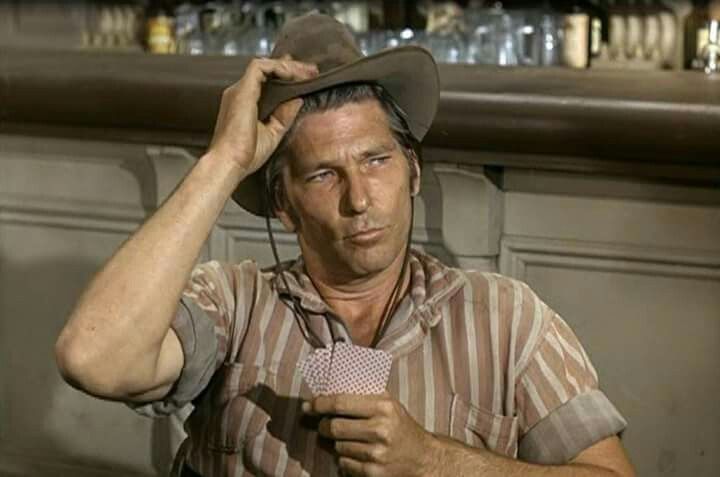 When I think of L.Q. Jones, I usually think of him with a cowboy hat. Or a mustache. Or both. Maybe because the roles I associate with him most are cowboys. Maybe it’s because he’s a Texas native. Maybe it’s both. But Mr. Jones played more than just a cowboy and though his film roles might have been bigger, he’s always been around on the small screen as well. With 165 credits from 1955-2006, he had plenty of opportunity to do more than hang out on the range.
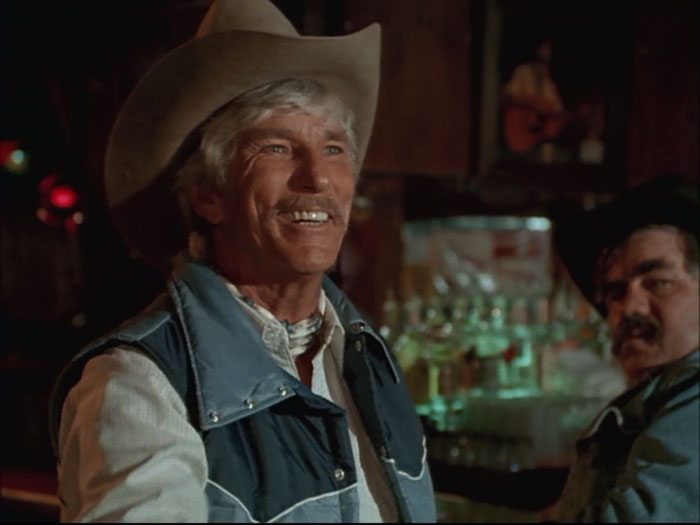 My personal favorite guest role of L.Q. Jones is his appearance in the Season 4 episode of The A-Team, “Cowboy George”, in which he gets to be a cowboy villain in a decidedly non-Western show. He plays Chuck Danford who owns the “Floor ’em” where Face has booked Cowboy George to play. Little does Face know that a loophole in the talent contract allowing for substitutions results in Boy George being sent to play the country joint instead. Face is also unaware that the entire purpose of the concert is so Chuck’s associates can rip off the armored car carrying the intended audience’s payroll. It’s not easy playing a bad guy against The A-Team. After all, you’re guaranteed to lose. But L.Q. Jones pulls it off brilliantly. The ease in which he appears to be a good guy right up until he isn’t is great because you buy him as both. He could totally be an innocent business owner or a guy plotting to get The A-Team lynched for the crime that he orchestrated.
 I’ll be honest with you: I heard the phrase “Book ’em, Danno” long before I started watching Hawaii Five-O in my early thirties. Considering the show went off the year a few months after I was born, that’s pretty impressive. This one little catchphrase (which wasn’t even designed to be a catchphrase; in fact, Steve McGarrett goes the entire third season without saying it) became a thread that had itself woven into the fabric of pop culture. So has the term “Five-O” as a way to refer to the police. That entered the lexicon before the show even went off the air.


