Pimpin’ Ain’t Easy

Let me just disclaimer this by saying that I haven’t thoroughly researched this post. I’ve just been thinking about it.

And what got me thinking about the depiction of sex work in cop shows, particularly pimps in the ’70s, was an episode of Hawaii Five-O that I just covered for an episode of Book ’em, Danno called “Tricks Are Not Treats”. The basic plot of the episode is a group of pimps (called “macks” in the episode for some reason because they’ve had no problem calling a pimp a “pimp” in previous episodes) led by Harley Dartson, played by Glynn Turman, are at odds with a loan shark named Lolo, played by Gregory Sierra, who is taxing their business.

The episode was shot and aired in 1973. Without watching it, I bet you know what the pimps look like, act like, and sound like. There is a certain image that’s been embedded into popular culture when it comes to pimps, particularly of the 1970s variety. These pimps fit that image.

Most of the pimps in this co-op are Black, though there is at least one Native Hawaiian, one Asian, and one token white guy with a ‘fro. All of them are decked out in the classic pimp styles: slick suits, bright colors, fab shoes, and fetching hats. Oh, the hats! It may be stereotypical as hell, but they had style. These Honolulu pimps would have been able to blend into any city on the mainland. They had the look.

The characterization of the pimps of this time period in particular lends them to be very convenient bad guys on cop shows. Just get them in the right outfit and the audience doesn’t need much more than that. It was understood that pimps were bad because prostitution was against the law. Pimps exploited the women who worked for them and weren’t above using violence to get the women to turn their tricks. Frequently, it was these violent tendencies that had them crossing paths with our police heroes. And it was probably not an accident that it seems like a majority of pimps depicted on TV at this time were Black. It seemed like if it was a white pimp as a main villain -and this is just my impression as I have no scientific data or research to back this up because I’m lazy- that he was depicted more as a businessman. He had “escorts”. He had an office. He wore respectable suits. He might not be above committing violence, but at least he was “classier” when he did it.

In “Tricks Are Not Treats”, Harley Dartson is positioned as sort of a good guy in comparison to Lolo, an unlikely and uncommon position for a pimp at the time. The pimps in the episode are humanized beyond the stereotypes that they’re usually presented as. Their line of work isn’t excused and it’s mentioned that they are still willing to use violence against the women in their stables to keep them in line, but that isn’t the focus. It’s them against Lolo and the writers want you on their side. So, they make them likeable, relatable. J. Paul (Ron Glass), prior to his demise, comes across as a funny, friendly guy. Wunton (Moe Keale) is deeply affected by his friend’s death, to the point of losing his cool to defend J. Paul’s memory.

Harley, our main mack, is given a normal home life with a wife, who used to be on the streets as one of his girls, and two children. Sure, Semantha (Lynn Ellen Hollinger) is still very much involved in the administration aspect of the business, keeping track of the women in Harley’s stable and the jobs they’re doing (or should be doing, as she does threaten one woman over the phone to get to a hardware convention before Harley takes a coat hanger to her), but it’s treated as a normal Mom and Pop kind of business. Pimps are having a meeting out on the lanai and Semantha is tracking tricks while the kids eat lunch at the kitchen counter and Harley fusses at the older boy about doing his homework. It’s a rare depiction to get that much into a pimp’s personal life and have it be so suburban.

(It’s also worth mentioning that Harley and Semantha were an interracial couple with biracial children, something else not often seen on TV in 1973.)

There’s a pimp with a heart of gold in an episode of Barney Miller as well. In “The Hero”, Carl Gibson’s mack character Mayflower is arrested for pushing a trick out of a window and ends up helping the guys put a baby Todd Bridges back on the straight and narrow. Sure, he’s doing it in part to ease his own punishment, but a pimp on another cop show wouldn’t have done it at all.

The bad buy blueprints for cop shows are interesting in how they both contribute to stereotypes and then deviate from the stereotypes they helped create. The way pimps are used in these shows is a great example of that.

Imagine what I might discover if I actually applied myself and researched it.
How To Replace the Dearly Departed Character

The Two Darrins.

It’s become a pop culture touchstone. Rather than get rid of the character of Darrin Stephens on Bewitched when Dick York’s back health began to decline, the show simply hired Dick Sergeant to replace him for the rest of the series. However, this sort of swap happened earlier in the show’s run. Alice Pearce originated the role of nosy neighbor Gladys Kravitz, however sadly died of cancer after only two seasons. She was replaced by Sandra Gould, who remained Gladys for the rest of the show.

Replacing departing characters can be a challenge for a show, especially if the show is riding high in the ratings. One false move and the popularity can tank. Pick the wrong actor or create the wrong character, and the chemistry of the show is forever altered in a way that renders it unwatchable. But get the right person combined with the right character, and it’s like finding gold all over again.

Not all actor departures can be helped. Death is inevitable. It comes for us all and it comes at the most inconvenient times. It can leave shows in the lurch about what to do.

One of the earliest instances of death taking out a major player happened on Wagon Train when Ward Bond died. His Major Seth Adams had been leading that wagon train for years. Then one day he was gone and Christopher Hale, played by John McIntire, was in his place, and nobody said anything about the missing major. This approach would also become a tactic to deal with the departure of living actors as well. See Gutterman (James Whitmore Jr), TJ (Robert Ginty), and Anderson (John Laroquette) on Baa Baa Black Sheep.

But it’s not always handled that way.

Dan Blocker died suddenly just prior to the final season of Bonanza. The season premier was to feature his character Hoss and as a result had to be rewritten. Hoss wasn’t just a main character, but a beloved one, and there was no way his character could just disappear from the show without remark. So it was said that Hoss died in an accident.

Jack Soo’s death from cancer was not sudden or unexpected. As his illness worsened, his character Nick Yemana showed up less and less. The show broke form after Jack Soo’s death for the retrospective episode, with the ensemble highlighting their co-star’s best moments while also offering some words about him as a person and a friend. It was never expressly stated that Nick died, but it was definitely implied, and though the character of Care Levitt, played by Ron Carey, was seen more often in the squad room in a detective role, I don’t think it would be accurate to say that Nick Yemana was ever replaced.

Some actors do leave of their own accord and their characters are either killed off or sent off, creating a void that must be filled.

This did happen on Bonanza when Pernell Roberts chose to leave the show. Logic dictated to replace one Cartwright with another and since it would be awkward to pull another half-brother out of the hat, they brought in cousin Will Cartwright, played by Guy Williams. He lasted all of five episodes before being cut loose from the show, supposedly due to Michael Landon’s insecurities surrounding Williams’s good looks.

But usually, the replacement characters stick around a little bit longer.

Frequently, shows would attempt to replace one character with a similar character, sometimes in appearance, usually in personality. The idea was understandable: don’t shake up the vibe too much. They knew what worked and wanted to stick with it. And sometimes it worked and sometimes it didn’t.

If you ask my opinion (and you’re reading my blog, so clearly you’re here for my thoughts), M*A*S*H* set the gold standard when it came to character replacement.

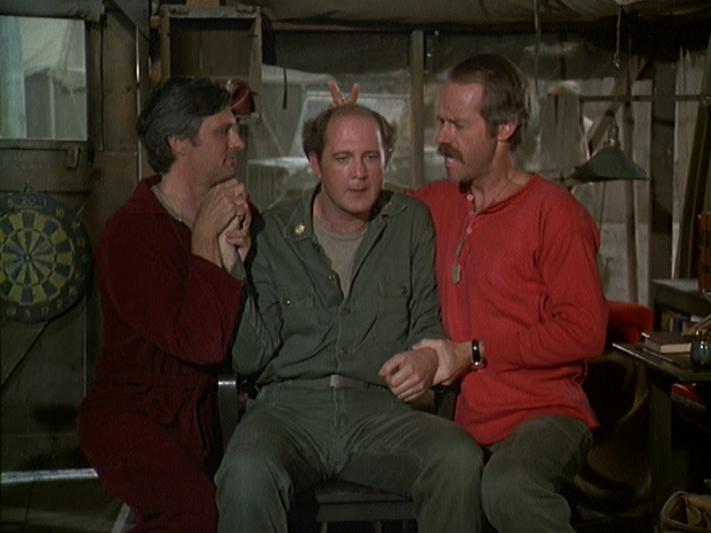
Between the third and fourth season, the show lost two major players: McLean Stevenson’s Henry Blake was shipped home on an ill-fated trip in the third season finale, and Wayne Roger’s Trapper John McIntyre was shipped home in one piece before the fourth season premier and while Hawkeye was on R&R.

Instead of replacing these two popular characters with ones of a similar ilk, they chose to replace them with characters that were very different from their predecessors.

Colonel Henry Blake, whose leadership was once described by Hawkeye as being on a sinking ship and running to the front of the ship to find the captain was Daffy Duck, was a good doctor, but a lousy military man and struggled to be effective in a leadership role, and ended up being replaced by Colonel Sherman Potter, surgeon and career military man. Meanwhile, lady’s man Trapper John was replaced by dedicated family man BJ Hunnicutt.

Bringing in two new characters is a big challenge, but to make them quite different from the ones they replaced feels like something of a gamble. One that, of course, paid off. Sure there were some growing pains, as is natural when new people come into an established setting, but it wasn’t long before they found their places in the scheme of things.

This was repeated when Larry Linville’s Major Frank Burns was sent home when he kinda lost his head when Margaret got married and was replaced by Major Charles Emerson Winchester III, played by David Ogden Stiers, who was literally assigned to the 4077th because he beat a colonel at cribbage.

Frank Burns was a unique weasel of a character that loved the authority because of the importance it gave him, but whose plans to acquire it backfired typically through his own incompetence or because of Hawkeye, Trapper, and/or BJ. Not to mention he was a lousy doctor. Though he had his moments of humanity, Burns was a largely insufferable, irredeemable character and Larry Linville portrayed him brilliantly for five seasons.

On the flip side, Winchester was a much more formidable adversary against Hawkeye and BJ when it came to shenanigans, as he was just a smart, and he was a gifted surgeon as well. He, too, could be insufferable, his arrogance usually getting the best of him, but he was much more human than Burns could ever be. Winchester was also more frequently an ally to Hawkeye and BJ. Though Charles was often the foil, there was a mutual respect at play, something that never would have happened with Burns.

One replacement that kind of wasn’t a replacement served to be a very interesting replacement. If you follow me.

Usually when we think of replacements, we think of one character leaving and a whole new character coming in. However, when Gary Burghoff left the show, his character Radar O’Reilly going home to take care of his mother and the family farm after his Uncle Ed died, the 4077th didn’t get a brand new company clerk. They got Klinger.

In-house promotions happen and we got to see that adjustment in real time, with Klinger struggling to learn a new job and the rest of the camp to struggling to to deal with Klinger’s struggles. The change got Klinger out of the dresses for the most part, but allowed his character to grow in an unanticipated way without losing the guy we’d come to know and love, the guy who’d had a friendship with the character he replaced.

M*A*S*H did a lot of things right -it’s got the 11 seasons and Emmy awards to prove it- but the way the show replaced characters in a way that reflected how people come and go in life, with new personalities replacing old, dynamics shifting, and new normals being established, was supreme. Like I said -the show set the standard.

Replacing dearly departed characters is a challenge and every show meets that challenge differently. Sometimes it works, sometimes it doesn’t. Sometimes we’re gifted in with characters that exceed our expectations and steal our hearts. And sometimes we wish they’d never been written.

But I guess that’s a little like how life works, too.

Five Favorite Couples

I probably should have said “couples” because despite the Valentine’s Day proximity of this post, I’m not speaking strictly romantically. Couples come in all varieties, you know. BFFs, coworkers, even frenemies can make for a good couple.

These are just the first five faves that came to my mind and they are listed in no particular order. Please note: These are my personal faves, not the couples I think are objectively the best ever. Just in case you want to die on any hills in the comments. Make your own list.

Magnum and Higgins, Magnum PI–Obviously, I’m talking about the original 1980 series and not the 2018 reboot as the heteronormative inevitability of romantically pairing Magnum and Higgins is one of the main reasons as to why I stopped watching the latter. I’ve also discussed in depth the unconventional bromance of the the 1980 Magnum and Higgins that I find so fascinating, so I won’t rehash too much here. But it’s no secret that their elevated frenemy relationship brought something special to the series. More than just adversaries, but not hang out together friends, the way Magnum and Higgins cared for and about each other even while driving each other up ever available wall at Robin’s Nest brings a unique emotional aspect to the show that was allowed to develop over the course of the series. Maybe they wouldn’t win a traditional Best Couple contest, but they are definitely in a category of their own.

Morticia and Gomez Addams, The Addams Family–Could I have a favorite couple list without Morticia and Gomez? No. I could not. Because when it comes to romantic relationships, they are goals. Here are two people who love each other unabashedly, are passionate about and with each other, and foster a loving household on top of it all. As a couple, they’re unstoppable, above the petty squabbles and nagging of other “normal” couples. They’re a united front against the problems that face them and their family. And on the rare occasion that Morticia and Gomez do spat, their disagreement withers in the face of their love. You cannot tell me that bickering couples who barely tolerate each other are the ideal when Morticia and Gomez Addams exist.

Walter and Ryan, CSI: Miami–This show actually features several of my favorite couples (Delko and Speed, Ryan and Natalia, Calleigh and Delko in a purely platonic fashion, Horatio and Tripp), but Walter and Ryan were the first to pop into my head and for good reason. Walter has the ability to bring out the best in Ryan, which is great because Ryan has a tendency to be a prat. I love him, but sometimes I want to push him down in a mud puddle. He can be too serious, angsty, and stubborn. Walter lightens Ryan up considerably, usually by tormenting him (the floating hat is one of my faves). They’re a fun couple. But also a dedicated one. They have each other’s backs to such an extent that even a tornado couldn’t break them up. Okay, maybe physically, but the friendship emerged from the rubble stronger than ever.

Marty and Mr. Driscoll, Barney Miller–Given that these two gay characters existed in the ’70s/early 80s, it was never explicitly said if Marty and Mr. Driscoll were in a romantic relationship. It was kind of implied that they were, but Marty was also known to fall for other guys, so. Maybe they dated, but remained friends. Maybe they were friends with benefits. No matter the exact nature of their relationship, Marty and Mr. Driscoll go together like peanut butter and chocolate. A hilarious duo who can repel any of Wojo’s homophobia with a quick and witty barb, they added some rainbow charm to the 12th precinct when they stopped by. They did some heavy representation work back in the day and they did it in glorious fashion. Individually, they’re terrific (I’ve written about my love of Marty before), but as a couple, they’re dynamite.

Laverne and Shirley, Laverne and Shirley–It’s no secret that I love Lenny and Squiggy, but I wouldn’t have those two weirdos without Laverne and Shirley. Their friendship is amazing. They have two rather different personalities that both mesh and clash beautifully. These two are not above their squabbles, but they’re also each other’s biggest supporters. The hijinks can be wacky and the physical comedy hysterical, but what grounds the craziness is the emotional bond these two women share. They truly love and care about each other. Even at each other’s throats, there’s never a doubt that they’re going to kiss and make-up because the idea of one without the other doesn’t make sense. When it comes to best friends, this couple takes the cake. And probably throws it at Lenny and Squiggy.

These five favorite couples are a good start, but there are many more favorite couples to write about. And I will.

Pinky swear.

Rerun Junkie Guest Stars–Don Calfa and Oliver Clark on Barney Miller

I could (and probably should) write guest star posts about both Don Calfa and Oliver Clark, and maybe one day I will, but since it’s their work on Barney Miller that thrills me so, I figure that deserves its own post.

Don Calfa appeared on the show seven times; Oliver Clark appeared six times. Funnily enough, their paths only crossed on the show once, but it was a glorious meeting.

Don Calfa’s first appearance in Season 4 sort of set the tone for all of his appearances. He tended to play guys who were operating on their own level and as a result ended up in the 12th precinct. In “Group Home”, Mr. Calfa portrays a man who blames the military conducting experiments in the subway for his various illnesses, so he threatens to blow up a recruiting station. He’s only in the end of the episode for a few memorable moments, but considering George Murdock (who I should also write about) has spent most of the episode building up to his appearance, he makes the most of it. As explained to the police sketch artist, James Cromwell (talk about an all-star guest cast), the most memorable thing about him is his cough. And while his cough was spectacularly disgusting, truly the most memorable thing about him was his obsession with those old military experiments, including blaming them for him getting VD six times.

Another memorable arrest involves Mr. Calfa playing a formerly brilliant thief reduced to a bumbling amateur thanks to a lobotomy. While there are plenty of laughs, there’s an underlying sadness to his situation. He was made so “harmless” that he can barely function. As funny as Mr. Calfa is -and he is because his timing and delivery are impeccable- he never loses that particular thread.

A criminal inspired by the TV Guide…a robber in witness protection up to his old tricks…a displaced resident…an inventor who believes a company is stealing his inventions…Don Calfa portrayed a wide-range of oddities.

Oliver Clark’s appearances were a little more varied. He played a man swindled out of a ticket on a space shuttle (arrested for causing a disturbance when they wouldn’t honor his ticket) and a pharmaceutical employee who isn’t thrilled that the company he works for won’t market his cure for a disease because not many people are affected by it, holding the distinction of being one of the last people to be arrested by the detectives of the 12th in the series finale.

He also played a couple of sex pests, including a groping dentist and a flasher. The latter is one of my favorites of his guest spots. Mr. Clark’s character is a member of a flasher support group and he falls off the indecent exposure wagon with newest 12th precinct addition, Detective Batista (June Gable). His lawyer ends up being a fellow flasher played by Ron Feinberg, reprising his role as Mr. Farber, the flasher who attempted to kill himself via men’s room electrocution in “Snow Day”. He goes from being embarrassed about his lack of willpower to increasingly excited as the episode progresses, even going for a ride on the cell door when Battista opens it to allow him to use the men’s room. He ends up declaring that he’s going to come out of the bathroom nude, but ultimately emerges fully clothed –well as clothed as an overcoat dressed flasher can be– much to everyone’s relief and his own satisfaction. After all, wasn’t it exciting just talking about it? He’s the only one who thinks so. But it’s fun watching his almost Dr. Jekyll/Mr. Hyde progression during the episode.

His first appearance on the show in the Season 2 episode “The Layoff” is very different from his other appearances. Mr. Clark tends to bring an almost nervous quality to most of the characters he plays on the show, however his turn as a fur thief shows him as one cool customer with an answer for everything. He’s so confident that he even makes a love connection with a fellow 12th precinct detainee played by Candy Azzara.

The one episode in which Don Calfa and Oliver Clark cross paths brings in the oddity of Mr. Calfa’s characters and the nervousness of most of Mr. Clark’s characters.

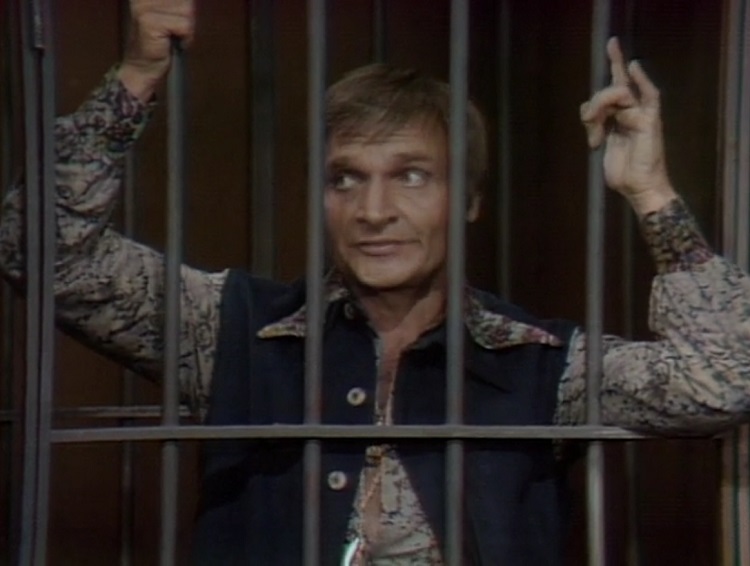
In the Season 4 episode “Hostage”, Don Calfa plays Leo Bedell, an armed robber looking at life for being a habitual criminal. He makes his one phone call to his brother Vern, played by Oliver Clark, who chooses to throw away his own life away in order to help Leo break out of the 12th precinct. Vern enters the squad room under the pretense of being Leo’s lawyer and when Leo gives the word, Vern shakily pulls a gun out of his bag. The two brothers then proceed to take everyone in the squad room, including Barney, the detectives, Levitt, Inspector Luger, a ventriloquist and his dummy, and the woman the dummy insulted, hostage, eventually locking them all in the cell.

The Bedell brothers then spend the episode trying to figure out how to escape the mess they’ve made as there are 137 uniforms downstairs. Both men are jumpy as hell, but where Leo is committed to the plan, Vern’s dedication wanes (“If you’re going to lose your enthusiasm, give me the gun.”). Ultimately, Vern decides that it’s hopeless and gives the gun to Barney (“Wrong person!”). Oliver Clark and Don Calfa don’t look very much alike, but with their interactions and their chemistry, you totally buy that they are two brothers of the non-criminal mastermind variety. They play off of each other beautifully, working that chemistry to the very end. It’s really a shame that the two men weren’t in more episodes together.

But the combined twelve episodes Don Calfa and Oliver Clark appeared in on Barney Miller are pretty good compensation.

It’s Okay! They’re the Good Guys!

It’s a common scene in a cop show.

The cops arrest someone and maybe it’s during the arrest, maybe during the interrogation, one of our guys loses his cool and gets a little rough with the suspect. And, you know what? We’re fine with that! Punk had it coming.

It’s yet another way that copaganda inures us to questionable police conduct.

We are firmly on our good guys’ side. We understand their frustration when a suspect won’t give up information or if they run and have to be chased down. These are bad guys after all. We’d lose our cool, too. Especially when some punk won’t talk and there’s a bomb about to go off or some kidnapped person’s minutes are ticking away. If our guys get a little aggressive in the pursuit of justice, it’s all good. After all…they’re the good guys. Sometimes a choke hold is necessary.

The shows are great at normalizing this. It makes sense that our cops would get a little rough while arresting a suspect, especially if they ran or were resisting. It makes sense that our cops might need to utilize a little physical persuasion during an interrogation. Lives are on the line. And besides, these are the BAD guys. Who cares if they get a little roughed up?

Except how often do we watch those arrests and those interrogations and the suspect in question turns out to NOT be the bad guy of the episode? Pretty often considering the first person arrested is seldom the culprit in an hour long police procedural. You can argue that it’s all in the pursuit of justice, but that argument doesn’t hold up against a person’s rights.

Ah, yes, those pesky rights that apply to everyone, not just the good guys. How our cops often lament how they’re forced to observe a suspect’s rights when they’d really rather smack them around.

And how often they ignore those rights and go right ahead.

We all know how much I love Horatio Caine, but the man crosses lines like he’s running a touchdown. Given that his line-crossing increases as the seasons progress, I could argue that his increasing disregard to the rights of suspects is a response to traumas he suffers over the years, but that’s a post for another day. The point is that Horatio has no problem threatening physical violence or getting outright physical with a suspect. In one episode, it’s insinuated that he beats the shit out of a pedophile for “resisting arrest”. Another insinuates he does the same to a guy who abused his girlfriend, but at that point, he was no longer even a suspect in her death. And in yet another episode, Horatio and Boa Vista get a guy in the backseat of one of the Hummers and it’s implied that they inflict some pain in order to extract information.

These three incidents are presented without any question to Horatio’s actions. Because we sympathize with him and in fact, identify with him. We’d beat the shit out of a grown man preying on teenage girls. We’d beat the shit out of a guy who was fond of DV. We’d do a little painful persuasion to get crucial information from someone already in custody.

However, we are not law enforcement. And there are very good reasons why law enforcement is not allowed to do such things.

But this is the standard for these shows. There’s no real attention brought to this sort of police violence other than mild warnings as a means of twisting the tension and providing a barrier to our good guys saving the day.

Unless they happen to be falsely accused of police brutality.

In a third season episode of CSI: Miami, Horatio is accused of police brutality and Calleigh has to clear him, which she does, of course, because in this instance Horatio hasn’t done the violence that he’s accused of.

It seems like every cop gets falsely accused at least once. Ponch and Jon. Starsky and Hutch. Reed and Malloy. It’s a rite of passage for a TV cop, like a police involved shooting. The focus of these episodes is always the same: the injustice and unfairness of our heroes being accused of brutality and how easy it is for people to make those claims. These people are only saying these things because they have an agenda. They hate the police. They’re petty. They’re either seeking retribution for getting caught committing their own illegal transgressions or trying to detract from them. Because only bad cops engage in brutality and our heroes are never bad cops.

Inevitably, like Horatio Caine, they’re cleared of any wrongdoing.

And then right back at manhandling the next week.

One cop show that didn’t really normalize police violence was Barney Miller. First of all, we didn’t see any of the arrests. We were told that the suspect had to be chased or that the suspect resisted, but it was understood that no violence ensued during these apprehensions. At least there was no apparent evidence or mention. Second of all, a preponderance of the criminals the 12th precinct dealt with where, well, harmless. There were some armed robbers and assaulters and the like, but this is a comedy. Most of the perps that the detectives arrested were of the nature of blind shoplifters and women throwing toilet seats out of the window because their husbands locked them in the bathroom and sugar addicts who fall off the wagon in hilarious fashion.

When the subject of police brutality came up in conversation, Wojo was usually the detective mentioned, particularly in the early seasons. He had a tendency to be aggressive in his arrests and it got him into trouble more than once. Inspector Luger was a great champion of police violence as that’s how things were done back in his heyday. He was painted as out of touch and his methods antiquated. The policing techniques of the 12th didn’t require rubber hoses or anyone “falling down” the stairs. Policing had evolved beyond that.

Which wasn’t an accurate reflection of reality, but it was a decent attempt at providing a counter thought to plant into people’s heads.

Police violence isn’t normal and we shouldn’t accept it as such.

Not even from our law enforcement faves.

Rerun Junkie Confession–Gimme That Found Family Vibe

I’ve written before about how Gilligan’s Island was the first rerun that really made an impression on me, something that I totally fell in love with even though I was so young. It is most likely responsible for my love of reruns today.

It’s also one of the earliest indications that shows with a found family vibe were going to be in my wheelhouse.

Maybe it’s my own strong desire to belong somewhere, but those shows that feature a group of people coming together to form a family get me on a soul level.

Look at Gilligan’s Island. Seven people thrown together in an unlikely and extreme situation, forced to survive. Okay, that’s a dramatic explanation for a sitcom, but it’s not wrong. They have to come together as a family to survive. Sure, they bicker and quarrel and many times want to drown Gilligan after one of his fuck ups, but ultimately, they care about each other. This never would have happened if they hadn’t gotten shipwrecked. They’d have completed their 3 hour tour (with an unnecessary amount of luggage) and then gone their separate ways. Fate (and Sherwood Schwartz) threw them together and gave them a bond that even being rescued couldn’t break.

But it’s not just that extreme found family vibe I’m looking for. Chosen family is a kind of found family and that works for me, too.

Take for example another early love of mine, The Monkees. It’s a show about a band trying to make it. Obviously, these four guys came together to form a band, so they must have at least known and liked each other before they moved into a beach house together. It’s less fate and more struggling dream that has them scraping together rent and playing gigs. But they’re no different than four brothers, squabbling on occasion, but always having each other’s back. Just look at the episode “Success Story”. Davy’s grandfather is going to take him back to England and the fellas do everything they can to keep him in America. After all, they may not be blood, but they love each other like they were.

It’s this found family/chosen family vibe that could account for my love (at least in part) of cop shows. Be it partners, a team, or a whole squad room, you end up with people who come for the job and stay for the family.

Barney Miller is a great example of this. There’s a squad room of detectives who are paid to be there, but the nature of the job means that they have to have each other’s backs. It’s inevitable that this would eventually extend into their personal lives to an extent. When the final episode sees the precinct closed and everyone split up, you still get the sense that even if they aren’t working together, and maybe if they never see each other again, they all hold a very special place in each other’s lives. The way blood bonds family, they’re bonded by experience.

CSI: Miami not only has a similar vibe, but even has Ryan saying that they’re his family in the final episode.

Starsky & Hutch are akin to blood brothers given how many times one has been near death and the other has bailed him out. Adam-12 has a similar feel even though most of the series focused on the mundane aspects of the job. When you’re riding in a car with a guy for 8-12 hours a day, there’s only a couple of ways your relationship is going to go.

Emergency!, The A-Team, The Golden Girls, Stargate: Atlantis, F-Troop, Magnum PI…the one thing they have in common is that they all have a found family/chosen family vibe.

And I simply cannot get enough of it.

Rerun Junkie Character–Marty Morrison

I’ve written a bit about Marty Morrison before when I wrote about Barney Miller and The Pride of the Ol’ 1-2, but I always knew I was going to dedicate an entire post to the man because as characters go, Marty Morrison is pretty brilliant.

Portrayed by the fantastic Jack DeLeon in eight episodes, Marty Morrison makes his grand entrance in the second episode of the series having been arrested by Wojo for stealing a purse. The entire scene of Wojo booking Marty in front of his victim is nothing but a showcase of Marty’s wit.

Wojo: Okay, Marty. This is the second purse you snatched in a week. Now you’re getting bad habits.
Marty: Kleptomania is a disease, not a crime. Besides, I’ve thrown away better purses than that.

Mrs. Florsheim: I want that man in jail. And I’m not afraid of reprisal.
Marty: Oh, who would want to reprise you?

Mrs. Florsheim: You’re just lucky the police got to you before my husband did.
Marty: Same to you.

Wojo: Mrs. Florsheim, what time was the crime committed?
Mrs. Florsheim: I beg your pardon?
Marty: What he wants to know is when did you buy the purse.

Wojo: Was there anything missing from the purse?
Marty: Good taste.

At a glance Marty is a stereotypical catty, somewhat effeminate gay man. That’s how that first scene with him plays out. A catty, gay thief.

But he makes some good points. He’s had all kinds of jobs, even tried to get on the police force. But at the time, they didn’t allow openly gay men on the force. As Marty points out, “Why can’t there be gay cops? There are gay robbers.”

Later in the episode, he makes a vaguely suggestive statement to a man he’s sharing the lone 12th cell with. Naturally the guy doesn’t take it well. And naturally, Marty responds with his scathing wit.

As funny as the character is, he also does an exquisite job of highlighting the other characters’ prejudices, particularly Wojo’s. In the earlier seasons, Wojo is extremely uncomfortable with the idea of homosexuality. The ultra-masculine former Marine has a tendency to be hostile towards Marty, and Marty has a tendency to throw that hostility back at Wojo in the form of his own clever insults or suggestive comments. Of course, Wojo’s growth over the eight seasons of the show includes coming to some sort of acceptance of Marty. As a plot devices go, he’s pretty great.

But Marty is more than just a plot device for another character’s growth. He’s more than just a token queer character. Marty gets to be a person, which was definitely more than what a lot of queer characters got to be on TV during that time period. In a time in which homosexuality was still viewed as a deviant choice by most, Marty gets to rise above much of that stigma. Why? Because we like him. He’s not like the deranged murderers that show up on other cop shows at the time. He’s a petty thief that’s been known to smoke pot. No different than any of the straight crooks and pot smokers that made their way through the 12th. Marty is harmless.

And being harmless allows Marty to help highlight the injustices that queer people faced. We watch Marty flirt with a Russian pianist seeking refuge in the United States from the oppression of his home country in “Asylum”. He also stands up for the man and offers to help him get to immigration since, according to the State Dept., no one with any official status is allowed to help and by Marty’s own admission, he doesn’t have any status.

While the cruelties of Russia were easy for an audience to absorb back in the ’70s, bringing that cruelty closer to home was more effective. In the episode “Discovery”, Marty brings in his friend Darryl Driscoll to get some help from the fellas at the 12th, something that Mr. Driscoll is sure will be their undoing. Mr. Driscoll was accosted by a man claiming to be a 12th precinct detective and had to buy his way out of trouble for $50. It’s only understandable that he’d think he was walking into a lion’s den. But Marty, despite his own frequent law tangles, considers these men to be his friends, and of course, Barney and his men -even Wojo- step up to take Mr. Driscoll’s complaints seriously. Marty, who is accustomed to the insults spit at him by many of the uniformed officers, had no doubt that they’d be treated like human beings by the detectives.

He’s been in enough trouble to know the 12th precinct pretty well.

In addition to stealing handbags and possessing pot, he once shoplifted luggage. Walked right out of the store and right into the 12th’s holding cell. It turns out that Marty’s get-rich-minded scheme of marrying a much older woman couldn’t deter his sticky fingers. And in another episode, Marty asks Barney to put in a good word for him with his probation officer as he and Mr. Driscoll are hoping to move to the much more gay-friendly city of San Francisco. Lucky for all of us, though, the duo stayed put in NYC.

Marty mostly cleans up his act by the time the show hits the finale, which is also Marty’s last appearance. Fitting that the man who helped establish the quality of characters populating the mug books of the 12th precinct would stop by to say goodbye to his friends and the place he made a mark on.

In a time when gay characters were scarce and often vilified, Marty Morrison was a funny, charming, likeable character that helped ease the stigma surrounding gay men, at least a little. Even if the character isn’t a perfect representation, he helped pave the way for the depiction of authentic, messy, queer humans that are more frequently (yet not frequently enough) seen onscreen today.

Foiled by Miranda

It is a guaranteed scene in a cop drama.

Our detectives are interviewing a suspect, trying to break them, and they say those fateful words…

“I want a lawyer.”

Thwarted, the detectives end their interrogation and look for another way to nail their suspect, which turns out to not be their culprit a big part of the time.

This oft-repeated scene is a brilliant piece of copaganda. The invocation of the Miranda rights is typically presented as a bad thing, a major hurdle to an investigation. Only criminals trying to get away with something would ask for a lawyer or invoke their right to remain silent. Or hell, even ask to end the questioning and leave because they’re not under arrest. But the truth is that these rights are guaranteed for everyone and not just criminals are entitled to use them.

If you’re unfamiliar, Miranda rights are the spiel that used to frequently be recited onscreen, usually when a person was placed under arrest, typically to the tune of: You have the right to remain silent. Anything you say can and will be used against you in a court of law. You have the right to an attorney. If you cannot afford an attorney, one will be appointed for you.

I don’t think you see it as often now as it’s just sort of understood that it happens. I could be wrong, of course. I watch several cop shows currently in production, but not all of them. Maybe some shows are saying it more than others. But it happened a lot on older cop shows. In fact, there’s a few Barney Miller episodes that make a point of ensuring the rights have been read.

Here’s the thing: if you’re under arrest or being detained, the cops do not need to read you your rights to have the rights available for you to invoke. This is especially important since the Supreme Court decided to take away any repercussions for law enforcement NOT informing people of their rights. The cops do not give you your Miranda rights; they’re already there.

Here’s the other thing: if you’re not under arrest or being detained, then the questioning is voluntary, which means that anything you say can be used against you, but you’re also free to end the questioning at any time. Cops will sometimes inform you of this, but often times they’ll word it in such a way that makes you feel like you can’t really end the questioning or leave. But you can.

When you watch these scenes play out on television, there’s an underlying, unspoken insinuation that an innocent person wouldn’t have to invoke their Miranda rights or stop an interview before law enforcement was finished. And it’s a trap that many innocent people fall into. “I haven’t done anything wrong, so I don’t need a lawyer/I’ll answer the questions” turns into marathon interrogations leading to false confessions. It’s not an uncommon thing.

Innocent people can, do, and should invoke their Miranda rights or leave a voluntary interview.

So should criminals. Those rights are available to everybody.

And even though it is a major source of frustration for our heroes -and hell, even me as a viewer out for fictional justice and firmly on the side of our mythical good guys- I can’t help but get a little thrill whenever I see someone invoke their rights onscreen. Hell yeah, honey. Shake what the Fifth Amendment gave ya.

It’s not like someone won’t be totally waiving their rights and spilling their guts in a full blown confession in the last five minutes anyway.

TV Bosses I’d Work For

Have you ever watched a TV show and thought to yourself, “Man, I wish they were my boss”? Well, I have. So I put together a short list (in no particular order) of the TV bosses that I’d work for.

Barney Miller (Barney Miller)- I feel like this is probably an obvious choice for someone enamored with police shows. Not only did Barney have a more reasonable approach to lawbreakers, he also had an excessive amount of patience when it came to the people in his squad room. He’d finally get to his breaking point, but it took some persistent aggravation. Given that I can be aggravating, it’s good to know I’d probably never get to that point with him, thanks to Wojo and Levitt beating me to it.

Steve McGarrett (Hawaii Five-O)- A no-brainer if you know me, Steve McGarrett is in many ways the ideal. He’ll mentor you, correct you, joke with you, go to bat for you, but he won’t tolerate any bullshit. You gotta put in your effort. I love a boss who has your back, and Steve definitely has the backs of Five-O.

Horatio Caine (CSI:Miami)- Much like Steve McGarrett (as I’ve written about), I dare say that Horatio would go even further for you, particularly in the later seasons when he was decidedly less attached to the rules. He’d do everything possible to turn you into the best CSI he could, but he’d only help you if you were willing to accept it. Some lessons have to be learned the hard way. Right, Ryan? I have no doubt Horatio would kill for you, though, and I really appreciate that kind of dedication.

Miss Kitty (Gunsmoke)- Leaving aside the not-explicity-said-but-definitely-understood nature of the work some of the Long Branch employees were doing, I have no doubt that Miss Kitty looked after all of them. From bartenders to saloon girls, she wasn’t a successful businesswoman because she let the clientele walk all over her and abuse her staff. She’s the fuck around and find out boss.

The Middleman (The Middleman)- All of the patience of Barney Miller, the mentoring of Steve McGarrett and Horatio Caine, and the protective nature of Miss Kitty, with a healthy dose of optimism and clean language. He makes ridding the world of comic book foes less of a chore and more of a good day at the office.

Sgt. Getraer (CHiPs)- As far as bosses with a sense of humor go, Gertaer is up there. Think about it. He had to deal with Ponch’s bullshit all the time. If he didn’t learn to laugh, his blood pressure would have been through the roof. He also has the ability to roll with the punches, which is a pretty good quality to have. Probably the only boss on this list that would go country-western dancing, roller skating, and participate in some questionable athletic shenanigans for charity.

Dr. Elizabeth Weir (Stargate: Atlantis)- If I’m in another galaxy with the prospect of never returning to Earth and our best chance of survival is making new friends, I’m going with Elizabeth. She kept things under control, put people in their place (I’m looking at you Shepherd), and didn’t take any shit from anybody -Wraith, Genii, or Replicator. She had things under control even when they were out of control and honestly, I wish she would have been in charge every Black Friday.

Colonel Sam Carter (Stargate: Atlantis)- Everything you got with Elizabeth, but with the added bonus of a military background, a different science expertise, and some “I have seen some shit” experience. She was also perfectly cool with blowing shit up and I need that in a boss.

Richard Woolsey (Stargate: Atlantis)- If you’ve seen the show, I know what you’re thinking, but let’s be real. Once he got broken in, Woolsey made for a pretty good boss. As a bureaucrat, he brought an element of sneakiness to his dealings with with others in the Pegasus Galaxy and was a pretty crafty negotiator. He also quickly figured out it was best to leave the science to the scientists and the defense to the military. A boss who knows when to let the workers do their thing and when to rein them in is valuable.

Is it cheating to have three bosses from the same show? Maybe. Did I exclude some excellent bosses from this list? Probably.

But this is my list.

Go make your own.

Rerun Junkie Confession–I Love a Series Finale

Warning! I will be spoiling the hell out of how several reruns ended. Proceed with caution.

The only episode of The Big Bang Theory I’ve ever seen in its entirety was the series finale. Never really cared for the series, but I had to see how it ended.

I’ve got a thing for a series finale.

Many series don’t get a formal ending. They get cancelled. Which is a shame, especially when they end on a cliffhanger because they fully expected to get another season, but had the rug pulled out from under them. An official series finale wasn’t a common place thing with older series. Most of them just ended without any grand exit even if they weren’t cancelled.

But whether the episode was intended to be the end of a series or not, whether it’s a big send-off or a quiet goodbye, I’m fascinated by how shows end.

The Fugitive was the first series that had a real finale: the one-armed man was caught and Richard Kimble was finally proven to be innocent. It set the template for other shows to follow. Wrap up all of the plot lines and say goodbye.

Obviously, the biggest series finale was M*A*S*H. Though alive when it went off the air in 1983, I can’t say for certain that toddler me actually experienced the end of the show’s 11 year run. I didn’t get to watch it until about twelve or thirteen years later when I was in high school. I’d been watching the reruns since junior high (not counting falling asleep to the episodes they showed after the local news when I was a kid spending the night at my grandparents’ house), but the finale was never shown. And now I can’t remember if some station did a one-time replay or if someone loaned me a copy of it. Either way, I finally managed to see it.

Talk about a grand finale. I can see why so many people tuned in. It was more than just bringing a popular series to a close. It was an event.

Safe to say most shows don’t get that kind of treatment.

Barney Miller got a three-part finale that saw the 12th Precinct building sold, everyone getting split up, Barney and Levitt getting their long-sought after promotions, and Barney turning off the lights and closing the door as he left the squad room. A fitting, bittersweet end.

One of the most brutal series finales is courtesy of Quantum Leap. Dr. Sam Beckett is leaping from person to person in his timeline, trying to right the wrongs of the past while searching for a way home. Spoiler alert! The last episode features a title card announcing that Sam Beckett never made it home. How do you like your feelings? Crushed over ice? Because that’s the only way you were getting them with the way this show ended. It still makes my chest ache to think of it. And I didn’t even watch the show religiously.

Sometimes a show gets cancelled with enough warning that it’s able to tie up enough loose ends that the final episode feels like a satisfying enough conclusion. Stargate: Atlantis comes to mind. Atlantis ends up on Earth and our cast is hanging out on the balcony, taking in the Golden Gate Bridge sunset. It promises more adventure is possible, but it’s not a cliffhanger. Stargate: Universe wasn’t so lucky. The show ended with everyone but Eli in stasis pods, and Eli had only a couple of weeks to fix the broken one or he’d die when the life support ran out. Yeesh.

The A-Team ended up with a shortened final season when their retooling didn’t boost ratings like they’d hoped. What should have been the final episode perhaps wasn’t the strongest, but the final scene was a perfect sum up of the show. They’d get their freedom and keep working to get justice for the underdogs. However, months after that “final” episode aired, the network aired a partially finished episode (they used scenes from another episode to “finish” it) and that became the series finale. “Without Reservations” is good, but the ending doesn’t hit that finale feel like “The Grey Team”.

Steve McGarrett finally caught Wo Fat in the last episode of Hawaii Five-O, but the Marshall family never made it back from The Land of the Lost. Dorothy finally found the love of her life and got married in the last episode of The Golden Girls, but as far as we know Mork and Mindy are still stuck in the stone age.

Planned or not, happy or sad, I love to see how a show ends.