Hyperfixation Reruns

I’ve talked before about how I can’t answer the question of what my favorite TV show is. I realized recently that I don’t have favorites because I have hyperfixations.

I’ve never been officially diagnosed with any neurodivergency, but my tendency to hyperfixate on things has been with me all of my life. When I find something that truly grabs my attention for whatever reason, I can and will deep dive on it for days, weeks, months, and sometimes, off and on for years.

With this knowledge, it should come as no surprise that some reruns have reached hyperfixation level.

There are two kinds of hyperfixation for me when I fixate on a rerun. One kind has me watching the show repeatedly and picking it apart, wanting to analyze it and write about every conclusion I come to. I don’t share everything I write, obviously, but believe me, it happens. CSI: Miami is probably the most recent hyperfixation rerun of this type. I’ve pulled that show apart and looked at it from all angles and analyzed all sorts of bits and pieces. I’ve written about it. I’ve kept much of what I want to write about it to myself because I don’t want to overwhelm you. My analysis is stunning in a “get a life” sort of way.

The other kind of hyperfixation is when merely watching and analyzing isn’t enough. I have to learn everything I can about the show, the behind-the-scenes stories, and the people who made it. Jack Webb shows fit this bill. It wasn’t enough for me to watch Dragnet, Adam-12, and Emergency! multiple times and analyze the episodes and characters and cases. I had to dig into the background of the shows and learn about the creator and the actors. I had to know more about them than would be asked on Jeopardy. And then once that was satiated, I was able to move on.

Why do I fixate on the shows that I do? I have no idea. Something about them captures my attention and triggers something that makes it hard for me to let it go. I do not know what that magical attribute is because I’ve fixated on a variety of reruns over the years. Okay, yes, there have been a lot of cop shows, but there have been other, decidedly not cop shows, too. The answer isn’t that simple.

How long do the fixations last? It depends. When it comes to reruns, it averages a few months. Typically, enough time to watch the series through multiple times and let my brain mull it over and pick its bones clean. Some shows stay in my brain for much longer; others fall out of my head in record time. The length of time I spend fixating on a show doesn’t seem to affect the intensity. It’s called a hyperfixation for a reason. Regardless of the time spent, the focus is intense.

The one good thing about this particular hyperfixation thing is that it sometimes makes for some interesting blog posts about reruns. The other good thing is that I learn new things and it puts my critical thinking skills to good use in a different way.

It won’t get me rich, but I’ll have some really offbeat trivia to share in conversation.

Brace yourselves.

Let’s Make Bad Decisions for Fun and Plot Lines

In an episode of the short-lived ’70s cop show Chopper One called “The Informer”, Dick Van Patten is in police protective custody so he can testify against a mobster. Our mains, Foley and Burdick, use the police helicopter to take him to a safe house…where he later calls his wife and tells her exactly where he is so she can come see him.

It’s a frustratingly stupid decision, one you know that the bad guys will capitalize on by following the wife out to the beach house of hiding. I am on record stating that I wanted something bad to happen to Dick Van Patten for this dipshittery. And yet! We wouldn’t have an episode if he hadn’t made this poor choice. Or we wouldn’t have this episode. Things would have played out much differently for everyone involved otherwise.

And like I said in my recorded statements, I can’t even really be mad about it because people willingly make such terrible decisions in real life.

Making bad life choices is sort of a key component to cop shows. Someone has to make the dubious decision to commit a crime, after all. That’s what gets the ball rolling. If people left the house every morning with the goal of making good choices, our TV cops would be out of work.

It’s not just criminals making poor life choices. There are the bad decisions by the (mostly) law abiding citizens that skitter events in a different direction. Like Dick Van Patten making that ill-advised phone call to his wife. Or the guy in the CSI: Miami episode “Long Gone”. The dad and his family are kidnapped because dear ol’ dad finds drugs buried on his property and decides to go into business for himself.

And then there are the guys (so often they’re men) that compound one bad decision with another. Like the rancher in the Hawaii Five-O episode “Paniolo” who lets his anger get the best of him when dealing with a real estate developer. The physical altercation leads to the developer’s accidental death, and instead of contacting the police, he decides to stage the developer’s death as a car accident. Does it work? No, of course it doesn’t work. It just makes things a whole lot worse.

Or the guy in the Law & Order: Criminal Intent episode “Homo Homini Lupus”, who gets in trouble by failing to repay a loan shark in a timely fashion. As a result, his family is kidnapped. Does he accept help from the authorities? Of course not. Why would he do such a thing? That would make sense, at least in the world of TV law enforcement. So, shit gets to go extra pear shaped for his sins.

Sometimes it’s hard to believe people could be such dipsticks. And then you read the latest Florida Man story. We can say all we want that the bad decisions people make on TV are unbelievable, but we know deep down that’s not necessarily true.

I realize I’m focusing on cop shows here, but that’s only because it’s my area of expertise, so to speak. Bad decisions motivate plots in other genres, too. The plot of more than one episode of Stargate: Atlantis was motivated by Dr. Rodney McKay’s ego-driven bad decisions.

Family-oriented sitcoms thrive on the bad choices of their precocious children. With the TGIF line-up, I know I put a slew of bad decisions in front of my eyeballs back in the day. The only one that sticks out in my memory is the Full House episode “I’m Not D.J.”, in which Stephanie allows Kimmy -of all people- to pierce her ears against her father’s wishes so she can impress her friends. It’s a relatable dubious decision because kids don’t have the life experience to know better than to do stupid shit. They’ve got to do the stupid shit to get the experience. Everyone knows that they’re not going to take anyone else’s word for it.

The adults on those sitcoms, though, don’t have that excuse. They’re doing it for the laughs of the live studio audience.

And because adults make dubious life choices, too.

At least on TV, they do it for the plot.

Where Do Your Sympathies Lie?

Minor trigger warning for mentions of sexual assault.

Something I frequently encounter while watching my cop shows are the grey moral areas that our heroes wander into. Specifically -at least for this post- I’m thinking of the victims and culprits and the audience’s perception of them.

For example, in the Hawaii Five-O episode “Little Girl Blue”, the two men who kidnap the little girl of the title aren’t your typical hardened criminals. Luther -played by Ron Feinberg- is a 6ft 7in beast of a man who has the mental equivalency of a child thanks to a brain injury incurred during his service in Vietnam. Meanwhile, Frank -played by Jackie Coogan- is a former orderly with a bad heart and considered the brains of the operation only because he’s at least functioning at an adult level. It’s not quite a Lenny and George scenario from Of Mice and Men, but it has that flavor.

We know from the initial kidnapping that these aren’t your ordinary criminals. The two men take the time to wrap the little girl up in a blanket and put her slippers on her. In fact, if their getaway hadn’t been interrupted, little Debbie would have been treated to a picnic while waiting for the ransom to be paid and everything to work out. None of the violence we saw would have happened if that cop hadn’t pulled Luther and Frank over. And really, the only reason Luther panicked in the first place was because the cop asked him for his license and he didn’t have one. It’s just an unfortunate series of events that land these two guys in hotter water than they’d intended to boil.

You just kinda feel bad for these guys. Obviously, Luther’s diminished capacity and Frank’s bad heart and bad choices don’t absolve them of their behavior, but you’re not exactly rooting for Five-O to come down hard on them.

Or maybe the audience was back when this episode aired in 1973. Maybe the deaths of two cops was enough to erase any shred of sympathy the viewer might feel for Luther and Frank. Or maybe when the kidnapping went sideways and Debbie was crying for her mom, maybe that was enough to alienate the viewers and have them rooting for Luther and Frank to get what was coming to them.

Or maybe they felt just as torn about it then as we do now. Or at least I do.

Then there’s the flip side. When the victim isn’t that great and you’re kind of not sorry they’re dead.

In the CSI: Miami episode “Forced Entry” a burglar/rapist gets what he gives in the exact fashion that he gave it. Only, he didn’t kill his victims. Instead, one of them kills herself and it looks very much like the grieving husband might have exacted revenge. Who else would know how the victims were bound, gagged, and assaulted so that they could recreate it with such detail?

The husband in question points out how cruel it is that the police are more concerned with finding the killer of his wife’s rapist than they are with his wife’s assault, which led to her suicide. And it is a cruel. Even Speed says that killing this piece of shit should earn the husband a medal if he did it. I’m on Speed’s side here. My guy played around and lost big. Oh well.

But that’s not how these sorts of episodes work. We might be on the side of the killer, but as it’s pointed out, it’s not the killer’s job to dispense justice. I don’t know about that. I think they didn’t a pretty good job here.

Okay, yes, there’s the whole concept that nobody deserves to die, and maybe that’s true, but that doesn’t mean we have to feel bad when some vile garbage gets their comeuppance. We’re not in the wrong to save our sympathy for the killer when justice is served because it feels like it’s being served to the wrong person.

These sort of muddy moral waters are interesting because of how they age. Some are timeless. Some switches the sympathies, swinging them around from the original, intended person to someone else. Just look at hippies. They were the villains in many cop shows back in the day, particularly Dragnet. Nowadays, though, you’d probably find more people on their side than on Joe Friday’s. Especially when it comes to marijuana.

I love exploring these moral grey episodes. They make me angry and they make me uncomfortable and they make me think and it’s fascinating to see how that shade of grey can turn black or white over time.

In the end, I find it quite colorful.

Five More Favorite Couples

I pinky swore before that I would come up with five more favorite couples and here I am, still needing to put couples in quotes because this list doesn’t have a single romantic pairing on it. It is bromance heavy, though. I’d apologize for that, but I’m not sorry.

Once again, these couples are listed in no particular order; I’m not saying they’re objectively the best couples ever, they’re just my favorites; and if you wanna argue, make your own damn list.

Jim West and Artemus Gordon, The Wild Wild West– It could be argued that I should have included this pair in my first list, but let’s not argue. My brain works in mysterious ways. Anyway! Jim and Artie are secret service agents in the steampunk wild west and that sort of situation creates a bond. These are dangerous assignments and Jim West frequently found himself in trouble. When that happens, your only hope is a guy willing to put on a dress or a fake mustache and a wig. Fun, smart, and witty, these are the guys you want to go on an adventure with. You know they’re going to save the day…and each other. There is something magical about these two together. I love their chemistry and their banter. Jim West is a suave, masculine hero and Artemus Gordon is a suave, charming master of disguise. They are a dynamic duo of heart eyes. Okay, maybe that’s just me.

Lenny and Squiggy, Laverne & Shirley– Hello! As much as I love Laverne and Shirley, Lenny and Squiggy are my bromance goals. Two compatible weirdos coming together to make a life. It’s a beautiful thing. Sure their behavior towards women can sometimes be problematic, but their behavior towards each other is pure. Mostly. These two have their arguments (Squiggy did kind of push Lenny out of a window during one), but they are better together and everyone knows it. These two men go to extremes to protect and uplift each other, like Lenny playing into Squiggy’s sleepwalking behavior to keep him safe. Like Laverne and Shirley, there’s no doubt that Lenny and Squiggy love each other even while getting on each other’s nerves. Not to mention that Lenny and the Squiggtones is one of the greatest bands ever.

Ryan and Natalia, CSI: Miami– I said before that I have several favorite couples from this show, but I’m once again picking another couple featuring Ryan. He makes a good partner. What I really like about Ryan and Natalia is that they have a beautifully platonic relationship. It starts off with Ryan having a thing for Natalia and they go on at least one date, but after that, it’s bestie city, population two. The best part is that removing the romantic element (while leaving the occasionally flirty banter) doesn’t diminish the relationship. These two people care about each other and they’re not afraid to tell each other the hard truth, like Ryan confronting Natalia about denying her hearing loss or Natalia telling Ryan he needs to step away from the camera to get his life together. Considering that Ryan at one time didn’t like Natalia due to a betrayal, the friendship coming back from that makes it even more solid and real.

Blanche and Rose, The Golden Girls– I could honestly put any combination of these four women together -Dorothy and Sophia, Blanche and Dorothy, Dorothy and Rose, Rose and Sophia, Sophia and Blanche- but there’s just something about Blanche and Rose that makes my day. Sweet Rose and sexy Blanche couldn’t be more different, yet they compliment each other so well. Blanche bringing Rose to her senses while waiting for the results of her AIDS test with her own experience and education is one of my favorite scenes with the two of them. It takes a lot of love to straighten your friend out during a dark moment. Even when they find themselves at odds, like when Rose thought Blanche had slept with her husband, you know the make-up is going to be hilariously sweet. Whether they’re cutting a rug doing a tap routine or dirty dancing in the living room, these two have all the right moves.

Roy DeSoto and Johnny Gage, Emergency!– I’ve got a lot of bromances on my list this time around, but this one is probably one of my favorite ones when it comes to coworkers. You know how it is with your work bestie. You might not hang with them outside of your place of employment, but on the job, you’re thick as thieves. That’s like Roy and Johnny, only they do hang out away from the firehouse. The practical married man and the slightly impractical bachelor, these two opposites probably wouldn’t have become friends if they hadn’t worked together, and I think that’s what makes their friendship so great. These two men will butt heads over where Roy should take the family on vacation or how Johnny should fix a paycheck mishap, but there always on the same page when it comes to a rescue or a patient. They’re a solid team, even when Johnny should keep his spaghetti recipes to himself.

Will I come up with five more favorite couples at a later date? Maybe.

Okay, yeah probably. There are so many great duos that I love.

Rerun Junkie Confession–I Love a Woman Who Takes Care of Business

I was initially inspired to write this post by Miss Simpson in the Season 5 Hawaii Five-O episode “Death Is a Company Policy”, and what I was actually going to confess was that I liked ruthless women. Miss Simpson was a representative of a criminal enterprise so vast it oversaw the work of numerous smaller scale criminal bosses. It’s at first thought that Miss Simpson is nothing more than an accountant sent to audit the criminal books of one of their branch managers, Piro Manoa. However, as the episode progresses, we come to understand that Miss Simpson is more than just an accountant. She’s an important part of their organization and makes the tough, crucial decisions when she has to.

And then just two episodes later came Joyce Hensley in “You Don’t Have To Kill To Get Rich, But It Helps”. The only female exec in a blackmail insurance business, she has a keen eye for good insurance prospects. She also reads Sam Tolliver for filth after only a five minute chat. Cool, calculating, and, well, ruthless.

But in that same episode is a character named Dollie. She’s a madam with amazing fashion sense who takes no shit from Ben. You get the sense that she’s good at her job and she takes care of her girls, but she’s no soft touch. She’s not ruthless. She’s just takes care of business.

And that’s what I really like. A woman who can take care of business. Miss Simpson and Joyce Hensley both displayed that even though their business is on the criminal side of the tracks.

So, let’s flip the script. What about Callie Duquense on CSI: Miami? Here is a woman who brings down the bad guys with same sort of efficiency and ruthlessness as her criminal counterparts I just mentioned. She’s not intimidated when challenged and she has remarkable emotional control even in the most stressful situations. She gets shit done.

Della Street on Perry Mason also comes to mind when it comes to efficient women on the right side of the law. To the untrained eye, she’s just a secretary. But Perry wouldn’t be able to vex Hamilton Burger by beating him in court if Della wasn’t on top of her game. She even keeps Paul Drake in check and that’s no easy task.

Women don’t have to be in law enforcement -or on the opposite side of it- to take care of business. When I was thinking of all of the women I admire, two nurses immediately popped into my mind: Major Margaret Houlihan on M*A*S*H and Dixie McCall on Emergency!.

Dixie is the head ER nurse. There were actually episodes that showed how things went to shit without Dixie in charge. She’s the one choreographing intricate dances of life or death with her staff. Doctors might be running the show, but it’s the nurses who have to anticipate their needs. Dixie got shit done because lives depended on it. And she was good at it.

The same can be said for Major Margaret Houlihan. A career army nurse. She’s in charge of a group of nurses in a war zone. She’s orchestrating order in devastating chaos. Even when taking into consideration her early season shenanigans, Margaret never messed around when it came to nursing. Taking care of those soldiers was her job and she took care of business.

What’s interesting about most of the women I’ve listed in this post (as guest stars we didn’t really see enough of Miss Simpson, Dollie, and Joyce Hensley) is that even though they could be considered strong women because of how effectively they got their shit done, it didn’t preclude them from having emotions. Sometimes the stress or the situations got to them, but they handled it, just like they handle everything. And they handled it in such a way that it didn’t stop them from taking care of business.

And I unabashedly love women like that.

The Laws of (TV Gunshot) Physics

Television takes liberties with reality for the purpose of storytelling. It requires a certain amount of suspension of disbelief. As a result, it ends up creating its own set of rules. My favorite set of these TV laws relates to being shot.

The real-life physics of gunshot wounds is too wild to properly translate to television. First of all, dying instantly isn’t something people do under most circumstances, let alone gunshots. We simply don’t have time for the necessary lingering unless there’s a confession or plot point to convey. Second of all, millimeters and luck play into the survival rate in such a way that people would likely struggle to find it believable if they saw it on their favorite procedural.

However, what does translate to screen is somehow easier for viewers to swallow. In addition to the prevalence of instant deaths, there’s also the understood notion that getting shot blows you off of your feet depending on the weapon used. I think it’s generally known that this doesn’t happen (more fascinating is the range of physical reactions gunshots survivors describe), but it’s something we as an audience have come to expect, especially when it’s the bad guy getting blown away. We prefer that dramatic liberty.

When it comes to the survivability of a gunshot, it’s guaranteed that our good guys will survive any wound inflicted unless they’re leaving the show. Bad guys, unless they’re a recurring threat, are probably dying instantly no matter where they’re hit. Westerns are my favorite example of this. Bad guys do not survive gut shots; good guys do. In reality, surviving a gunshot wound to the abdomen is a toss-up. There’s a lot of organs, arteries, and blood vessels packed in there. If you don’t bleed to death because the bullet nicked an artery or hit an organ, you just might die of sepsis, peritonitis, or some other kind of infection due to a perforated bowel. And then of course, the bullet might miss everything vital and you’ll be just fine.

Speaking of our good guys surviving their gunshot wounds, they rarely suffer any negative aftereffects unless the plot calls for it. So often they’re shot in one episode and then right back to work the next episode with nary a mention. When it comes to older reruns, this is more a matter of treating each episode as its own thing rather than adhering to any serious continuity. Look no further than our Five-O heroes for an example of this. In one episode, Steve McGarrett is shot three times and left for dead. In the next, he’s back to work and well-enough to be stabbed.

Or perhaps we can consider the interesting gunshot wound continuity of Eric Delko on CSI: Miami. He was shot twice at the end of the first part of a two-parter in the fifth season. During a firefight in a parking lot, he was shot once in the right thigh. Horatio Caine dragged him behind a car where Delko was then shot in the back of the head by a different, unseen shooter. During the second part, Delko fought for his life, rallied, and lived. However, they couldn’t get all of the bullet fragment out of his head and Delko did suffer aftereffects from this head wound. He lost memories from around the time of the shooting, had some confusion issues regarding aspects of his job, and had transitory hallucinations. In the eighth season, the fragment jarred lose during a shooting/car chase/car crash and he ended up on the operating table yet again to have it finally removed. He recovered from that without any issues. So, that one incident had long-lasting implications.

However, the gunshot wound in his leg was literally only addressed once…when he was initially shot. It was never mentioned again: not when Delko was in surgery, not when he returned to work a few weeks after getting shot, nada. It was as though it never happened. Setting aside the fact that it was dubious at best he’d be returning to work so soon after being shot in the head, Delko definitely would have been limping if he had. He’d probably know every time it was going to rain for the rest of his life, too.

Many of our law enforcement leads could find themselves in a similar situation, especially if they’ve been shot in the shoulder, which is a favorite target of the writers and bad guys it seems. Shoulder wounds are notoriously nasty as there’s a lot that can go wrong in that region and not much room for it not to. There’s the subclavian artery, which could easily have someone bleeding out in minutes, not to mention all of the muscles, tendons, and bones in that area that work together to move the arm. Starsky got shot in the shoulder on the first season of Starsky and Hutch, nearly died, was back to work in the next episode without a bandage, and never had a problem using his arm to enforce the law for the rest of the series. Heroes don’t get arthritis from traumatic injuries.

Rumor has it that the best place to get shot (aside from nowhere) is in the backside. The abundance of fatty tissue is ready-made for high-impact projectiles (good luck if you have a flat ass, I suppose), but rarely do shows, cop shows in particular, have one of their mains take one for the team in this fashion. I guess there’s something less dramatic about spending the week on their stomach than taking one in the gut or the shoulder and still managing to chase down and arrest/kill the bad guy. Or maybe spending most of the episode in a coma while their besties get justice for them for maximum viewer angst.

No matter where they get shot, we all know they’ll be back and better than ever in the next episode anyway.

Rerun Junkie Episodes–“Out of Time”

There’s a genre of TV show episode that I like to think of as “How the Band Got Together”. It’s basically a flashback episode (not a clip show) showing how characters that we’ve always seen to have known each other first met. A great example of this is the first season finale of The Golden Girls. It literally shows how Blanch, Rose, Dorothy, and Sophia all came to live together.

The eighth season premier of CSI: Miami, “Out of Time”, is one of these episodes, but it does a lot more and I love it.

Season 7 ends with Delko helping his Russian mob connected father escape from a shootout and in the process gets shot at by Calleigh (which put a damper on their relationship). Delko ends up wrecking the car and goes wading off in a marsh, leaving his unconscious father inside, and Horatio and the team searching for him.

Season 8 opens with them finding an unconscious Delko on a road by the marsh. The bullet shrapnel left in his head from being shot in Season 5 has shifted and put his life in danger. As Delko fights for his life, we see how the band got together back in 1997.

We see the lab before it was The Lab, before CSI was actually a thing. It was literally a broom closet. We meet Detective Horatio Caine without his trademark sunglasses and his partner Detective Sullivan. We meet the fresh-faced, enthusiastic lateral transfer Calleigh Duquense. We meet Jesse Cardoza on his last day as he’s transferring to L.A. We meet Officer Frank Tripp in uniform and sporting an amazing mustache. We meet Dr. Alexx Woods working in a much less nifty basement morgue. We meet Eric Delko…who’s not in law enforcement. He’s driving a tow truck and recovering items he finds that people have ditched. When he goes to pull an old stove out of the marsh -yes, the same marsh where Horatio found him unconscious at the beginning of the episode- he finds a submerged car. He tows it out, sees bloody water pouring out of the trunk, and calls it in. From the way Delko greets Sully and Horatio, and teases Horatio about not having sunglasses with Horatio coming right back by saying he’s supposed to find some for him, it’s clear that they’re not strangers. But at the same time, this case will be the first time Horatio and Calleigh meet.

The case of the murdered woman found in the trunk illustrates how far the team and CSI and forensics as a whole has come as we go between the past and the present of Delko fighting for his life and the rest of the team keeping watch. While old school Sully prefers the obvious suspect -the husband- Horatio, Jesse, and Calleigh follow the evidence to the killer -the gardener. With Delko’s help. At the conclusion of the case, Jesse leaves for L.A., recommending a guy by the name of Tim Speedle who’s working in St. Petersburg for Horatio’s newly established CSI department. Horatio, recognizing talent when he sees it, also encourages Delko to become a police officer and then come find him.

We’re also gifted with the beginnings of Horatio’s style as he ditches his tie and accepts a pair of sunglasses that Delko recovered during one of his salvages. They are THE sunglasses famed in gif and meme and they’re made even more special knowing that they came from Delko. And Delko’s life becomes even more precious knowing that it was Horatio who got him started in law enforcement.

Because this episode does more than just show how the band got together. It’s always been clear that Horatio has a special relationship with his team, but here it’s established just how special his relationship with Eric is. One of the few present day scenes is Horatio talking to a comatose Eric after brain surgery, begging him to stick around and fight because he can’t lose him after losing Marisol, Ray, and Speed. It’s an unexpectedly tender scene that I love and makes the final scene of Delko waking up surrounded by the entire team even sweeter.

The episode also establishes the groundwork for the season despite spending most of the time in the past.

Delko’s injury paves the way for him to take a leave of absence from the team as post-surgery he feels less enthusiastic about the job. Obviously, he doesn’t stay away, but it was a convenient storyline for Adam Rodriguez to step away from the show for most of the season. At the same time, it introduces us to Jesse Cardoza as his character is first leaving for L.A. in the past and returns in the present of the next episode with Eddie Cibrian joining the cast for the season. And Sully, who could have been a one-off past character, ends up being a familiar face who returns a few times later in the season.

Now does the ep have its faults and fudge the facts and timeline some? Yeah. Whatever de-aging they did to David Caruso makes him look like he escaped Whoville part of the time (I said what I said). I also feel they could have gone more late ’90s with everyone’s wardrobe, particularly Calleigh’s, but that’s neither here nor there.

It’s said that Horatio is going to head up the newly established CSI at the end of the 1997 portion of the episode, but as the first episode established, Megan Donner was actually in charge until she took a leave of absence due to her husband’s death and Horatio ended up with that job (Horatio does mention her in this episode, though, saying she’s out in the field and that’s why he needs Jesse’s help on the case). There’s also the insinuation that Horatio went right from the bomb squad to CSI, but during the course of the series, he also spent some time being a detective in NYC, but was working Miami at least in 1987. He has a very interesting career history.

Also, the 1997 start date is questionable. Horatio and Megan both worked the ValuJet crash of ’96 and it’s insinuated that CSI was a thing then. Also, Delko mentions playing baseball for the Miami Hurricanes for a couple of seasons (consistent with something said in a first season episode), but if you go by the birth year on older sister Marisol’s headstone, 1978, then Delko is at most 18 in ’97. So, either he graduated high school early, or I’m paying more attention than I’m supposed to.

I’m also not fond of them putting Natalia in the flashback. They could have just kept her in the present like Ryan and it would have be fine. But I recognize that this complaint is a me-thing, not an actual issue.

But obviously, none of this detracts from my enjoyment of the episode or how well it was done. Seeing the team come together and the birth of the Horatio that we know is terrific. Getting to see Calleigh at her most bubbly, which by this point in the show had decreased in the face of her lived experience, is so wonderful. Also the hilarious wink wink nudge nudge when she says that she’d never even think of socializing with anyone remotely connected with her work when the three men we actually see her in romantic relationships with -Hagen, Berkeley, and Delko- are her coworkers. And that instead of this episode being a stand alone emotional gut punch, it actually puts in place multiple pieces for the season is clever and well-done.

Also the fact that they used Chumbawumba’s “Tubthumping” to establish the 1997 vibe is nothing short of magical.

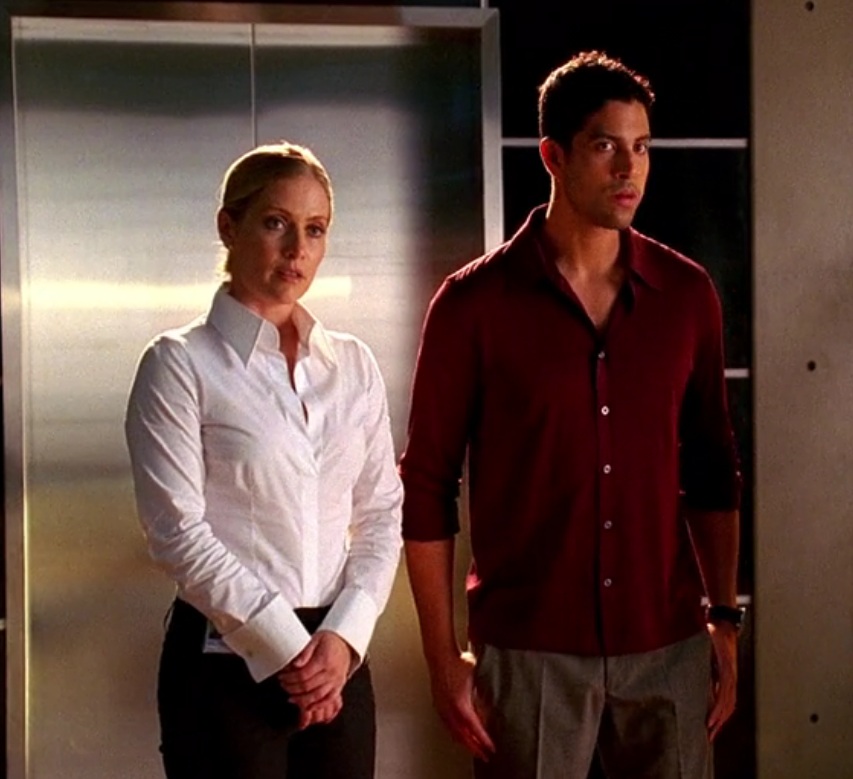
horatio new 1997

Five TV Tropes I Love

Since I already ran off at the mouth about five tropes I hate (with the promise of more), it’s only fair that I give the tropes I love the same treatment. As with the hated tropes, these are in no particular order because you can’t rank love.

Elaborate Schemes- If you’ve ever listened to Book ’em, Danno, you already know this. I adore elaborate schemes, the wilder the better. They don’t have to make sense. They don’t have to be practical. They just have to be bold. That’s why Wo Fat is one of my favorite villains. The man has a gift for theatrics. I’ve raved about his long-game frame job. But Hawaii Five-O is full of great plans and grand schemes. Elaborate plans to rob banks and steal diamonds and commit murders. There are times they border on ridiculous and unnecessary. There are times they absolutely cross that line. Sometimes they end up an absolute mess and don’t make much sense at all. None of that matters to me. A for effort. Get complicated. Get weird. I’m in.

Doppelgangers- That Wo Fat frame up included a doppelganger and that is also my joy. A doppelganger plot, regardless of what kind of show it’s on, is going to be ridiculous. Sitcoms frequently use the Prince and the Pauper set-up, sometimes literally. Davy took the place of a shy prince in order to win him the girl. Ginger’s doppelganger Eva Grub ended up on the island with the castaways and after a make-over, went back to civilization to take over Ginger’s career. Gilligan also came face to face with a spy with his face. And Mr. Howell had his own dealings with an imposter bearing his likeness. In retrospect, there were a lot of doppelgangers on Gilligan’s Island. Of course, it’s said that everyone has one. Naturally occurring doppelgangers are great; created doppelgangers are better. These happen a lot on dramas. People impossibly surgically altered to look like someone else for nefarious purposes. It’s absolutely unlikely and totally ridiculous, which makes it that much better.

Improbable Countdowns- You know the drill. There’s five minutes, two minutes, thirty seconds left before the big terrible thing happens but somehow our heroes are able to beat the clock despite the fact that they ran out of time three times over easy and we all know it. Rarely are shows able to do what needs to be done in the allotted time and that’s fine. We’re not expecting 100% accuracy here. But there are times when it’s so egregious it’s laughable and those are the one I love the most. There’s an episode of Baywatch Nights in which Mitch, Ryan, and guest character Claire have to get off a rig that’s going to explode in 90 seconds and they use half of that time sitting and dialoguing. There’s no way they got to the railing in the time they had, but thanks to the law of TV countdowns, they had time to spare. And I’m not mad about it.

It Was All a Dream- I admit this is a controversial love, but stick with me here. There’s an episode of The Golden Girls where Blanche’s husband George appears to have faked his death, meanwhile, Sonny Bono and Lyle Waggoner are pursuing Dorothy relentlessly, straight up fighting over her. It’s a wacky episode and funny as hell. And it’s not until the end that’s it’s revealed that it’s all a dream, a recurring one that Blanche has which is rooted in some unresolved feelings she has surrounding her husband’s sudden death. It’s quite bittersweet when she reveals that this dream was different because she finally got to hug her husband as she usually wakes up before then, suggesting that she’s come to terms with an aspect of her grief. So, there are times in which those dreams episodes can be well done. But they don’t have to be for me to enjoy them. Saying an entire season of Dallas was a dream just to get Patrick Duffy back on the show and therefore fucking up canon across that universe is amazing for the chaos alone and I’ll ride with it. Also, St. Elsewhere‘s series finale? Come on. Some dreams are legendary.

The Rashomon Effect- Quick refresher: this is the device of telling the same story from the viewpoint of different characters and because people tend to interpret and remember their realities differently for various reasons, it can get pretty entertaining and messy. One of my favorite instances of this is in a Mama’s Family episode actually called “Rashomama”. Thelma ends up in the hospital thanks to a cookpot to the head and Ellen, Naomi, and Eunice all give their versions of what happened, which naturally paints each teller as a saint without fault. We never do learn exactly what happened and who put Thelma in the hospital. Gilligan’s Island uses the Rashomon Effect to retell the events of an episode we’ve already seen, painting each teller as the hero when we all know that Gilligan was the one who saved them, which is a pretty unique spin. CSI: Miami did a fun version of this having Ryan, Calleigh, and Eric investigate the same murder, each coming to a different conclusion from their evidence. Naturally, Horatio straightens things out and the correct killer is caught in the end. So, give me all of the viewpoints. I won’t get bored.

I admit that my love of some of these tropes is rooted purely in my love of the ridiculous and there’s no doubt that all of these have the potential to go off the rails. But I never said they were necessarily good or that they could be (and probably are) overused. I said that I loved them.

And I do.

Rerun Junkie Confession–I Love a Good Frame

As someone with a fondness for police shows, I’m familiar with the tropes of the genre. And I admit that I love a frame job.

In reality, people getting framed for crimes is pretty unlikely. More often, the miscarriage of justice isn’t the result of some well-orchestrated, fiendish plot; it’s because law enforcement fixates on a theory and molds the evidence to fit it.

But on television…

Typically, people on TV are framed for murder, but theft is also a frequent frame. And some of these frames can be incredibly elaborate to the point of absolutely questionable. The stretch you’d need to consider it believable would kill your hamstrings. And frankly, I don’t care. I love it. Give me your outlandish, ridiculous frame-ups. I’m in.

To be clear, I’m talking about the deliberate setting up of someone to take a fall, not someone being wrongly accused of a crime someone else did and that person letting them take the wrap. I’m looking for detailed planning targeting a specific person for a specific crime for a specific reason.

Hawaii Five-O has many great frames, but I just covered a two part episode called “Ninety Second War” for Book ’em, Danno that has a magnificent one. This frame, orchestrated by Wo Fat, is designed to merely get Steve McGarrett out of the way for a little while so his government can proceed with the testing of a nuclear weapon delivery device, basically some kind of missile. Gotta consider it high praise when an entire government sees you alone as an obstacle to their whole weapons testing business.

Anyway, Wo Fat could have just kidnapped McGarrett, tucked him away for a few days, left Five-O scrambling to look for him, and while they were distracted, his government could get on with it. But Wo Fat is a beautifully theatrical man. Instead, he spends YEARS setting up a plan that involves a surgically created doppleganger, perfect handwriting imitations, regular bank deposits in a Swiss bank account totaling up to a couple million dollars that make it look like Steve is taking bribes, and then capping it all off by manufacturing a car accident that leaves Steve alive but injured in a car with a dead mobster. All to get him out of the way for a weapons test.

It’s just…perfect. It’s so elaborate and so meticulous and so long-game and it’s only to keep Steve out of their hair for a few days, maybe a week. If he’s indisposed with clearing his name longer, great. But the whole point is that it was done for this specific time. Just amazing.

And that wasn’t even framing him for murder!

Steve McGarrett did get framed for murder at least once that I remember right off the top of my head. He was set up for murdering his girlfriend and Five-O had to work to clear him despite all of the evidence pointing to Steve.

Now that I think about it, Horatio Caine was also framed for murder on CSI: Miami. He was also set up for murdering a woman he’d been dating. Clearly, their similarities are many.

It’s not only our heroes that are getting framed. The good guys are often going to great lengths to prove that innocent people are being framed. These plots are good, but never so good that they can’t be unraveled. And they rarely rival any that are concocted against the good guys.

But that’s okay.

I never get tired of a good frame.

Five Favorite Couples

I probably should have said “couples” because despite the Valentine’s Day proximity of this post, I’m not speaking strictly romantically. Couples come in all varieties, you know. BFFs, coworkers, even frenemies can make for a good couple.

These are just the first five faves that came to my mind and they are listed in no particular order. Please note: These are my personal faves, not the couples I think are objectively the best ever. Just in case you want to die on any hills in the comments. Make your own list.

Magnum and Higgins, Magnum PI–Obviously, I’m talking about the original 1980 series and not the 2018 reboot as the heteronormative inevitability of romantically pairing Magnum and Higgins is one of the main reasons as to why I stopped watching the latter. I’ve also discussed in depth the unconventional bromance of the the 1980 Magnum and Higgins that I find so fascinating, so I won’t rehash too much here. But it’s no secret that their elevated frenemy relationship brought something special to the series. More than just adversaries, but not hang out together friends, the way Magnum and Higgins cared for and about each other even while driving each other up ever available wall at Robin’s Nest brings a unique emotional aspect to the show that was allowed to develop over the course of the series. Maybe they wouldn’t win a traditional Best Couple contest, but they are definitely in a category of their own.

Morticia and Gomez Addams, The Addams Family–Could I have a favorite couple list without Morticia and Gomez? No. I could not. Because when it comes to romantic relationships, they are goals. Here are two people who love each other unabashedly, are passionate about and with each other, and foster a loving household on top of it all. As a couple, they’re unstoppable, above the petty squabbles and nagging of other “normal” couples. They’re a united front against the problems that face them and their family. And on the rare occasion that Morticia and Gomez do spat, their disagreement withers in the face of their love. You cannot tell me that bickering couples who barely tolerate each other are the ideal when Morticia and Gomez Addams exist.

Walter and Ryan, CSI: Miami–This show actually features several of my favorite couples (Delko and Speed, Ryan and Natalia, Calleigh and Delko in a purely platonic fashion, Horatio and Tripp), but Walter and Ryan were the first to pop into my head and for good reason. Walter has the ability to bring out the best in Ryan, which is great because Ryan has a tendency to be a prat. I love him, but sometimes I want to push him down in a mud puddle. He can be too serious, angsty, and stubborn. Walter lightens Ryan up considerably, usually by tormenting him (the floating hat is one of my faves). They’re a fun couple. But also a dedicated one. They have each other’s backs to such an extent that even a tornado couldn’t break them up. Okay, maybe physically, but the friendship emerged from the rubble stronger than ever.

Marty and Mr. Driscoll, Barney Miller–Given that these two gay characters existed in the ’70s/early 80s, it was never explicitly said if Marty and Mr. Driscoll were in a romantic relationship. It was kind of implied that they were, but Marty was also known to fall for other guys, so. Maybe they dated, but remained friends. Maybe they were friends with benefits. No matter the exact nature of their relationship, Marty and Mr. Driscoll go together like peanut butter and chocolate. A hilarious duo who can repel any of Wojo’s homophobia with a quick and witty barb, they added some rainbow charm to the 12th precinct when they stopped by. They did some heavy representation work back in the day and they did it in glorious fashion. Individually, they’re terrific (I’ve written about my love of Marty before), but as a couple, they’re dynamite.

Laverne and Shirley, Laverne and Shirley–It’s no secret that I love Lenny and Squiggy, but I wouldn’t have those two weirdos without Laverne and Shirley. Their friendship is amazing. They have two rather different personalities that both mesh and clash beautifully. These two are not above their squabbles, but they’re also each other’s biggest supporters. The hijinks can be wacky and the physical comedy hysterical, but what grounds the craziness is the emotional bond these two women share. They truly love and care about each other. Even at each other’s throats, there’s never a doubt that they’re going to kiss and make-up because the idea of one without the other doesn’t make sense. When it comes to best friends, this couple takes the cake. And probably throws it at Lenny and Squiggy.

These five favorite couples are a good start, but there are many more favorite couples to write about. And I will.

Pinky swear.