Those Weak and Wily Women of the Wild West

Silhouette of a cowboy on horseback leading another horse against a pink, orange, and blue sunset. Image by Yuri from Pixabay.I am by no means an expert on TV Westerns. (Actually, you could put “I am by no means an expert” on my headstone because I’m not an expert on anything; I’m just really good at running my mouth.) But I have watched all of The Big Valley and Bonanza, and just about every episode of Gunsmoke thanks to my father’s latest binge watching habits, and I’ve noticed something.

Women in the old west were pretty weak. The plot typically calls for them to be at the mercy of something, usually a man. The man is either a bad man who makes everyone miserable or a man she loves who is either a bad man who makes everyone miserable or a good man who makes terrible life choices.

I honestly think the latter makes my eye twitch more.

There’s this insinuation that all a woman wants is to have a man and that she will put up with anything to have one, even if that man is garbage. The number of times I’ve heard, “You have to do X because I am your husband,” or “because you love me” or “because you don’t have a choice.” I would be a widow. Men outnumber women in the Old West. I will find me a new one that does not try my nerves to such an extent.

Which brings me to my next observation.

Men did outnumber women back in the Old West because it was a rough life. It wasn’t for everyone. You had to be pretty tough to survive out there. So, it stands to reason that most of the women out there would be a little more involved in self-preservation. They probably wouldn’t be as tolerant of their man’s bullshit because finding another one would pose no challenge.

Also, women would have to be tougher to survive out there, period. Depending on a man wouldn’t be the best strategy because if your man is shit or if he dies -which was probably pretty likely, especially in a TV Western- a woman would be shit out of luck. And that has been the plot of more than one of these episodes. The women are always looking for a man to save them.

I find this most egregious when it comes to the saloon girls working at the Long Branch on Gunsmoke. We all know what their business really is -wink wink nudge nudge- and the fact is that in order to survive that lifestyle, you had to be a helluva lot tougher than the men. Looking for a fella to save you wasn’t going to work out in your favor and being pushed around by the clientele was bad for business. Miss Kitty was a bad ass broad, but I feel like she should have shot a lot more men.

Which brings me to the flip side. Sort of.

If the women weren’t weak, they were wily. They were plotting, cunning, and conniving, using their feminine wiles to get what they wanted. It frequently manifests as a woman pitting two men against each other, or using a man as a proxy to enact either vengeance or self-enrichment. These women are tough, in their way, and that’s a bad thing. Being tough and resilient is at odds with femininity, at least in the minds of cowboys and the men who wrote them.

Of course, there are exceptions. Miss Kitty and Victoria Barkley are notable in this respect. Both women are fiery, independent, and not apt to take shit from any man. Victoria Barkley was skilled with a whip and even though I thought Miss Kitty should have shot more men, that didn’t mean she didn’t have a gun behind the bar and that she didn’t use it. I also saw her whip a man with a parasol once. I wouldn’t cross either one of those women.

I suppose they didn’t want independent, strong women to have too much representation in the Old West.

The ladies might get ideas.
That Pesky Due Process

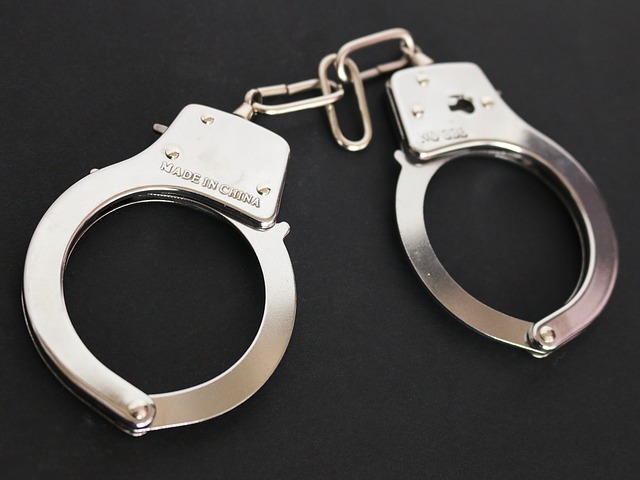
A pair of silver handcuffs on a black background. Image by jp from Pixabay.It’s a common trope on a cop show.

The good guys have caught the bad guy, but the bad guy gets off on a technicality. The good guys are then forced to watch their bad guy walk free to create more of their brand of mayhem, usually while giving an impassioned version of “I’m going to nail that guy if it’s the last thing I do,” a lyric that fits into almost any melody a fictional super cop wants to sing.

Naturally, since we’re on the side of our good guys, we’re incensed with them. The justice system is clearly flawed/broken if it would allow a bad guy to walk free, a bad guy that we know is a bad guy because our good guys said so. We’re confident that our cops will see that justice is done no matter what those fancy attorneys and incompetent judges do. And, of course, they do. Just as we knew they would.

It’s a clever trick of copaganda.

“Technicality”. It makes it sound like someone didn’t dot an I or cross a T. And while it is accurate -the defendant wasn’t found not guilty, they were released because of a technical error- it’s also deceptive. The shows tend to gloss over how these “technicalities” are part of due process.

Due process is that pesky part of the Constitution that guarantees a person is granted certain rights and protections when dealing with the legal system. These are guaranteed rights that apply to everyone, not just citizens, not just the innocent. Due process covers such things as habeas corpus, the right to remain silent, the right to counsel, the right to cross examine a witness, the right to a speedy trial, the right to access to the evidence, etc.

Cop shows love to make defense attorneys look morally questionable. After all, they’re defending the bad guys. They also love to make them look sneaky when they use these “technicality tricks”. While they gloss over the nature of the technicalities, they also gloss over the role of the defense attorney. Their job is to defend their client. Part of that defense is to make sure that their client’s rights aren’t being violated.

An episode of Hawaii Five-O deals with the consequences of due process in an interesting way.

In the sixth season episode “Mother’s Deadly Helper”, an accused man has his case dismissed because the prosecution can’t produce a needed witness to proceed with their case. The defense attorney asks for a dismissal based on the fact that the repeated continuations that the state’s attorney has asked for violates his client’s right to a speedy trial.

It feels like a miscarriage of justice because we learn later that this guy is a hitman. But it’s not because even hitmen are entitled to their rights.

His freedom is short-lived as a vigilante snipes him as soon as he leaves the courthouse. The disgruntled citizen in this episode is fed up with “soft-hearted judges” letting criminal walk. The “soft-hearted judges” in question are committing the unforgivable acts of upholding the rights of individuals.

In the context of cop shows, it feels egregious to allow these bad guys the same rights as the innocent folks because what we want to see is our good guys putting them behind bars for good.

I suppose it feels egregious in the context of the real world, too. Especially when it seems like those rights favor a select group of the population.

But we all have them.

Even fictional bad guys.

I Am Fascinated by the Heterosexual Marriages of Television Yore

For episode 72 of Book ’em, Danno, I watched the sixth season Hawaii Five-O episode “One Born Every Minute” in which a brilliant con man uses a beautiful blonde to rope in married, middle aged men to swindle money from them in an elaborate diamond buying scheme. The con man targets these men because their married nature precludes them from going to the cops once they’ve discovered they’ve been had because they don’t want their wives to find out that they were in the market to cheat.

Which is funny considering cheating was almost normalized on TV during that time. It’s understood that married, middle aged men are going to cheat on their wives as soon as a pretty young thing gives them the opportunity, and not just at the office or on business trips, but even while they’re on vacation with their wives waiting in their hotel room while they’re off cavorting, like two of the swindle victims in the episode.

The heterosexual marriage narrative depicted in television is that by middle age and a couple of decades of marriage, the wives are used up, miserable nags, and the husbands are misunderstood, hen-pecked, and most importantly, still desirable to gorgeous young women, so it’s only logical that they would step outside of the confines of their marriage to experience that freedom. Most of the time, there’s no indication that the men want anything but a little something-something on the side -after all, to leave their wife is to leave the comfort of their needs being consistently met. Girlfriends are for sexy times; wives are for laundry. Yet, there’s also enough concern for consequences (I’d call it shame, but baby, that ain’ it) that these men don’t want their wives to find out about any of these indiscretions.

What a delightful dichotomy that lands husband after husband in hot water, particularly on cop shows.

What an odd expectation of marital life to set. It was inevitable that husbands would cheat on their wives and wives would tolerate it. It was inevitable that husbands and wives would eventually hate each other. It’s a natural progression of marital bliss after the honeymoon period. In a society that puts emphasis on marriage -especially at that time when a woman’s life was forcibly tied to a man (unable to get credit, open a bank account, etc. without a man’s signature)- can you imagine watching your favorite show and being told that’s the life you should not only expect but be grateful for? Hell, week after week on The Honeymooners, Ralph Cramden threatened to send his wife Alice to the moon while she seemed to barely tolerate his existence for the sake of his paycheck, and that was considered to be a normal marriage. Wild.

Of course, not every television marriage was depicted this way. Darrin and Samantha Stephens had a pretty loving marriage on Bewitched; Carol and Mike Brady are both marriage and parenting goals; even some of the married couples that passed through Hawaii Five-O, criminal and law abiding, seemed to have decent relationships. But when The Addams Family exists in direct challenge to everything suburban normal and that includes a loving marriage with spouses who are openly affectionate and infatuated with each other even after two kids and many years, that speaks some volumes. Practically shouts, really.

Watching these shows now, at this distance, with the depiction of the casual philandering and the general ball-and-chain attitude, it’s just fascinating that this was put forth as an ideal. A norm. This was the future every girl should dream of and every man should subject himself to.

Enjoy your marital bliss.

The Truth Is Always Best…Unless You’re a Cop

Despite my love of cop shows, I’ve never really been into the Law & Order franchise. Never had the urge or inclination to watch any of the shows. Then Charge changed their line-up, I was too lazy to change the channel, and now I’m hooked on Law & Order: Criminal Intent. I blame Vincent D’Onofrio and Kathryn Erbe.

The character of Detective Robert Goren says at one point during the final season that everybody lies all the time. Granted, this is said during a therapy session because my guy has some issues and he learned this lesson from his father telling him to lie to his mother about his father’s affairs, but it sort of makes sense that he would believe that anyway since he kind of lives this truth in his work. During the course of their investigations, he and Detective Alex Eames lie a whole lot to suspects. They lie about evidence, they lie about conversations, they lie about circumstances. I’m not talking about undercover work -though they do that a bit in the series. I’m talking about straight up lying to the people they’re questioning.

This behavior is totally legal. Cops are allowed to lie to the people they’re questioning. Just another reason why it’s important for folks to exercise their rights and ask for a lawyer.

But these are the good guys. Their lies are justified. It’s all in the pursuit of justice. Evidence is fine. A confession is better. In the world of fictional cops, confessions aren’t just the goal; they’re the norm. There’s a narrative to be served here.

Goren and Eames do have their own moral code when it comes to lying to suspects. For example, they won’t pressure a mentally fragile suspect, but instead lie and manipulate the suspect’s psychiatrist, who is responsible for the suspect’s destroyed mental state and ultimately, his crime.

They also right a wrong of a coerced confession from a group of minors accused of assaulting a woman. The cops in the interrogation video don’t do anything that Goren and Eames haven’t done before -lying to and manipulating their suspects- but the difference is these boys are innocent and the cops know it.

Fun fact: it only became illegal in Illinois for cops to lie to minors they’re interrogating in 2022. It’s still legal in other states. This is also why it’s important for minors to know their rights and for their guardians to know them, too.

I know it seems like I’m picking on Law & Order: Criminal Intent, but this is prevalent in just about every cop show. Steve McGarrett wasn’t above lying to suspects on Hawaii Five-O. In the case of some criminals, I think he took a certain amount of pleasure in lying to them just to see the look on their faces when they were caught. He had mean streak when it came to justice.

I’m sure that even the saintly Barney Miller lied to a suspect or two, but I can’t remember any instances off hand and I’m too lazy to do any research on it. It’s not like the 12th precinct arrested the kind of criminals the required an intensive interrogation. Most of them were caught in the act anyway.

The point of copaganda is to normalize some of the worst behaviors of the police and though it is legal for cops to lie to suspects during questioning, it doesn’t necessarily make it a good thing. It’s a manipulation tactic that’s seen more than a few innocent people put behind bars.

Some things are better left to the likes of Goren and Eames.

Pimpin’ Ain’t Easy

Let me just disclaimer this by saying that I haven’t thoroughly researched this post. I’ve just been thinking about it.

And what got me thinking about the depiction of sex work in cop shows, particularly pimps in the ’70s, was an episode of Hawaii Five-O that I just covered for an episode of Book ’em, Danno called “Tricks Are Not Treats”. The basic plot of the episode is a group of pimps (called “macks” in the episode for some reason because they’ve had no problem calling a pimp a “pimp” in previous episodes) led by Harley Dartson, played by Glynn Turman, are at odds with a loan shark named Lolo, played by Gregory Sierra, who is taxing their business.

The episode was shot and aired in 1973. Without watching it, I bet you know what the pimps look like, act like, and sound like. There is a certain image that’s been embedded into popular culture when it comes to pimps, particularly of the 1970s variety. These pimps fit that image.

Most of the pimps in this co-op are Black, though there is at least one Native Hawaiian, one Asian, and one token white guy with a ‘fro. All of them are decked out in the classic pimp styles: slick suits, bright colors, fab shoes, and fetching hats. Oh, the hats! It may be stereotypical as hell, but they had style. These Honolulu pimps would have been able to blend into any city on the mainland. They had the look.

The characterization of the pimps of this time period in particular lends them to be very convenient bad guys on cop shows. Just get them in the right outfit and the audience doesn’t need much more than that. It was understood that pimps were bad because prostitution was against the law. Pimps exploited the women who worked for them and weren’t above using violence to get the women to turn their tricks. Frequently, it was these violent tendencies that had them crossing paths with our police heroes. And it was probably not an accident that it seems like a majority of pimps depicted on TV at this time were Black. It seemed like if it was a white pimp as a main villain -and this is just my impression as I have no scientific data or research to back this up because I’m lazy- that he was depicted more as a businessman. He had “escorts”. He had an office. He wore respectable suits. He might not be above committing violence, but at least he was “classier” when he did it.

In “Tricks Are Not Treats”, Harley Dartson is positioned as sort of a good guy in comparison to Lolo, an unlikely and uncommon position for a pimp at the time. The pimps in the episode are humanized beyond the stereotypes that they’re usually presented as. Their line of work isn’t excused and it’s mentioned that they are still willing to use violence against the women in their stables to keep them in line, but that isn’t the focus. It’s them against Lolo and the writers want you on their side. So, they make them likeable, relatable. J. Paul (Ron Glass), prior to his demise, comes across as a funny, friendly guy. Wunton (Moe Keale) is deeply affected by his friend’s death, to the point of losing his cool to defend J. Paul’s memory.

Harley, our main mack, is given a normal home life with a wife, who used to be on the streets as one of his girls, and two children. Sure, Semantha (Lynn Ellen Hollinger) is still very much involved in the administration aspect of the business, keeping track of the women in Harley’s stable and the jobs they’re doing (or should be doing, as she does threaten one woman over the phone to get to a hardware convention before Harley takes a coat hanger to her), but it’s treated as a normal Mom and Pop kind of business. Pimps are having a meeting out on the lanai and Semantha is tracking tricks while the kids eat lunch at the kitchen counter and Harley fusses at the older boy about doing his homework. It’s a rare depiction to get that much into a pimp’s personal life and have it be so suburban.

(It’s also worth mentioning that Harley and Semantha were an interracial couple with biracial children, something else not often seen on TV in 1973.)

There’s a pimp with a heart of gold in an episode of Barney Miller as well. In “The Hero”, Carl Gibson’s mack character Mayflower is arrested for pushing a trick out of a window and ends up helping the guys put a baby Todd Bridges back on the straight and narrow. Sure, he’s doing it in part to ease his own punishment, but a pimp on another cop show wouldn’t have done it at all.

The bad buy blueprints for cop shows are interesting in how they both contribute to stereotypes and then deviate from the stereotypes they helped create. The way pimps are used in these shows is a great example of that.

Imagine what I might discover if I actually applied myself and researched it.

Let’s Make Bad Decisions for Fun and Plot Lines

In an episode of the short-lived ’70s cop show Chopper One called “The Informer”, Dick Van Patten is in police protective custody so he can testify against a mobster. Our mains, Foley and Burdick, use the police helicopter to take him to a safe house…where he later calls his wife and tells her exactly where he is so she can come see him.

It’s a frustratingly stupid decision, one you know that the bad guys will capitalize on by following the wife out to the beach house of hiding. I am on record stating that I wanted something bad to happen to Dick Van Patten for this dipshittery. And yet! We wouldn’t have an episode if he hadn’t made this poor choice. Or we wouldn’t have this episode. Things would have played out much differently for everyone involved otherwise.

And like I said in my recorded statements, I can’t even really be mad about it because people willingly make such terrible decisions in real life.

Making bad life choices is sort of a key component to cop shows. Someone has to make the dubious decision to commit a crime, after all. That’s what gets the ball rolling. If people left the house every morning with the goal of making good choices, our TV cops would be out of work.

It’s not just criminals making poor life choices. There are the bad decisions by the (mostly) law abiding citizens that skitter events in a different direction. Like Dick Van Patten making that ill-advised phone call to his wife. Or the guy in the CSI: Miami episode “Long Gone”. The dad and his family are kidnapped because dear ol’ dad finds drugs buried on his property and decides to go into business for himself.

And then there are the guys (so often they’re men) that compound one bad decision with another. Like the rancher in the Hawaii Five-O episode “Paniolo” who lets his anger get the best of him when dealing with a real estate developer. The physical altercation leads to the developer’s accidental death, and instead of contacting the police, he decides to stage the developer’s death as a car accident. Does it work? No, of course it doesn’t work. It just makes things a whole lot worse.

Or the guy in the Law & Order: Criminal Intent episode “Homo Homini Lupus”, who gets in trouble by failing to repay a loan shark in a timely fashion. As a result, his family is kidnapped. Does he accept help from the authorities? Of course not. Why would he do such a thing? That would make sense, at least in the world of TV law enforcement. So, shit gets to go extra pear shaped for his sins.

Sometimes it’s hard to believe people could be such dipsticks. And then you read the latest Florida Man story. We can say all we want that the bad decisions people make on TV are unbelievable, but we know deep down that’s not necessarily true.

I realize I’m focusing on cop shows here, but that’s only because it’s my area of expertise, so to speak. Bad decisions motivate plots in other genres, too. The plot of more than one episode of Stargate: Atlantis was motivated by Dr. Rodney McKay’s ego-driven bad decisions.

Family-oriented sitcoms thrive on the bad choices of their precocious children. With the TGIF line-up, I know I put a slew of bad decisions in front of my eyeballs back in the day. The only one that sticks out in my memory is the Full House episode “I’m Not D.J.”, in which Stephanie allows Kimmy -of all people- to pierce her ears against her father’s wishes so she can impress her friends. It’s a relatable dubious decision because kids don’t have the life experience to know better than to do stupid shit. They’ve got to do the stupid shit to get the experience. Everyone knows that they’re not going to take anyone else’s word for it.

The adults on those sitcoms, though, don’t have that excuse. They’re doing it for the laughs of the live studio audience.

And because adults make dubious life choices, too.

At least on TV, they do it for the plot.

Where Do Your Sympathies Lie?

Minor trigger warning for mentions of sexual assault.

Something I frequently encounter while watching my cop shows are the grey moral areas that our heroes wander into. Specifically -at least for this post- I’m thinking of the victims and culprits and the audience’s perception of them.

For example, in the Hawaii Five-O episode “Little Girl Blue”, the two men who kidnap the little girl of the title aren’t your typical hardened criminals. Luther -played by Ron Feinberg- is a 6ft 7in beast of a man who has the mental equivalency of a child thanks to a brain injury incurred during his service in Vietnam. Meanwhile, Frank -played by Jackie Coogan- is a former orderly with a bad heart and considered the brains of the operation only because he’s at least functioning at an adult level. It’s not quite a Lenny and George scenario from Of Mice and Men, but it has that flavor.

We know from the initial kidnapping that these aren’t your ordinary criminals. The two men take the time to wrap the little girl up in a blanket and put her slippers on her. In fact, if their getaway hadn’t been interrupted, little Debbie would have been treated to a picnic while waiting for the ransom to be paid and everything to work out. None of the violence we saw would have happened if that cop hadn’t pulled Luther and Frank over. And really, the only reason Luther panicked in the first place was because the cop asked him for his license and he didn’t have one. It’s just an unfortunate series of events that land these two guys in hotter water than they’d intended to boil.

You just kinda feel bad for these guys. Obviously, Luther’s diminished capacity and Frank’s bad heart and bad choices don’t absolve them of their behavior, but you’re not exactly rooting for Five-O to come down hard on them.

Or maybe the audience was back when this episode aired in 1973. Maybe the deaths of two cops was enough to erase any shred of sympathy the viewer might feel for Luther and Frank. Or maybe when the kidnapping went sideways and Debbie was crying for her mom, maybe that was enough to alienate the viewers and have them rooting for Luther and Frank to get what was coming to them.

Or maybe they felt just as torn about it then as we do now. Or at least I do.

Then there’s the flip side. When the victim isn’t that great and you’re kind of not sorry they’re dead.

In the CSI: Miami episode “Forced Entry” a burglar/rapist gets what he gives in the exact fashion that he gave it. Only, he didn’t kill his victims. Instead, one of them kills herself and it looks very much like the grieving husband might have exacted revenge. Who else would know how the victims were bound, gagged, and assaulted so that they could recreate it with such detail?

The husband in question points out how cruel it is that the police are more concerned with finding the killer of his wife’s rapist than they are with his wife’s assault, which led to her suicide. And it is a cruel. Even Speed says that killing this piece of shit should earn the husband a medal if he did it. I’m on Speed’s side here. My guy played around and lost big. Oh well.

But that’s not how these sorts of episodes work. We might be on the side of the killer, but as it’s pointed out, it’s not the killer’s job to dispense justice. I don’t know about that. I think they didn’t a pretty good job here.

Okay, yes, there’s the whole concept that nobody deserves to die, and maybe that’s true, but that doesn’t mean we have to feel bad when some vile garbage gets their comeuppance. We’re not in the wrong to save our sympathy for the killer when justice is served because it feels like it’s being served to the wrong person.

These sort of muddy moral waters are interesting because of how they age. Some are timeless. Some switches the sympathies, swinging them around from the original, intended person to someone else. Just look at hippies. They were the villains in many cop shows back in the day, particularly Dragnet. Nowadays, though, you’d probably find more people on their side than on Joe Friday’s. Especially when it comes to marijuana.

I love exploring these moral grey episodes. They make me angry and they make me uncomfortable and they make me think and it’s fascinating to see how that shade of grey can turn black or white over time.

In the end, I find it quite colorful.

In the Line of Duty

We all know how enamored I am with cops shows, particularly cop shows from the ’70s, but there’s a certain genre of copaganda episode, which seemed to be done often in the ’70s, that just hits me the wrong way every time.

An officer killed in the line of duty.

Here’s how this particular variety of copaganda episode typically plays out. We meet a cop, usually a uniformed officer, that we’ve never seen before and will likely never been mentioned again after this episode. We get to know this cop for about five minutes. He’s usually a very likeable guy and he’s usually good friends with one of our faves. Then our new cop friend gets killed in the line of duty, usually by someone who refers to cops as “pigs” and has an all-out hate on for the police. If not, then someone in the episode does and they are very, very vocal about it. It’s all very anvil about showing the audience how thankless the job is because people hate them even though they put their lives on the line every day. It’s an efficient delivery system for some unquestioned stats on the number of cops killed in the line of duty every year.

Now, the whole point of copaganda is to help normalize and valorize the shit cops do that shouldn’t be normalized or valorized, like roughing up a suspect for information or getting pissy when a suspect knows their rights and won’t speak without a lawyer. But this particular genre of copaganda is incredibly and unnecessarily emotionally manipulative.

The point is to highlight how dangerous and thankless police work can be. I’m not arguing that being a police officer can’t be dangerous. My police officer father ended up with a broken knee incurred while handling a domestic violence call (and the guy later apologized for it; such is life in a small town). But when it comes to dangerous jobs in America, law enforcement doesn’t crack the top ten list. According to some lists, they don’t even make the top 25. In fact, police officers kill more people in the line of duty then they themselves are killed. They may end up in some dangerous situations, but the odds are in their favor.

Something that cop shows in general, particularly with these kinds of episodes, don’t acknowledge.

And if you wanna talk thankless, look at any customer service job.

My biggest issue with these episodes, outside of the inaccuracies I’ve already mentioned, is how it’s implied that a cop’s life has more value than anyone else’s simply because of the job they do. And that is bullshit. Not just because of the inaccuracies I’ve already point out, but also because nobody’s life is inherently more or less valuable than anybody else’s.

To drive home the point that these cops’ lives are so much more valuable than the average citizen, they have the cop hater right there to highlight just how derided and misunderstood the police are. Nothing gets the audience more on the side of law enforcement than some asshole screaming “pig” at our heroes. Especially after they’ve lost one of their dear uniformed friends whose name we don’t bother to learn.

It all ends up being overwrought and grating and, like I said, unnecessary. In the context of the show, we already ride with the idea that a cop’s job is dangerous and their work is thankless because of how many dangerous situations we see our favorites in (some of which they don’t survive) and how often they’re disrespected in the course of their investigations. We already know.

This very special episode isn’t required.

The Laws of (TV Gunshot) Physics

Television takes liberties with reality for the purpose of storytelling. It requires a certain amount of suspension of disbelief. As a result, it ends up creating its own set of rules. My favorite set of these TV laws relates to being shot.

The real-life physics of gunshot wounds is too wild to properly translate to television. First of all, dying instantly isn’t something people do under most circumstances, let alone gunshots. We simply don’t have time for the necessary lingering unless there’s a confession or plot point to convey. Second of all, millimeters and luck play into the survival rate in such a way that people would likely struggle to find it believable if they saw it on their favorite procedural.

However, what does translate to screen is somehow easier for viewers to swallow. In addition to the prevalence of instant deaths, there’s also the understood notion that getting shot blows you off of your feet depending on the weapon used. I think it’s generally known that this doesn’t happen (more fascinating is the range of physical reactions gunshots survivors describe), but it’s something we as an audience have come to expect, especially when it’s the bad guy getting blown away. We prefer that dramatic liberty.

When it comes to the survivability of a gunshot, it’s guaranteed that our good guys will survive any wound inflicted unless they’re leaving the show. Bad guys, unless they’re a recurring threat, are probably dying instantly no matter where they’re hit. Westerns are my favorite example of this. Bad guys do not survive gut shots; good guys do. In reality, surviving a gunshot wound to the abdomen is a toss-up. There’s a lot of organs, arteries, and blood vessels packed in there. If you don’t bleed to death because the bullet nicked an artery or hit an organ, you just might die of sepsis, peritonitis, or some other kind of infection due to a perforated bowel. And then of course, the bullet might miss everything vital and you’ll be just fine.

Speaking of our good guys surviving their gunshot wounds, they rarely suffer any negative aftereffects unless the plot calls for it. So often they’re shot in one episode and then right back to work the next episode with nary a mention. When it comes to older reruns, this is more a matter of treating each episode as its own thing rather than adhering to any serious continuity. Look no further than our Five-O heroes for an example of this. In one episode, Steve McGarrett is shot three times and left for dead. In the next, he’s back to work and well-enough to be stabbed.

Or perhaps we can consider the interesting gunshot wound continuity of Eric Delko on CSI: Miami. He was shot twice at the end of the first part of a two-parter in the fifth season. During a firefight in a parking lot, he was shot once in the right thigh. Horatio Caine dragged him behind a car where Delko was then shot in the back of the head by a different, unseen shooter. During the second part, Delko fought for his life, rallied, and lived. However, they couldn’t get all of the bullet fragment out of his head and Delko did suffer aftereffects from this head wound. He lost memories from around the time of the shooting, had some confusion issues regarding aspects of his job, and had transitory hallucinations. In the eighth season, the fragment jarred lose during a shooting/car chase/car crash and he ended up on the operating table yet again to have it finally removed. He recovered from that without any issues. So, that one incident had long-lasting implications.

However, the gunshot wound in his leg was literally only addressed once…when he was initially shot. It was never mentioned again: not when Delko was in surgery, not when he returned to work a few weeks after getting shot, nada. It was as though it never happened. Setting aside the fact that it was dubious at best he’d be returning to work so soon after being shot in the head, Delko definitely would have been limping if he had. He’d probably know every time it was going to rain for the rest of his life, too.

Many of our law enforcement leads could find themselves in a similar situation, especially if they’ve been shot in the shoulder, which is a favorite target of the writers and bad guys it seems. Shoulder wounds are notoriously nasty as there’s a lot that can go wrong in that region and not much room for it not to. There’s the subclavian artery, which could easily have someone bleeding out in minutes, not to mention all of the muscles, tendons, and bones in that area that work together to move the arm. Starsky got shot in the shoulder on the first season of Starsky and Hutch, nearly died, was back to work in the next episode without a bandage, and never had a problem using his arm to enforce the law for the rest of the series. Heroes don’t get arthritis from traumatic injuries.

Rumor has it that the best place to get shot (aside from nowhere) is in the backside. The abundance of fatty tissue is ready-made for high-impact projectiles (good luck if you have a flat ass, I suppose), but rarely do shows, cop shows in particular, have one of their mains take one for the team in this fashion. I guess there’s something less dramatic about spending the week on their stomach than taking one in the gut or the shoulder and still managing to chase down and arrest/kill the bad guy. Or maybe spending most of the episode in a coma while their besties get justice for them for maximum viewer angst.

No matter where they get shot, we all know they’ll be back and better than ever in the next episode anyway.

It’s Okay! They’re the Good Guys!

It’s a common scene in a cop show.

The cops arrest someone and maybe it’s during the arrest, maybe during the interrogation, one of our guys loses his cool and gets a little rough with the suspect. And, you know what? We’re fine with that! Punk had it coming.

It’s yet another way that copaganda inures us to questionable police conduct.

We are firmly on our good guys’ side. We understand their frustration when a suspect won’t give up information or if they run and have to be chased down. These are bad guys after all. We’d lose our cool, too. Especially when some punk won’t talk and there’s a bomb about to go off or some kidnapped person’s minutes are ticking away. If our guys get a little aggressive in the pursuit of justice, it’s all good. After all…they’re the good guys. Sometimes a choke hold is necessary.

The shows are great at normalizing this. It makes sense that our cops would get a little rough while arresting a suspect, especially if they ran or were resisting. It makes sense that our cops might need to utilize a little physical persuasion during an interrogation. Lives are on the line. And besides, these are the BAD guys. Who cares if they get a little roughed up?

Except how often do we watch those arrests and those interrogations and the suspect in question turns out to NOT be the bad guy of the episode? Pretty often considering the first person arrested is seldom the culprit in an hour long police procedural. You can argue that it’s all in the pursuit of justice, but that argument doesn’t hold up against a person’s rights.

Ah, yes, those pesky rights that apply to everyone, not just the good guys. How our cops often lament how they’re forced to observe a suspect’s rights when they’d really rather smack them around.

And how often they ignore those rights and go right ahead.

We all know how much I love Horatio Caine, but the man crosses lines like he’s running a touchdown. Given that his line-crossing increases as the seasons progress, I could argue that his increasing disregard to the rights of suspects is a response to traumas he suffers over the years, but that’s a post for another day. The point is that Horatio has no problem threatening physical violence or getting outright physical with a suspect. In one episode, it’s insinuated that he beats the shit out of a pedophile for “resisting arrest”. Another insinuates he does the same to a guy who abused his girlfriend, but at that point, he was no longer even a suspect in her death. And in yet another episode, Horatio and Boa Vista get a guy in the backseat of one of the Hummers and it’s implied that they inflict some pain in order to extract information.

These three incidents are presented without any question to Horatio’s actions. Because we sympathize with him and in fact, identify with him. We’d beat the shit out of a grown man preying on teenage girls. We’d beat the shit out of a guy who was fond of DV. We’d do a little painful persuasion to get crucial information from someone already in custody.

However, we are not law enforcement. And there are very good reasons why law enforcement is not allowed to do such things.

But this is the standard for these shows. There’s no real attention brought to this sort of police violence other than mild warnings as a means of twisting the tension and providing a barrier to our good guys saving the day.

Unless they happen to be falsely accused of police brutality.

In a third season episode of CSI: Miami, Horatio is accused of police brutality and Calleigh has to clear him, which she does, of course, because in this instance Horatio hasn’t done the violence that he’s accused of.

It seems like every cop gets falsely accused at least once. Ponch and Jon. Starsky and Hutch. Reed and Malloy. It’s a rite of passage for a TV cop, like a police involved shooting. The focus of these episodes is always the same: the injustice and unfairness of our heroes being accused of brutality and how easy it is for people to make those claims. These people are only saying these things because they have an agenda. They hate the police. They’re petty. They’re either seeking retribution for getting caught committing their own illegal transgressions or trying to detract from them. Because only bad cops engage in brutality and our heroes are never bad cops.

Inevitably, like Horatio Caine, they’re cleared of any wrongdoing.

And then right back at manhandling the next week.

One cop show that didn’t really normalize police violence was Barney Miller. First of all, we didn’t see any of the arrests. We were told that the suspect had to be chased or that the suspect resisted, but it was understood that no violence ensued during these apprehensions. At least there was no apparent evidence or mention. Second of all, a preponderance of the criminals the 12th precinct dealt with where, well, harmless. There were some armed robbers and assaulters and the like, but this is a comedy. Most of the perps that the detectives arrested were of the nature of blind shoplifters and women throwing toilet seats out of the window because their husbands locked them in the bathroom and sugar addicts who fall off the wagon in hilarious fashion.

When the subject of police brutality came up in conversation, Wojo was usually the detective mentioned, particularly in the early seasons. He had a tendency to be aggressive in his arrests and it got him into trouble more than once. Inspector Luger was a great champion of police violence as that’s how things were done back in his heyday. He was painted as out of touch and his methods antiquated. The policing techniques of the 12th didn’t require rubber hoses or anyone “falling down” the stairs. Policing had evolved beyond that.

Which wasn’t an accurate reflection of reality, but it was a decent attempt at providing a counter thought to plant into people’s heads.

Police violence isn’t normal and we shouldn’t accept it as such.

Not even from our law enforcement faves.