The Good About “Bad” Shows

There are people who will trip over themselves to tell you something is bad. And by bad, I mean bad as in not good. These people who only consume critically acclaimed content will gleefully inform you that whatever show you love is really bad, actually.

These people are plentiful and to be perfectly frank, they’re buzzkills. I can only assume that they’re acting out of a desperate need to feel superior to others in order to fill some sort of void in their own self-esteem. Or they’re just joyless jerks. I don’t know. I’m not here to judge. But I can say they will go above and beyond to make their point and make you feel shame about enjoying a “bad” show.

Unfortunately, as someone who hate watches Friday the 13th Part VIII: Jason Takes Manhattan every time it comes on TV, their arguments are wasted on me. I am immune to such discourse because I am gleefully unqualified when it comes to declaring things “good” and “bad”. You can’t reason with someone like me. You can’t make me feel bad about my TV choices.

Because I always choose joy.

Okay, I know it doesn’t look like it with the hate watching thing, but there’s still a joy in that. And I have hate watched a show. The only reason I ever watched Arrow was because David Nykl had a recurring role on it and he was really the only thing about it that I liked. Oliver Queen was the worst and his friends were all enablers and I will die on that hill. But there was still something joyful in talking shit at my TV in between Anatoly sightings. I had fun, at least.

I’m also having a blast doing this CSI: Miami re-watch. This show is bonkers and I love it. But even back in the day it wasn’t exactly considered to be quality television.

Which is a shame because it is pure joy.

There is a place for these shows on our TVs and in our lives. It’s okay to enjoy them. I don’t necessarily think that “bad” shows contribute to brain rot if you watch them intelligently. You’re talking to someone whose favorite thing is copaganda. ’70s cop shows are my jam. I enjoy them for what they are, but I don’t buy their message. I love Steve McGarrett, but I know he’s not an accurate representation of reality.

Are their a lot of “bad” shows? Sure. Are there a lot of “bad” shows that masquerade as “good” shows? Absolutely. Are there a lot of shows that I wouldn’t watch? God, yes. But will I fault anyone for enjoying their “bad” shows? No. I want them to have as many spots of happiness in this unkind world as possible.

Do I watch things of quality? Yes, it’s been known to happen, usually by accident. By my own admission, I watch a lot of shows that are less than quality caliber. On purpose. And I’m fine with that.

They make me happy.

And that’s a good thing.

Rerun Junkie Guest Stars–Burt Mustin

For nearly 30 years, if a TV show was in need of a quirky and/or spunky senior citizen, they could call on Burt Mustin.

According to IMDB, he racked up 199 credits between 1951 and 1979, a feat that wouldn’t be too remarkable if he hadn’t made his first onscreen appearance at age 67. As fate would have it, Mr. Mustin’s retirement as a salesman gave birth to a second career that has blessed us all.

Mr. Mustin had recurring roles on several series including portraying Arthur Lanson on Phyllis, Jud on The Andy Griffith Show, Grandpa Jenson on Petticoat Junction, and Gus the Fireman on Leave It to Beaver. He also frequently made repeat appearances on shows as different characters, including Our Miss Brooks, Adam-12, My Three Sons, The Many Loves of Dobie Gillis, The Texan, Dragnet 67, and The Monkees.

It’s the last two shows that contain my favorite Burt Mustin performances.

In the Dragnet 67 episode “Homicide: DR-22”, he plays Calvin Lampe, who is at first thought to be a nosy neighbor of and then a possible suspect in the murder of a career girl. It’s later revealed that he’s a retired chief of detectives and friend of Friday and Gannon’s boss. He ends up helping the two whippersnappers solve the homicide. Calvin Lampe has an unmatched attention to detail and his insinuation in the case is at first a source of a bit of annoyance before Friday and Gannon realize how valuable it is. One of my favorite scenes is Lampe talking to Friday and Gannon while a uniformed officer in the background (played by Jack Webb favorite Marco Lopez) gives them a yikes look.

Mr. Mustin appeared in two episodes of The Monkees that I love. He was the butler in the classic “The Christmas Episode” and he portrayed a Tarzan knock-off by the name of Kimba in “Monkees Marooned”. The bit in which Peter translates for him is a hoot.

He stuck to The Andy Griffith universe, appearing in both Gomer Pyle: USMC and Mayberry RFD and even popped up on The New Andy Griffith Show; spent some extra time in the Henningverse on a couple of episodes of The Beverly Hillbillies; completed the Jack Webb odyssey with a couple of episodes of Emergency!; and appeared on both The Mary Tyler Moore Show and Rhoda.

He turned up on Westerns like Maverick, Gunsmoke, Bonanza, Wagon Train, The Virginian, and Alias Smith and Jones; hung out with Lucille Ball on both The Lucy Show and Here’s Lucy; and cut up on The Dick Van Dyke Show, Bewitched, Laugh-In, The Brady Bunch, Sanford and Son, All in the Family, and Love, American Style. He got mysterious on Mr. Lucky, Surfside 6, and 77 Sunset Strip; saw some action on The Girl from UNCLE, Batman, The Fugitive, and Get Smart; got spooky on Thriller, The Twilight Zone, The Alfred Hitchcock Hour, and The Outer Limits; and he even did a couple of medical stints on Ben Casey and Marcus Welby MD.

There wasn’t a television genre that Burt Mustin couldn’t shine in. He’s a delight in everything he appears in, elevating a generic senior citizen into something more memorable and cementing his face into the good graces and fond memories of generations.

Not bad for an old guy, huh?

Rerun Junkie Show–David Cassidy: Man Undercover

david cassidy man undercover

I first remember coming across David Cassidy: Man Undercover when I was doing guest star research for Book ’em, Danno. As soon as I saw it, I knew I had to watch it. David Cassidy playing an undercover cop in the ’70s bridge between The Mod Squad and 21 Jump Street? Yes, please! It became one of my Holy Grail shows. It hasn’t been released on DVD, so streaming was my only hope.

I lucked out when it showed up on Crackle. The only hitch in the giddy-up? Episode 5 is missing for some reason (EDIT: Thanks to Gail for providing a link to Episode 5 in the comments). Missing an episode or two in a 200 episode show is no big deal (there are two eps of Hawaii Five-O I haven’t seen because they don’t get play in syndication, but one of them I’ll be able to watch thanks to streaming; bootleg is the only way I’ll ever see the lost episode); in a 10 episode short-lived series, it can be more significant. However, I think my binge watch of the nine available episodes is sufficient, at least for this little write-up.

As the title so expertly explains, David Cassidy plays undercover officer Dan Shay. He and his fellow undercover officers including Paul Sanchez (Michael A. Salcido) and T.J. Epps (Ray Vitte) answer to tough, loud, and supportive Sargent Abrams (Simon Oakland), while his wife Joanne (Wendy Rastattar) takes care of their daughter Cindy (Elizabeth Reddin), worries about his safety, and wonders if he’ll ever get to attend family events like a normal husband.

Every episode Dan Shay goes undercover as someone else named Dan (and I’m pretty sure every last name started with an S, but it might have just seemed that way) to infiltrate some sort of crime group and bring them down from the inside. Now, we’re talking about heartthrob David Cassidy here. Even four years after The Partridge Family, he was still something of a baby-faced hunk, which played in his favor for some undercover assignments and against him in others.

He was believable as a street racer, a college student in a baby-making scheme (yes, you read that right), and as a junkie. He was really good as the junkie, something you wouldn’t expect from such a normally clean-cut guy.

It was a stretch of believability when he went undercover as a pimp (yes), a motorcycle gang member, and an arms dealer. It’s no fault of his own. David Cassidy pulled off the acting, but when you put him next to another arms dealer played by James Whitmore Jr., the difference is glaring. He just didn’t have the right look.

Other guest stars include James Whitmore Jr.’s Baa Baa Black Sheep Squadron co-star WK Stratton (who was also almost too sweet-faced to play the bad guy he was playing); Ty Hardin, Norman Alden, Frank Campanella, Gerald Berns, Donald Petrie; soon to be TV names Heather Thomas, Gary Graham, and Randi Oakes; J. Jay Saunders, Jenny O’Hara, Alan Vint; voice artist king Michael Bell; Lana Wood, Ed Harris, Ed Nelson, Barry Nelson; horror faces Christopher Stone and Cliff Emmich; Jacques Aubuchon, Vince Howard, Joe Santos, Ken Swofford; ladies Jenny Sherman, Robin Dearden, Barbara Tarbuck, and Christina Hart; Paul Koslo, Vincent Bagetta, Tom Simcox, Craig Stevens, Carl Weintraub, Justin Lord, and Frank Converse.
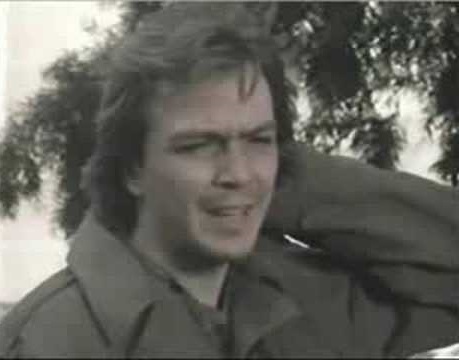
Even if David Cassidy couldn’t always pull off the undercover assignments to my expectations, the episodes for the most part were decent to good. I particularly liked the twist of the college baby ring. Instead of coercing knocked up college girls to give their babies up for adoption to couples who could pay the huge fees, they solicited willing college students to make designer babies the old-fashioned way. Paying couples could flip through a book of headshots and pick the DNA they wanted. Then the chosen two would bow chicka wow wow their way to a baby and a payday. The problem was there was no take-backs and those who tried to back out of the deal were dealt with harshly. And that’s where Dan came in.

The episode in which Dan goes undercover as a junkie was also quite good, but more for the relationship that Dan established with another junkie. Sure, he used and manipulated him, but it was also clear that Dan cared about the man, too.

That’s the thing about the show. It’s very earnest. Dan is not only big on getting justice, but also on doing the right thing. The show humanizes addicts and sex workers, when most shows at the time still treated them as castoffs, undesirables, and garden variety criminals. That doesn’t stop them from playing Joanne as a petty, insecure wife when Dan is undercover as a pimp (I know) and working closely with a sex worker. Which is a shame because most of the time, their relationship is pretty grounded. She worries for him and gets frustrated with his work, but they also have silly, loving moments together that work really nicely to keep her from being a typical serious police wife.

I think the show would have benefited by keeping Dan’s undercover assignments toward his strengths of looking like a young, hip guy and/or derelict, juxtaposing that with his home life as a husband and father, but apparently, there’s more excitement in trying to convince us that Dan is a tough prison thug (I was not convinced; nothing to do with the acting, everything to do with the looks).

The show does tend dampen any climax peril for Dan. The only time I ever actually feared for him was when he was nearly molested in prison (which wasn’t the climax) and even then he quickly dispatched the offender. Most of the time the episodes wrap up pretty quickly and neatly with the bad guys not fighting back a whole lot. Sometimes it makes sense, but I expect James Whitmore Jr. not to go so quietly.
Even so, I enjoyed the show.

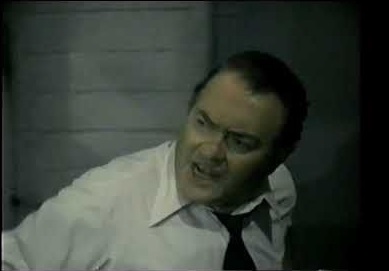
It’s just more evidence that I’ll watch Simon Oakland yell in anything.
Rerun Junkie Episodes–“To Kill or Be Killed”

Warning: This post contains spoilers for the Season 3 Hawaii Five-O episode discussed in Episode 34 of Book ’em, Danno. Do not read this post if you haven’t seen the episode and don’t want to be spoiled for a fifty year old show.

Trigger Warning: This post also contains mentions of suicide, so please take care of yourself accordingly.

In the third season Hawaii Five-O episode “To Kill or Be Killed”, the death of a soldier just returned from Vietnam sparks a search for his draft-dodging brother in an attempt to find out the truth about the soldier’s death. It seems draft-dodger Michael had gone to talk to his brother Jack just before Jack either jumped or was pushed from his apartment balcony.
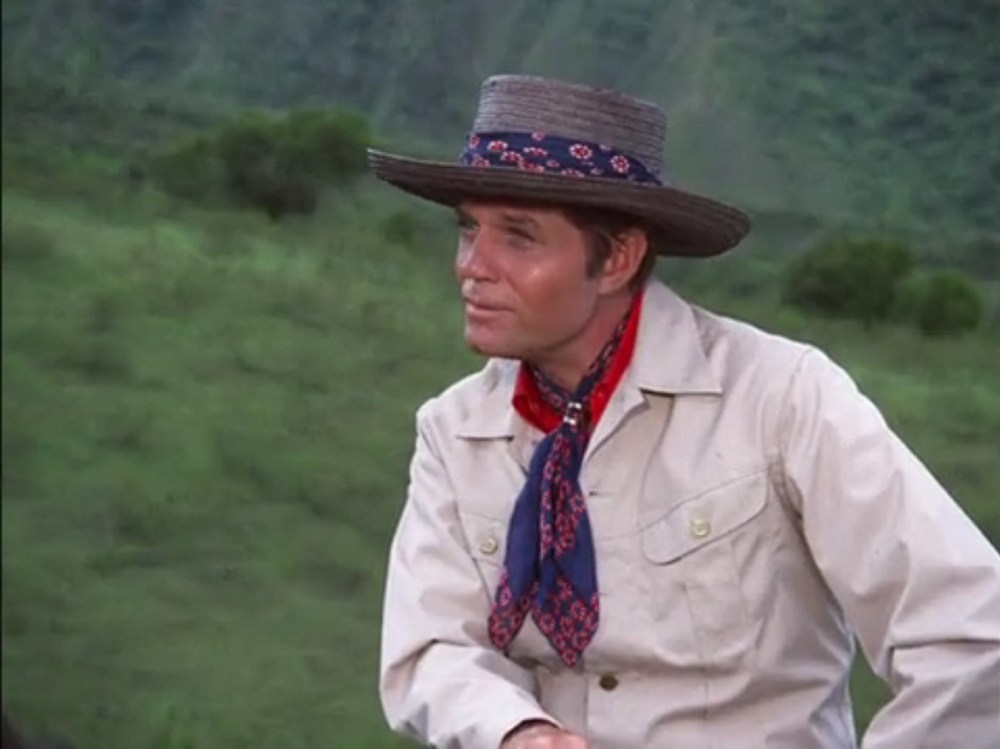
According to their General father, Jack was the perfect son who’d sacrificed friends and his girl to enlist in the military and serve is country. Meanwhile, in the initial interview with McGarrett, he doesn’t even mention Michael, something Steve asks him about later. Though the General says he didn’t think it was relevant even though he knew Michael had gone to see Jack just before he died, it’s pretty clear by his demeanor in his son’s anti-war pad that’s he’s not exactly proud of the kid.

In Five-O’s efforts to solve the mystery of Jack’s death, they discover that someone had Jack under surveillance. Turns out that it was the army. The General pulls ranks to hear the tapes they made, but even he is stonewalled. The officer in charge can only assure him that Michael didn’t kill Jack. It’s a heartbreaking scene, watching the General as he begs to hear the surveillance tape so he can finally know what happened to his son.

The final scene in the office with everyone listening to the tapes is devastating. And the very end…infuriating.

We knew that Michael was going to talk to his brother about being drafted. He was struggling with it and needed advice. The tape revealed that he found Jack in his apartment about to kill himself with a gun. They struggled for it and after Michael got it away from him, Jack explained that he was involved in a terrible incident in Vietnam in which his squad wiped out a bunch of innocent villagers (hence the army surveillance once he got back). Jack was overcome with guilt about it. Michael thought he’d talked him out of suicide, but after Michael left, Jack jumped from the balcony.

The war destroyed him.

And what is General Dad’s reaction to hearing the tape?

He tells Michael that an incident like what Jack was involved in was a rare mistake and that he should still serve his country like his brother. But Michael chooses to go to jail instead and General Dad declares he’s lost both of his sons.

Yes. He disowns his son for not serving after his other son died as a direct result of his service.

I very nearly broke my no-spoilers-without-Dan rule on the podcast because I so wanted to discuss the final scene. The ending of this episode makes me viscerally angry. You’re not a real fan of the General because he lauds one son over the other, but his heartbreak is so genuine that you can’t help but feel for him. And you think he just might have a change of heart after what he’s heard on that tape.

But no.

I think what pisses me off the most is that it’s such a believable reaction. The denial of a man who has dedicated his life to the military being confronted with the brutal reality of how his blind service contributed to the death of his son. He can’t accept it. He can’t accept that he has in anyway participated in a bad thing, that war is not the glorious, brave mission to keep the world safe like he’s been told and like he’s told his sons. War is brutal and ugly and destructive and takes more peace than it gives. Vietnam in particular stripped away all of the spit shine that made war look like a valiant act.

The General can’t handle any of that.

He’d rather have a dead son.

It’s a crushing final blow to Michael who ends up losing his whole family to not only do what he feels is right, but to also avoid the same fate as his brother.

Not every episode is guaranteed to have a happy ending, but when it comes to those unhappy endings, this one is certainly one of the most effective.

Book ’em, Danno–Episode 34

Book 'em Danno Podcast

It’s a triple feature!

An old cowboy struggles to hold onto his ranch with tragic consequences in “Paniolo”; Five-O attempts to thwart an elaborate heist in “Ten Thousand Diamonds and a Heart”; and the death of a soldier puts his drafted brother in a tight spot in “To Kill or Be Killed”.

It’s an extra long episode, but it’s extra good. A sad-fun-sad sandwich. Prepare accordingly.

Listen on Soundcloud, iTunes, Spotify, and Stitcher.

Please enjoy these visual references to certain points in my discussion of the episodes. Steve’s tracking outfit in “Paniolo”, a shirtless Tim O’Connor in “Ten Thousand Diamonds and a Heart” for those who never knew they needed it, and the framing that really struck me in “To Kill or Be Killed”.

steve paniolo

tim oconnor shirtless

steve no war

Police Involved Shooting

In the world of cop shows, there are two kinds of very special episodes: a cop gets shot or a cop shoots somebody.
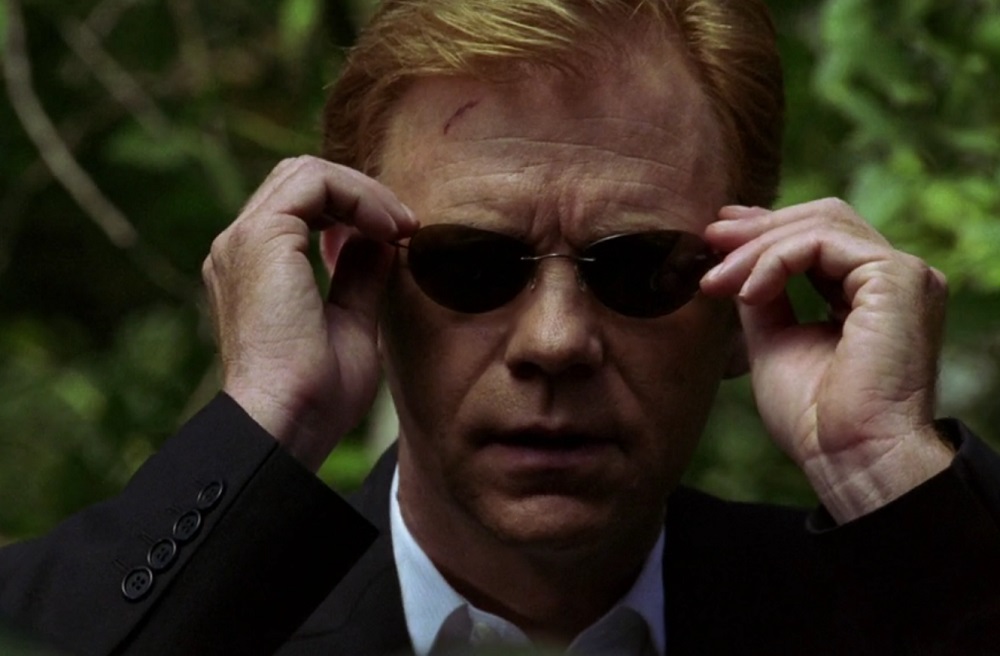
This post is about the latter.

Here’s how the episode usually goes: One of our cop heroes shoots somebody. There is then an investigation into the shooting in which there’s an underlying implication that this investigation isn’t fair because our good guys always have good shoots. There’s some drama. Then our shooter is once again declared a cop hero.

Obviously, there are variations and not every episode follows this format, but that’s basically it for many of the episodes I’ve seen.

The police involved shooting episodes of Dragnet and Adam-12 are probably the most technical I’ve ever seen due to Jack Webb’s dedication to the manual. While we do have that little bit of angst that comes from our hero being questioned, there’s still an objectivity about it. This is how the process is supposed to work. Jack Webb very much so believed that police officers were meant to be held to a higher standard which is why these episodes stand out. This treatment of our good guys isn’t exceptional -it’s routine.

Despite Jack Webb’s good intentions, this sort of intense scrutiny is an idealization of what we’d like to believe happens during these investigations, but we know doesn’t.

I pointed this out when I was covering the Hawaii Five-O first season episode “And They Painted Daisies on His Coffin” on Book ‘em, Danno that the investigation into Danny shooting the supposedly unarmed young man and him subsequently getting arrested for murder was idealized. It’s only in the most extreme circumstances that a police officer is arrested for this kind of shooting today. You can’t tell me that it happened more often when there wasn’t the prevalence of video.

A first season episode of Starsky and Hutch called “Pariah” dealt a little with the public fallout of a police involved shooting. Starsky ends up shooting an armed robber who turns out to be only sixteen. The kid’s mom is devastated and Starsky feels incredibly guilty over the death. The public isn’t exactly thrilled with the circumstances, particularly one guy with an agenda who says if Starsky is cleared, he’ll start killing cops. Starsky is cleared of any wrongdoing because of course and the killing spree begins and will continue until Starsky resigns. So this is an example of taking our very special episode and upping the ante by adding in public scorn and then throwing in a vendetta for good measure.

The police involved shooting episodes are always very special episodes because they’re the only episodes in which the violence our heroes inflict on the criminals is ever questioned. In any other episode, they’re offing the bad guys without even the slightest mention of the paperwork. Every other shooting is completely justified, no question.

One exception to this rule (at least that I know of because I haven’t seen every cop show–yet) is Barney Miller. Possibly because it’s a comedy that primarily deals with the mundane and oddball aspects of police work, the show had a unique take on the police involved shooting.

For one, perps weren’t getting shot every week. The members of the 12th precinct got shot at more than they shot and even those instances ended up funny and mild. So, they didn’t need a very special episode about a police involved shooting to separate it from all of the other police involved shootings that were never questioned.

Because in the entire run of the show, there were only three episodes in which a member of the 12th shot someone. In the first season “Hero”, Chano infiltrates a hostage situation in a bank and ends up killing the two would-be robbers. It’s quickly apparent that Chano isn’t handling it well at all despite the incident being considered a good shoot. By the end of the episode, he breaks down into sobs in his apartment.

Dietrich has a similar reaction to his shooting in the seventh season episode “Resignation”. After shooting a suspect in the backside, Dietrich decides that this part of the job goes against his morals and attempts to submit his resignation. Though Barney susses out the real root of Dietrich’s angst, which goes a little sideways from just his morals, it still illustrates the negative effect of a shooting on the firing officer.

In the eighth season episode “Inquiry”, Wojo faces an investigation after shooting a suspect, winging him in the arm. In this episode, there’s doubt that Wojo was justified in the shooting, particularly with his history of being rough with suspects. We’re also introduced to the then-current requirements for the investigation: Wojo is suspended, put on desk duty, has his sidearm confiscated, and advised of his rights before he’s questioned. What’s startling is that during the questioning, a clearly frustrated Wojo admits that he was trying to kill the suspect. Which is what the police are trained to do. Center mass. Shoot to kill.

Everything turns out in Wojo’s favor, of course, but he’s still rattled and to be honest, so are we. Our Wojo can be rough, but a killer? It’s hard to believe. It’s harder to acknowledge that our good guys were trained that way.

Which is probably why the police involved shooting episodes of Barney Miller are so much more impactful than the very special episodes from other cop shows. They aren’t shooting it out every episode. There’s barely any shooting during an entire season.

Which is more true to life than you might think.

But this is fiction.

And in fiction, tension comes from putting our heroes under the gun.

So to speak.

Rerun Junkie Confession–I Don’t Like Your Favorite Sitcom

I am currently enamored with two TV comedies, What We Do in the Shadows and Ghosts. This probably hasn’t happened since the ’80s. Because the truth is that I’m not a real big fan of sitcoms.

Now, that’s not to say that I don’t like them at all, obviously. It’s just that when it comes to sitcoms and the like, I’m very picky and particular. Comedy is hard and I’m a persnickety bitch.

Which means I probably don’t like your favorite sitcom.

We’ve already established that I don’t love Lucy. Or even like her. I’m also not a big fan of Cheers. Even first run, I didn’t really want to watch it with the rest of the family when it was on (ah, the days when we had only one TV and no say about what was on it). Seinfeld? I don’t think I’ve seen an entire episode. Ditto Friends. And I don’t have any desire to.

On school days back in the long, long ago of grade school, my mother would put on a particular channel and that’s how we timed ourselves getting ready for school. The channel played Bewitched, I Dream of Jeannie, Happy Days, Laverne & Shirley, and when Little House on the Prairie came one, we left for school at the first commercial break. Of those four classic sitcoms, I only really liked Laverne & Shirley. It’s still the only one I really like.

It’s not that I think the shows are bad or that I hate them or anything like that. I just don’t care for them. Or about them.

My Three Sons, Mr. Ed, Make Room for Daddy, The Andy Griffith Show, Gomer Pyle, and The Honeymooners just don’t do it for me. I only like The Dick Van Dyke Show when he’s at the office. I never hit it off with The Partridge Family or The Odd Couple. All in the Family, The Jeffersons, Good Times, and Maude are all fine, I’m just not compelled to watch them. Ditto The Mary Tyler Moore Show and Rhoda. Throw Welcome Back, Kotter in there, too. I’ve seen them all and they all have episodes I like, but I wouldn’t exactly call myself a fan.

There are a lot of sitcoms I watched first run back in the ’80s and ’90s as a kid -The TGIF line-up, Mr. Belvedere, Family Ties, Head of the Class, Gimme a Break, Kate & Allie, The Cosby Show, Alf, Married…with Children– that I really enjoyed at the time, but either have no interest in revisiting them or I have, but now don’t enjoy them as I once did.

Of course there are exceptions to all of these. I watched The Golden Girls first run and I still love it. I discovered The Addam’s Family, The Monkees, and Gilligan’s Island reruns when I was a kid and they remain my faves. I was grown when I found F-Troop and Barney Miller and quickly fell in love.

So, I do like some sitcoms.

Just not your fave.

Shades of McGarrett

Thanks to Charge! and my habit of leaving the TV on in the background while I work, I’ve been half-ass rewatching CSI:Miami. I watched this show first run back in the aughts (though I was in and out on the final few seasons) and it is just as bonkers as I remember it. Which is absolutely not a bad thing. Of the three CSIs that were running at the time, it definitely trotted into nighttime soap territory while proceduraling and I find that to be good fun.

As I’ve been rewatching it, I find myself remembering some of the episodes and the character arcs. But I’m also picking up on things I didn’t really notice before. Or maybe care about.

This time through, I’ve found myself somewhat captivated by Horatio Caine aka David Caruso. Now, I’m not a main guy kinda gal, so it’s not surprising that I didn’t pay that much mind to him during my original watch. No slight against him. His sunglasses-quip one-two is iconic, after all. But the main has never been my bag.

(If memory serves, my favorite character back in the day was Tripp, and if you’re wondering why I would pick this sarcastic, no-patience, no fucks to give detective over the young, pretty CSIs, let me tell you that even in my twenties, that man spoke to my soul. It’s speaks even louder now that I’m his age.)

So, I’ve been puzzling about this. Because there’s something about Horatio Caine that’s caught my eye now, something that’s captured my attention that didn’t before, and I haven’t been able to put my finger on it.

Until the other night when it hit me and the epiphany lit up my brain in such a way that I think I might have actually cried out “Eureka!” Also, my eyes might have bulged out of my skull. It wasn’t pretty, but it was satisfying.

There is something very Steve McGarrett about Horatio Caine.
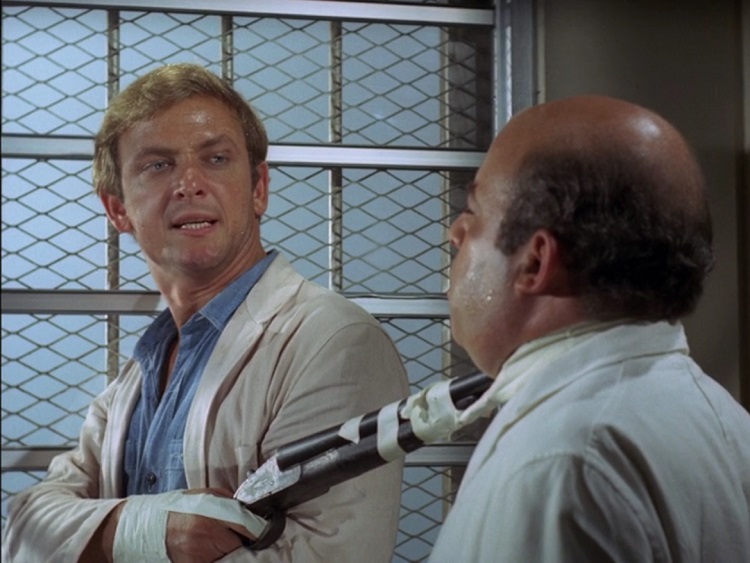
Obviously, this is probably just me, though it could be argued that Jack Lord set a certain standard when it came to good looking justice seekers with fab hair and impeccable style when playing Steve McGarrett, and David Caruso kind of followed along with that with Horatio Caine. But truly, this is an all-in-my-head vibe kind of thing that I now cannot unsee and so I shall gift it unto you.

I’m not apologizing.

Here’s my vibe comparison.

Steve McGarrett and Horatio Caine have a lot in common. They’re both the leaders of their law enforcement teams, something they take very seriously. They both take their jobs as a whole seriously. They are justice seekers and that is serious business. They have a tendency towards stoicism when they’re hunting down bad guys, and it’s no surprise that since they’re the pinnacle of good guys, they almost always get their quarry. And damned if they don’t always have the line that puts anyone and everyone in their place.

This, of course, is sort of the backbone to the leads on this sort of show. That strong, in charge, can’t be beat personality.

But, both Steve McGarrett and Horatio Caine have softer sides that tend to be forgotten amongst the Book ’em, Danno and sunglasses of pop culture.

For all of their tendency to the serious, both men have a sense of humor. They find things funny. And there’s something sweet and glorious when they smile. Perhaps because they’re so serious so much of the time a quirk of the lip means that much more.

The way Horatio Caine interacts with children is reminiscent of the way Steve McGarrett interacts with them. Both men have the ability to be soothing without being condescending. They have a knack for making a kid feel safe. Also, the little ones seem to adore them. I don’t know what faces they’re making when we’re not looking, but babies and toddlers think they’re great. Likewise, these serious business, childless men (okay, Horatio acquired a teenage son in the later seasons thanks to a before-times thing with Elizabeth Berkley because why the fuck not) are just as happy with the little ones. They look nothing but completely comfortable with them and their reputations do not suffer a bit for it.

The biggest vibe for me, though (aside from the smiling thing because my laws the sweetness) is the affection and even tenderness each man has for the members of his team. It’s anticipated that they will have their team’s backs if someone comes for them or implies that they are anything other than terrific humans. There are no doubts that these two men will have the heads of anyone who hurts one of their crew. And that injured party in peril will have the love and support of their leader. Always.

But it goes beyond that given.

These two men care about their team beyond the work and it’s shown in ways both surprising and mundane. Steve thanking Danny for a birthday party at the office with sincere gratitude and a touch of physical affection is as sweet as it is surprising (almost as surprising as Steve getting blown up 30 seconds later…well, as surprising as it can be when it happens once a season). He’s truly touched. Meanwhile, Horatio offering to be the DD during a night out could be written off as a Drive Sober PSA and a given for a responsible cop. However, the implication goes beyond that. He’s there to make sure his team gets home safely. Period.

It’s a likeness that struck me hard.

As iconic as Steve McGarrett is, I never thought anyone could, intentionally or not, compare.

Leave it to a ginger in Miami with a pair of excellent shades to do just that.

Book ’em, Danno–Episode 33

Book 'em Danno Podcast

Here we are over half-way through Season 3.

Episode 13 “The Payoff” has Albert Salmi and Madlyn Rhue double-crossing their fellow felons in order to keep a huge ransom for themselves. Episode 14 “The Double Wall” sees an innocent Monte Markham behind bars and driven to extremes in order to prove it.

The star power in these two episodes, particularly the latter, is incredible.

Listen and enjoy.

Soundcloud iTunes Spotify Stitcher

Here is a visual representation of Monte Markham’s desperation. He’s holding Boss Hogg hostage. That’s desperate.

monte markham sorrell booke

Heteronormativity Is a Helluva Drug

I didn’t expect to like the reboot of Magnum PI. I only gave the pilot a shot because I’d been watching the 1980 series and decided to compare and contrast. I already knew that Magnum was now Latino and Higgins was now a woman. I went into it thinking it’d be fine, but not for me, like most reboots.

The pilot was a fun ride. I gave it the three episode test (pilot establishes the show; second ep is the adjustments; third ep is the vibe) and ended up hooked.

My one hope for the show was that they wouldn’t default to hooking up Magnum and Higgins.

Well, it was good while it lasted and it lasted until early in the 2nd season. Once it became clear that the endgame is Magnum and Higgins are omg-meant-to-be (and that it’s apparently going to be played out in poorly executed fanfic tropes), it then became a countdown until I got fed up and quit watching. That lasted until half-way through the 4th season. I haven’t given up entirely but I am absolutely half-assing it and I don’t care about the show like I once did.

It’s a shame, but thems the breaks.

And there’s plenty of history behind the continuation of the heteronormative narrative that defaults opposite sex leads or lead/supporting into a romantic tension leading to a relationship.

Obviously, the most known example of this is Dave and Maddie on Moonlighting, a show that so depended on the will-they-or-won’t-they, that when they did, it pretty much cancelled the show (to be fair there were other behind-the-scenes issues that contributed to the show’s demise, too). Also, Agnes and Herb had the much better relationship.

Scarecrow and Mrs. King and Remington Steele drew from the same playbook. On Barney Miller, it played out over five episodes between Wojo and Wentworth before Linda Lavin left to be Alice.

In the case of shows like Tales of the Gold Monkey, it’s less of a will-they-or-won’t-they and more of a when-will-he-commit. Because there’s obviously something going on between Jake and Sarah (hell, they kiss in the pilot), but it’s a situationship that allows Jake to kiss other ladies depending on the plot. There’s a similar sort of set-up happening with Walter and Roxanne on Automan. Are they dating? Kinda, maybe, it depends.

Emergency! actually began with Dr. Kelly Brackett and Nurse Dixie McCall in a romantic relationship, which was dropped in later episodes without explanation (read: break-up). From that point on, Brackett and Dixie were friends and colleagues, caring for and respecting each other in both professional and platonic ways, showing that, hey, it could be done.

I’m not saying that it wasn’t. There were series that didn’t necessarily default to the romantic relationship. Della Street didn’t get involved with Perry Mason or Paul Drake (though Paul did nickname Della “Beautiful” and there was some joking that might be considered flirting). Likewise Britt Reid clearly cared about Miss Case and vice-versa, but there was nothing but boss-secretary friendship happening with The Green Hornet. Clearly, it could be done.

But there’s no denying that it could be a struggle. For most of Hunter‘s seven season run, Rick Hunter and Dee Dee McCall were partners and friends, a caring and satisfying platonic relationship that Fred Dryer and Stepfanie Kramer were happy with. But as the story goes, the network and the fans wanted more. As a result, a Season 6 episode informed the audience that Hunter and McCall had once slept together, but it caused an issue with their work relationship.

It’s the default aspect of the hetereonormative narrative, the well-worn path of it, the perpetuation of the idea that the only chemistry that exists between opposite sexes is sexual and the only important relationships are romantic that really grates. Worse, it’s dull. And it’s dull because it’s expected. No other options are presented or considered.

Magnum PI had an opportunity to explore something beyond the default, to establish a couple of opposite sex platonic soulmates without some sort of caveat or exemption (like one or both of them being queer), to really dig into that kind of relationship and do something different.

Instead, it fell for the same quick and easy high that’s been dulling senses for decades.

It really is a helluva drug.