
Back in the long long ago of my childhood of the late ’80s/early ’90s, I discovered many of my beloved reruns thanks to my grandma’s much better cable and living close enough that I could spend weeks in the summer at her house. One of those shows was CHiPs. Oh yes. My love of ’70s cops shows started when I was quite young. I can remember watching this show during the summer at grandma’s house (along with a slew of other reruns) and then being thrilled a few years later when it ended up on a line-up on a channel I got at home and could watch after school. I believe it was on after Starsky and Hutch.
Anyway.
 CHiPs follows two officers of the California Highway Patrol, Officer Jon Baker (Larry Wilcox) and his partner Officer Frank “Ponch” Poncherello (Erik Estrada) as they fight crime under the watchful eye of Sgt. Joseph Getraer (Robert Pine) and alongside their fellow officers including Officer Arthur Grossman (Paul Linke), Officer Barry Barizca (Brodie Greer), Officer Bonnie Clark (Randi Oakes), Officer Jebediah Turner (Michael Dorn), Officer Gene Fritz (Lew Saunders), Officer Kathy Linahan (Tina Gayle), Officer Sindy Cahill (Brianne Leary), and Officer Benjamin Webster (Clarence Gilyard Jr.). Baker also partnered with Officer Steve McLeish (Caitlyn Jenner) for some episodes (Estrada was sitting out due to a contract dispute) and Officer Bobby “Hot Dog” Nelson (Tom Reilly) stepped in after Baker left the CHP to go back to Wyoming (Wilcox left the show), bringing along brother Officer Bruce Nelson (Bruce Penhall) as a trainee. And of course, the whole squad was kept running by the brilliant Harlan Arliss (Lou Wagner). It should be noted that Michael Dorn sported a magnificent cop mustache during his run on the show and I appreciate that dedication.
Since the show is all about the highway patrol, there was a lot hot freeway action with chases and accidents. And while many of the crimes dealt with some sort of moving violation, be it speeding, racing, car theft, or trafficking of some sort, some of the storylines moved off the road, so to speak. There was always a main story weaved into the other minor crimes along with whatever shenanigans Ponch and/or Jon were getting into. Sometimes everyone got in on the shenanigans. For example, I just watched an episode that involved the CHP helping to care for a bunch of orphaned babies. Yes, really. Robert Pine demonstrating how to most effectively soothe a baby (“skate and sway”) is something we all need in our lives.
But there were also drag racers, stunt drivers, off-road racers, and demolition derbies, and we need that in our lives, too. Thank goodness this show provided. Not one to shy away from the things that made the ’70s great, Ponch and Jon often found themselves doing the latest hip things, like land boarding or hang gliding, either undercover or just for fun.
Because of the nature of the show, it was easy to work in guest stars for not only the main storylines, but for the smaller crimes, too. And since the show’s six seasons ran during the late ’70s and early ’80s, we’re talking the cream of the rerun crop here.
Just a scant few of the guest stars that cruised through include Gwynne Gilford (Robert Pine’s wife playing Sgt. Getraer’s wife); Larry Linville, Herb Edelman, William Schallert, Shelley Berman, Tom Poston, George Lindsey; teenagers Danny Bonaduce, Robbie Rist, Leif Garrett, Christopher Knight, and Moosie Drier; William Smith, Robert F. Lyons, Don Stroud, Mills Watson; Halloween franchise alums Pamela Susan Shoop, Nancy Stephens, Tony Moran, Hunter von Leer, Cliff Emmich, and Kyle Richards; Katherine Cannon, Christine Belford, Mary Crosby, Joanne Linville; future Growing Pains stars Tracey Gold and Joanna Kerns; Reb Brown, Richard Roundtree, Alex Rocco, Brion James; Emergency! vets William Boyett, Tim Donnelly, and Vince Howard; Jenny O’Hara, Elaine Joyce, Anne Lockhart, Anne Francis; Escape to Witch Mountain kids Kim Richards and Ike Eisenmann; The Howling stars Dee Wallace and Christopher Stone; Troy Donahue, Rudy Vallee, Dough McClure, Edd Byrnes; Poltergeist stars Dominique Dunne and Heather O’Rourke; Ed Harris, David Caruso, Michelle Pfeifer, Kelly Preston, Bryan Cranston; Black Sheep Squadron vets Simon Oakland, Robert Ginty, and Dirk Blocker; Clu Gulager, Robert Englund, Kip Niven; Welcome Back, Kotter graduates Ron Palillo and Robert Hegyes; Dwight Schultz, A Martinez, Fred Dryer, Gary Sandy, Edward James Olmos, Gerald McRaney, Markie Post, Martin Kove, Anne Ramsey, Soleil Moon Frye, Moon Unit Zappa, Keenan Ivory Wayans; Ironside alums Don Galloway and Don Mitchell; Sonny Bono, Eric Braeden, Julie Newmar, Miguel Ferrer, Royal Dano, Ellen Travolta; Gilligan’s Island castaways Tina Louise and Jim Backus; Alice Ghostly, Richard Deacon, Don Most, Alan Sues; F-Troop vets Ken Berry and Larry Storch; and comedy legends Milton Berle, Phil Silvers, Rich Little, and Phyllis Diller.
Believe me when I say that I didn’t include everyone I wanted to. The show really is a gold mine for guest stars.
Part of that is because it was easy for celebs to do a cameo or in the case of a couple of episodes, uncredited appearances thanks to the CHP charity efforts.
There are at least two of these episodes I can think of off the top of my head. Both of them were two-parters, but one is legend.
 The Season 4 episode “The Great 5K Race and Boulder Wrap” features Ponch trying to recruit celebrities for a charity function, a couple of thieves with a fancy motorcycle and side car, and a boulder threatening Milton Berle’s house. Don’t worry, everything works out okay, of course, and we get treated to our CHP officers getting dunked in a dunk tank by the likes of Michael Cole, Todd Bridges, Richard Kline, and one of the Landers sisters. The fun and games is also attended by Cindy Williams, Rose Marie, Peter Marshall, Ruth Buzzi, Vic Tayback, Betsy Palmer, Marcia Wallace, Merlin Olsen, Conrad Bain, and Dean Butler.
However, the Season 3 opener “Roller Disco” is the ’70s glam and WTF that dreams are made of. In addition to a group of roller skating thieves (Jim Brown and Fred Williamson on skates!), a really annoying roller skating brat, a whiplash guy looking for revenge, and a burnt out rock star, Ponch is in charge of the Skate with the Stars charity event. That’s right! Stars on skates! Melissa Sue Anderson, Richard Hatch, Victor French, Wesley Eure, Nancy Kulp, Phillip McKeon, Brett Somers, Dick Van Patten, George Peppard, Jo Anne Worley, and more. Yes, it is as glorious as it sounds. Only a disco ball glitters more.
Of course, most episodes weren’t this glitzy. Even though Ponch and Jon were the focus of the show, the secondary characters got their chances to shine in episodes, too. Bonnie thought about joining a stunt show; Barizca helped out his parents; Getraer had his hands full with his own kids as well as Ponch and Jon; and Grossman…well, he’s Grossman.
And since this is a cop show featuring traffic, there were also plenty of peril episodes. Everybody wrecked at least once, and some of those wrecks weren’t accidents. In one episode, someone deliberately targeted our CHiPs and ended up taking out Jon and Grossman. Some wrecked worse than others. Ponch, Jon, Bonnie, Sindy, Gertraer, and Grossman all ended up in the hospital at one point in time or another. Poor Sindy ended up being accused of causing an 11 car pile-up and it took the Chippies working the MAIT team investigation to clear her.
One of the more memorable wrecks, at least memorable to me, was when Ponch ended up crashing into a store and ended up with a display case poised to decapitate him. Thanks to Jon, Barizca, Turner, and Grossman, Ponch escaped without a physical scratch, but the mental wounds nearly kept him from doing his job. And there were episodes that were a little more emotionally involved for our CHiPs, in between the romances, daredevils, wayward kids, pranks, motor cycle gangs, martial arts, pot farmers, and road rage.
I’m sure back in the day women, men, and enbys of the guy-liking persuasion probably sorted themselves into one of two categories: Ponch or Jon. I admit that in my teen years, I went between the two. But ultimately, my heart belonged to Grossman. When it comes to my fictional men, there’s something about a chubby, awkward one that wins me every time. Plus, he was in Motel Hell. My opinion hasn’t really changed much in my elder years, though now I definitely have a thing for Bonnie, too, and I totally see the appeal of Getraer. Take that Chris Pine. Your dad will always be cooler.
But whichever category you fall into, you know that these Chippies will be keeping you safe on the freeway.
Grab your skates.

 It’s no secret that one of my favorite TV genres is ‘70s cop shows. I don’t know why. You can say it’s because my father was a police officer for twenty-five years, but I think that has little to do with it considering very little of what I’ve seen on the screen reflected what he dealt with policing my small town in the middle of a cornfield.
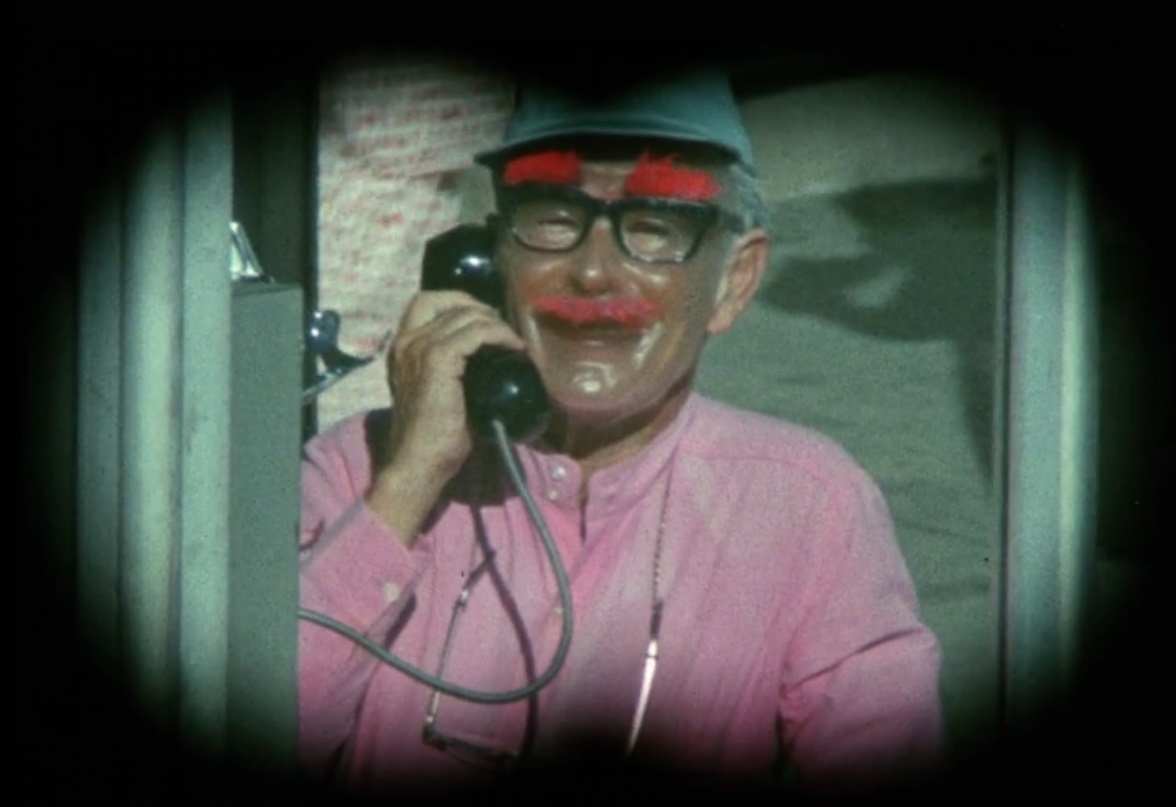
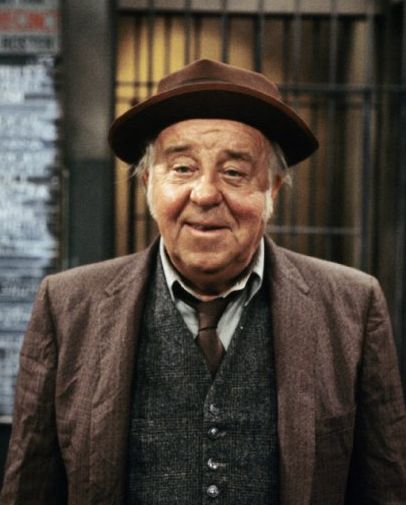 Since I’ve already written about J. Pat O’Malley once when I discussed
 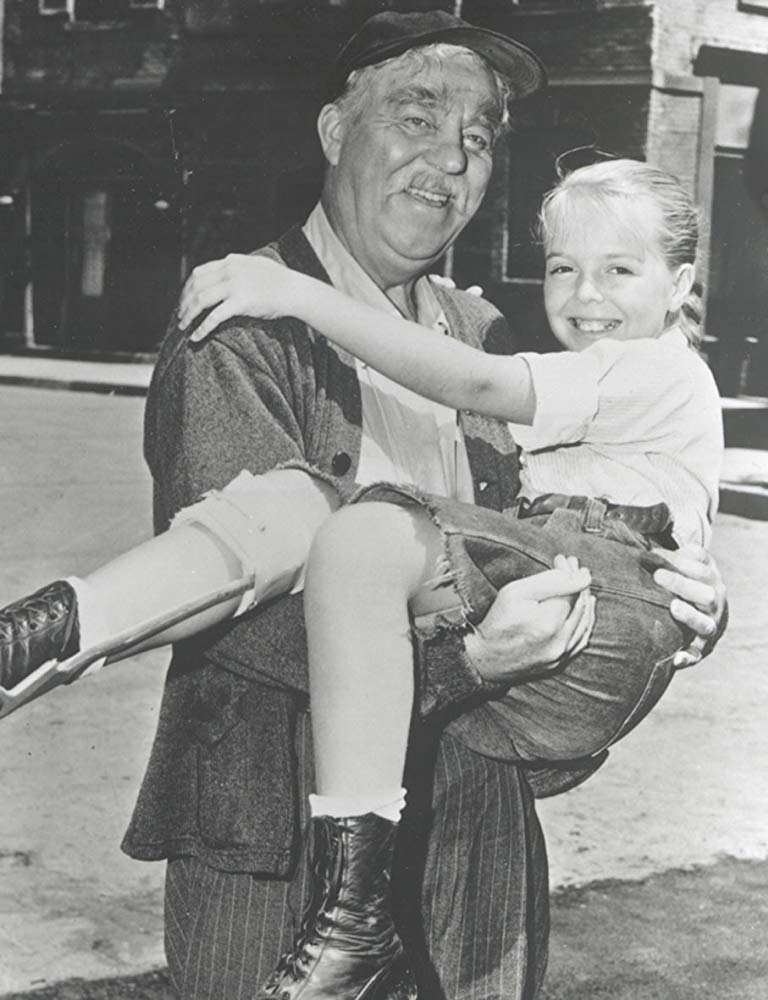 J. Pat did a tour of the Henningverse, appearing on The Beverly Hillbillies, Green Acres (4 times), and Petticoat Junction (2 times); was a medicine man on F-Troop; he welcomed the Bradys to TV in the pilot for The Brady Bunch; was Rob Petrie’s grandfather on The Dick Van Dyke Show; and attempted to con Barney Fife’s landlady on The Andy Griffith Show.
 Not everyone believes in soulmates and that’s fine. I’m not judging you. People can’t even seem to agree on the definitive definition of a soulmate. My preferred explanation is that a soulmate is a person who comes into your life to stimulate your growth. Maybe it’s just for a short time, maybe it’s forever, but they are there for a purpose and that purpose is to nudge you into being a better version of yourself.
  One of my favorite episodes of The A-Team is the Season 2 finale “Curtain Call”. In it, Murdock is shot during a job and the team has to figure out how to get him help while being pursued by Decker. It’s actually just an excuse to have a clip show. But the whole time, Murdock is bleeding to death and I love it.

 I think I’ve made it pretty clear that Jeanette Nolan is one of my favorites, so it should be no surprise that I could find a way to elevate your holiday TV viewing with her presence.
 As a listener of (and sometimes guest on)


 aka KikiWrites