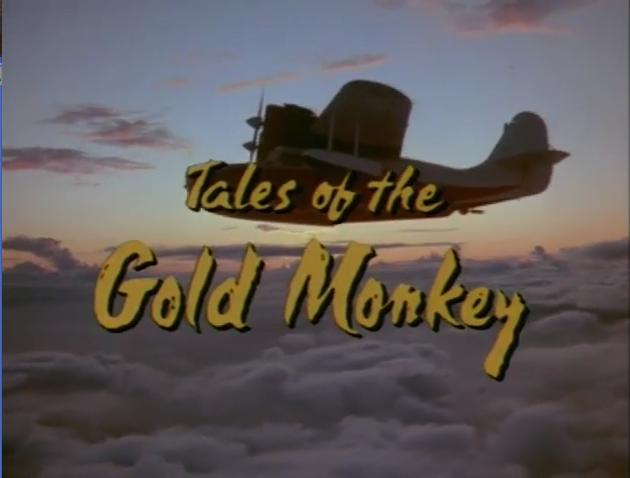
 As I like to say, the only men I fall in love with are either dead or fictional, and unfortunately Lt. “Mac” MacReynolds on Magnum PI ended up being both.
As the story goes, Jeff MacKay, who portrayed the recurring role of Mac, got a regular gig on a new Donald Bellasario show, Tales of the Gold Monkey, and so his character ended up being killed off at the beginning of the third season (much to the chagrin of me who has had a crush on Mac for years). When the new show was cancelled after one season, Jeff MacKay asked to come back and ended up returning to Magnum PI as Mac’s doppelganger, con artist Jim “Mac” Bonnick.
Obviously, I had to watch this one season show that caused Mac’s death and rebirth. And as luck would have it, my library carries this 1982 show. Which is wild when you consider that we don’t even have Magnum PI.
Anyway.
Before I even begin going into this show, I’m going to acknowledge it’s problematic nature upfront.
First of all, it’s a 1982 show set in 1938, apparently inspired by the 1939 movie Only Angels Have Wings. So there ends up being a lot of this show that did not age well. And while I believe in viewing these reruns in their appropriate context as well in current context, there’s some shit that’s just plain cringe-worthy.
Secondly, and more importantly, the lead in this show is portrayed by Stephen Collins, who admitted to “inappropriate sexual conduct with three female minors” in an interview he did with People magazine in December of 2014. So, yeah, knowing that the lead is a creeper definitely casts a shadow over the series, especially since he’s actually really good in the role and almost makes you forget that he’s a shitty person. Almost.
Now on to our feature presentation.
 Tales of the Gold Monkey follows the exploits of former Flying Tiger Jake Cutter (Stephen Collins), his mechanic bestie Corky (Jeff MacKay), and his dog Jack (Leo the dog) as he makes a living flying his plane The Goose around the Marivella Islands from his home port of Boragora, which is under the jurisdiction of Bon Louie Chance (Roddy McDowell; Ron Moody in the pilot), who also owns and runs the Monkey Bar with the aid of his right-hand man Gushie (Les Jankey) where newcomer Sarah Stickney White (Caitlin O’Heaney) finds a job as a singer. However, only Jake knows that she’s also a spy. Princess Koji (Marta DuBois) rules a nearby island and has something of a fascination with Jake, much to the annoyance of her bodyguard Todo (John Fujioka). The princess and Todo are the only ones who know that the Reverend Willie Tenboom actually isn’t a Dutch man of God, but is really a Nazi soldier in disguise.
And if that sounds like a lot, you should watch the pilot. I said “WTF” at least 12 times starting with the killer monkeys. They aren’t bad WTFs, just genuine ones. I admit that it took several episodes for me to actually get the hang of this show and even then it still found ways to trip me up.
For example, in the episode “Shanghaied”, while Jake is delusional with fever from malaria, Corky gets kidnapped by Guy Stockwell the good ol’ fashioned way that captains acquired crew for their boats -got them loaded and they woke up at sea. So you think, “Ah yes. A sea romp in which Corky is captive and Jake eventually saves him”, which is accurate. Except there’s also a hard left into slavery that’s not exactly anticipated. Guy Stockwell’s slightly-campy captain veers directly into vile with no warning and it’s a bit jarring. Also the depiction of indigenous people in this series isn’t the greatest, so that really brings the ep down from “Oh, this is fun” to “Okay, WTF, I didn’t agree to any of this.”
There are other episodes that balance the tone between serious and fun better. And some that don’t, but end up on the sillier side rather than the uncomfortable side. “Trunk From the Past” tries to give Sarah a tragic backstory with a murdered archaeologist father and a fiance that she never mentioned to anyone, but the visions, mummy, and pyramid in the middle of the jungle send it a little bit over into ridiculous and caps it with a brutal end for someone in the guest cast. It’s not bad, just not hitting the notes it was going for.
Some episodes just go for the serious. “Last Chance Louie” has Bon Louie Chance going to the guillotine for murder and the whole story is rather tragic and heartbreaking (spoiler alert: he keeps his head). Speaking of tugging at the emotions, the fight between Jake and Corky which results in Corky trying to leave Boragora in “Cooked Goose” is incredibly upsetting. The scene between Jake and Corky involving the baseball just hurts.
“Naka Jima Kill” is a straight fun episode that has Jake looking for an assassin while Sarah and her bestie from college who’s now a famous journalist end up getting into a bit of a battle of egos as Sarah can’t reveal to her that she’s a spy and her friend thinks that she’s being generous by letting her tag along to find this Japanese defense minister to interview. It’s a little bit serious, but it’s mostly just fun.
It’s also remarkably like the season 2 Magnum PI episode “The Jororo Kill”. Both feature an assassin that dons women’s clothing, a journalist that’s an old friend, and a plot to murder a high ranking official from another country. And they both also feature Jeff MacKay.
Perhaps it shouldn’t be surprising that Donald Bellasario ended up utilizing bits of one of his other shows for this one. The plot of “High Stakes Lady” was first used for the season 2 Magnum PI episode “Texas Lightning”. Jeff MacKay wasn’t in that one.
 It’s not just plots. Aside from Jeff MacKay (Mac/Jim Bonnick), Marta DuBois (Michelle Hue), John Calvin (3 episodes as various characters), John Fujioka (Nishimoto in “The Taking of Dick McWilliams”), several of the guest stars on Tales of the Gold Monkey showed up on Magnum PI including: Guy Stockwell (in the same ep as John Fujioka), William Lucking, Lance LeGault, Anne Lockhart, Richard Narita, Soon-Tek Oh, Sondra Currie, Henry Darrow, Shelley Smith, John DiSanti, Ray Dotrice, Pamela Susan Shoop, W.K. Stratton, Branscombe Richmond, John McLiam, Kathryn Leigh Scott, and John Hillerman. Yes, Higgins himself showed up in the pilot being a Nazi and wearing a monocle. It was weird.
Other guest stars include: Ken Foree, Nicholas Pryor, James Avery, Reid Shelton, James T. Callahan, Kim Cattrall, Alex Colon, Faye Grant, Michael Ensign, Alexa Hamilton, James Hampton, Charles Napier, Nia Peeples, Sandy Ward, Charles Macaulay, Curt Lowens, and John Reilly.
Of everything questionable about this show, it does manage to pull off one spectacular trick: you end up liking a Nazi.
 As I said, only Princess Koji and Todo know that Reverend Tenboom is really a Nazi spy. And Todo seems to delight in torturing him, which I find amusing. But our heroes -Jake, Sarah, Corky, Louie- don’t know that. I can’t imagine it would go over well if they did. Instead, they think of him as a reverend and a good guy. The fact that his “blessing” of the female congregation is just a euphemism seems to miss them (another example of how poorly indigenous folks were portrayed -they were so “uneducated” the women didn’t know the difference between sex and religious practice). As a result of Willie’s disguise -despite his skeeviness- the audience sometimes is lulled into forgetting that the dude is a Nazi. Especially when he does things like helps them look for Sarah when she’s kidnapped or takes care of Corky when he’s banging his head on a pole because he can’t remember something or fights a pimp taking advantage of the young indigenous girls (even though that’s what he does -I guess prostitution is the line in the sand he doesn’t cross). He’s just bizarrely likeable even though he’s a literal Nazi. It makes me wonder how that would have played out had the show lasted several seasons.
If the show had lasted, then I think it would have emerged that Jack was the real star of the show. A dog with an eye patch because Jake gambled away his false eye, an opal with a sapphire star in the middle, and who would bark once for no and twice for yes. Many of the times I laughed out loud were because of that dog. He was brilliant.
As questionable and sometimes cringe-worthy as this show can be, and despite my initial reservations early in the series, I do enjoy it for the most part. Not everyone is going to be able to get past some of the more problematic elements of the series (in particular Stephen Collins) and that’s fine. But it is entertaining overall. For a show set in 1938, it still manages to hit some ’80s tropes, including one of Jake’s old girlfriends coming back as a nun (I do not know why that was a thing) and Jake falling for a single mother, but they just weren’t meant to be. And of course, he’s romancing the leading lady throughout. But there’s also some really on point 1938 elements, such as the fashion and the music, that makes it feel more like an old school adventure.
Also, the pilot is basically one long brass monkey joke. Can’t get better than that.


 Cautionary tales and morality tales have evolved from stories and plays to television and movies. Makes sense. Go where the people are. And in theory, the tales themselves should also evolve to fit the current times. However, sometimes that doesn’t happen. Sometimes, they stagnate.
 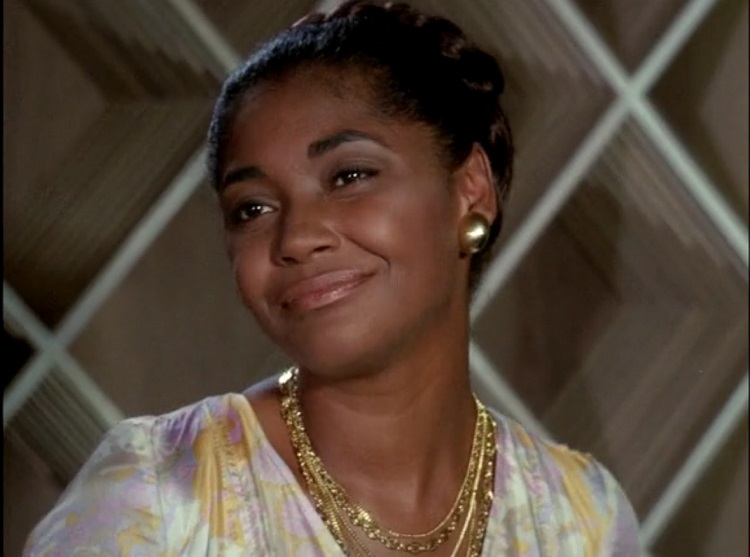 For example, in the Season 3 Hawaii Five-O Episode “Trouble in Mind”, there’s some tainted heroin going around the islands and it’s believed that pianist Mike Martin is in the cross hairs. He’s been picked up for heroin before and did some time in rehab. However, it’s later revealed that Mike took the fall for his love, singer Eadie Jordan. She’s got the problem.
  Perhaps an even more tragic example is that of the story arc of Lt. Aiden Ford on Stargate: Atlantis. During the three-part Season 1 finale/Season 2 opener “The Siege”, Lt. Ford nearly dies while battling a Wraith. The Wraith attempts to feed on Ford just before they plunge into the icy ocean waters. The two of them are recovered in a dormant state with the Wraith still attached to Ford. Dr. Beckett is able to successfully separate them and save Ford, but unfortunately, Ford has received a massive dose of a Wraith enzyme that strengthens their victims so they don’t die too quickly during the feeding.
 I’m not talking about the Brady kids, or the Drummonds, or Punky Brewster and her friends, or even Cousin Oliver. I don’t mind the children on their sitcoms where they’re meant to be. I’m talking about the kids that show up on my grown-up shows only to irritate the hell out of me because their spoiled antics and precocious nature are played for laughs or worse, for them to learn a life lesson that I’d rather not witness.
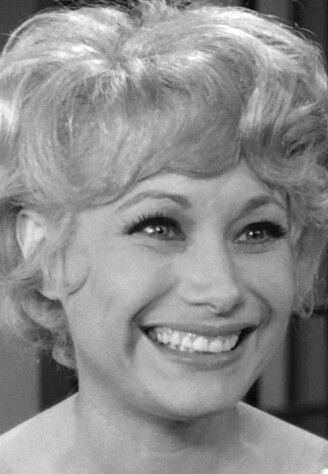 Joyce Jameson is one of my crushes. I fell for her when I first saw The Comedy of Terrors and I never looked back.
 She also turned up on F-Troop, this time zeroing in on Corporal Agarn. She and Larry Storch would team up again years later on an episode of Emergency!, in which he’s an amateur magician attempting to escape from a safe and she’s his nervous wife who calls the fire department because she’s afraid he can’t get out. It’s a brief but funny interaction. Her second appearance on the show had her get stuck in a doggy door, another funny bit, though perhaps it depended a little too much on making fun of her weight.

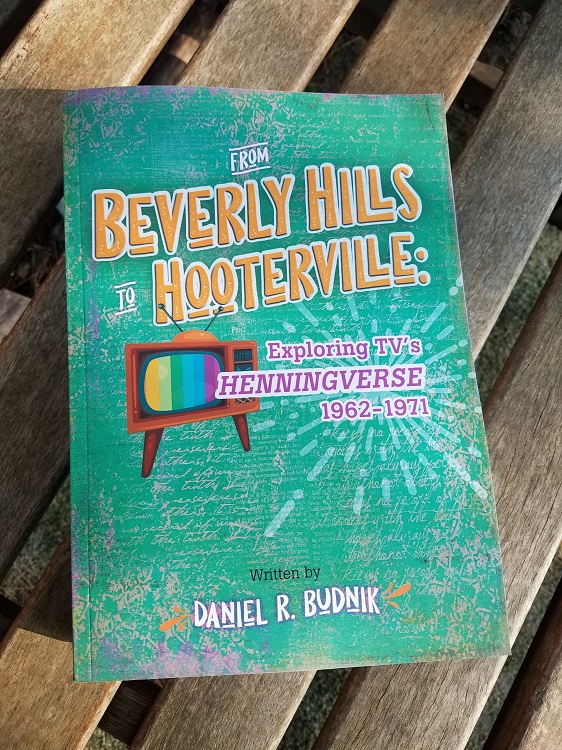 Welcome to the Henningverse!
 Women.
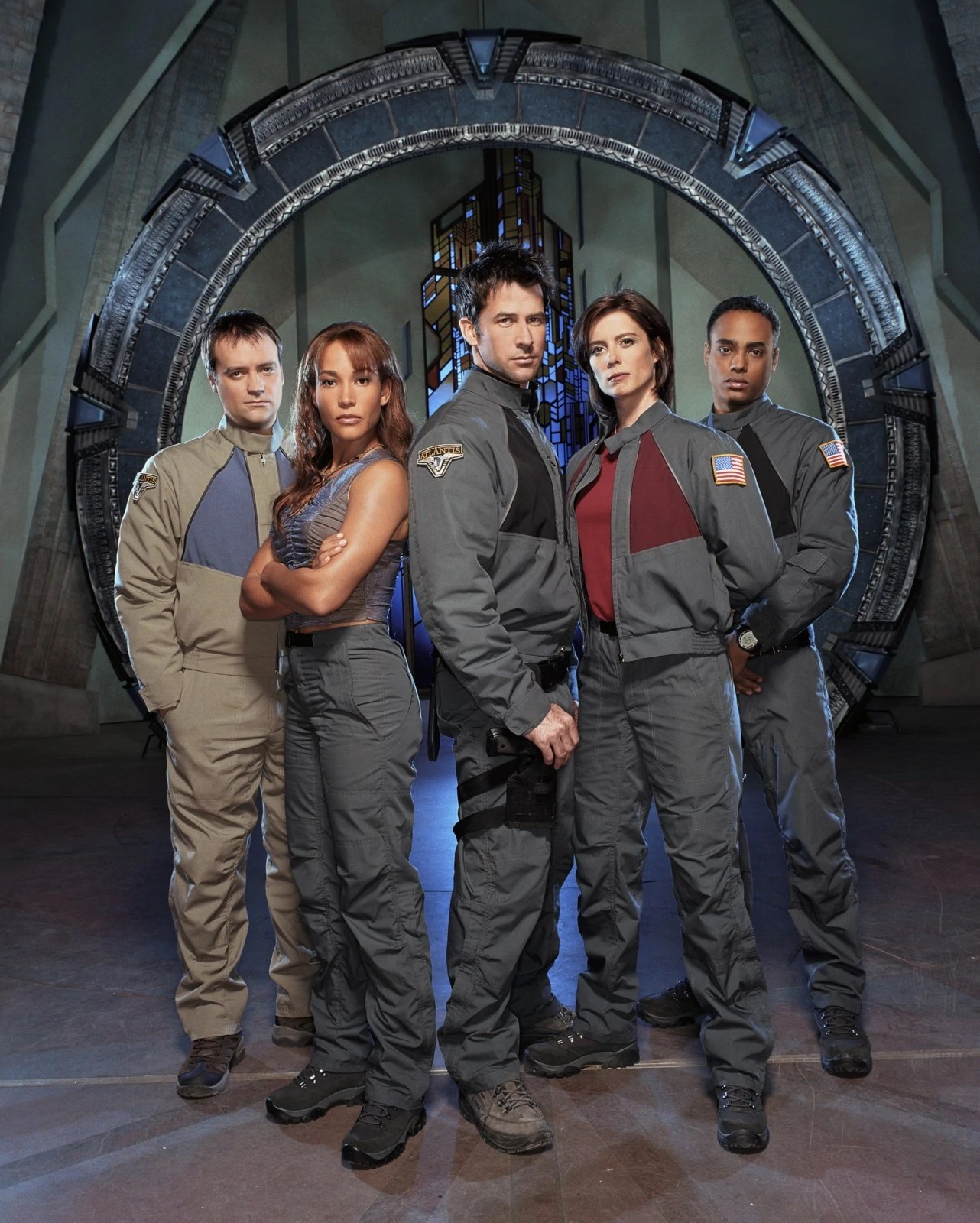 In this series, Stargate Command sends a team through the gate on a potentially one-way trip to the Pegasus Galaxy and the mythical lost city of Atlantis. The expedition is lead by Dr. Elizabeth Weir (Tori Higginson) and includes scientists Dr. Rodney McKay (David Hewlett), Dr. Radek Zelenka (David Nykl), medical man Dr. Carson Beckett (Paul McGillion), and Chuck the Technician (Chuck Campbell). Their military attachment is initially led by Col. Marshall Sumner (Robert Patrick), who unfortunately doesn’t last long, forcing Lt. Col John Shepherd (Joe Flanigan) to assume charge, and whose men include Major Evan Lorne (Kavan Smith), and Lt. Aiden Ford (Rainbow Sun Francks). They’re aided in their exploration of the new galaxy by local Athosian Teyla Emmagan (Rachel Luttrell).
  In the course of five seasons, Dr. Elizabeth Weir is replaced by first Col. Samantha Carter (Amanda Tapping) from SG-1 and then later IOA official Richard Woosley (Robert Picardo). After a tragic encounter with a Wraith, Lt. Ford becomes addicted to Wraith enzyme and goes rogue. His place on Shepherd’s team is filled by Satedan and former runner Specialist Ronan Dex (Jason Momoa). And after a devastating incident, Dr. Beckett is replaced by Dr. Jennifer Keller (Jewel Stait). The expedition is also reconnected with Stargate Command and the Milky Way, sometimes by stargate, but usually by an Asgard ship called the Daedalus that’s commanded by Col. Steven Caldwell (Mitch Pileggi).
 Also, it is no secret that Zelenka is my favorite, so many of my favorite episodes have him in them. I’m biased and I don’t care.
 aka KikiWrites