Rerun Junkie Episodes–“To Kill or Be Killed”

Warning: This post contains spoilers for the Season 3 Hawaii Five-O episode discussed in Episode 34 of Book ’em, Danno. Do not read this post if you haven’t seen the episode and don’t want to be spoiled for a fifty year old show.

Trigger Warning: This post also contains mentions of suicide, so please take care of yourself accordingly.

In the third season Hawaii Five-O episode “To Kill or Be Killed”, the death of a soldier just returned from Vietnam sparks a search for his draft-dodging brother in an attempt to find out the truth about the soldier’s death. It seems draft-dodger Michael had gone to talk to his brother Jack just before Jack either jumped or was pushed from his apartment balcony.
According to their General father, Jack was the perfect son who’d sacrificed friends and his girl to enlist in the military and serve is country. Meanwhile, in the initial interview with McGarrett, he doesn’t even mention Michael, something Steve asks him about later. Though the General says he didn’t think it was relevant even though he knew Michael had gone to see Jack just before he died, it’s pretty clear by his demeanor in his son’s anti-war pad that’s he’s not exactly proud of the kid.

In Five-O’s efforts to solve the mystery of Jack’s death, they discover that someone had Jack under surveillance. Turns out that it was the army. The General pulls ranks to hear the tapes they made, but even he is stonewalled. The officer in charge can only assure him that Michael didn’t kill Jack. It’s a heartbreaking scene, watching the General as he begs to hear the surveillance tape so he can finally know what happened to his son.

The final scene in the office with everyone listening to the tapes is devastating. And the very end…infuriating.

We knew that Michael was going to talk to his brother about being drafted. He was struggling with it and needed advice. The tape revealed that he found Jack in his apartment about to kill himself with a gun. They struggled for it and after Michael got it away from him, Jack explained that he was involved in a terrible incident in Vietnam in which his squad wiped out a bunch of innocent villagers (hence the army surveillance once he got back). Jack was overcome with guilt about it. Michael thought he’d talked him out of suicide, but after Michael left, Jack jumped from the balcony.

The war destroyed him.

And what is General Dad’s reaction to hearing the tape?

He tells Michael that an incident like what Jack was involved in was a rare mistake and that he should still serve his country like his brother. But Michael chooses to go to jail instead and General Dad declares he’s lost both of his sons.

Yes. He disowns his son for not serving after his other son died as a direct result of his service.

I very nearly broke my no-spoilers-without-Dan rule on the podcast because I so wanted to discuss the final scene. The ending of this episode makes me viscerally angry. You’re not a real fan of the General because he lauds one son over the other, but his heartbreak is so genuine that you can’t help but feel for him. And you think he just might have a change of heart after what he’s heard on that tape.

But no.

I think what pisses me off the most is that it’s such a believable reaction. The denial of a man who has dedicated his life to the military being confronted with the brutal reality of how his blind service contributed to the death of his son. He can’t accept it. He can’t accept that he has in anyway participated in a bad thing, that war is not the glorious, brave mission to keep the world safe like he’s been told and like he’s told his sons. War is brutal and ugly and destructive and takes more peace than it gives. Vietnam in particular stripped away all of the spit shine that made war look like a valiant act.

The General can’t handle any of that.

He’d rather have a dead son.

It’s a crushing final blow to Michael who ends up losing his whole family to not only do what he feels is right, but to also avoid the same fate as his brother.

Not every episode is guaranteed to have a happy ending, but when it comes to those unhappy endings, this one is certainly one of the most effective.

Book ’em, Danno–Episode 34

Book 'em Danno Podcast

It’s a triple feature!

An old cowboy struggles to hold onto his ranch with tragic consequences in “Paniolo”; Five-O attempts to thwart an elaborate heist in “Ten Thousand Diamonds and a Heart”; and the death of a soldier puts his drafted brother in a tight spot in “To Kill or Be Killed”.

It’s an extra long episode, but it’s extra good. A sad-fun-sad sandwich. Prepare accordingly.

Listen on Soundcloud, iTunes, Spotify, and Stitcher.

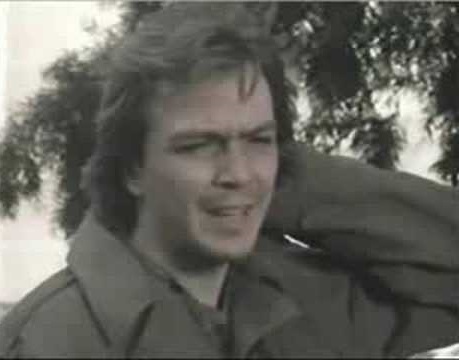
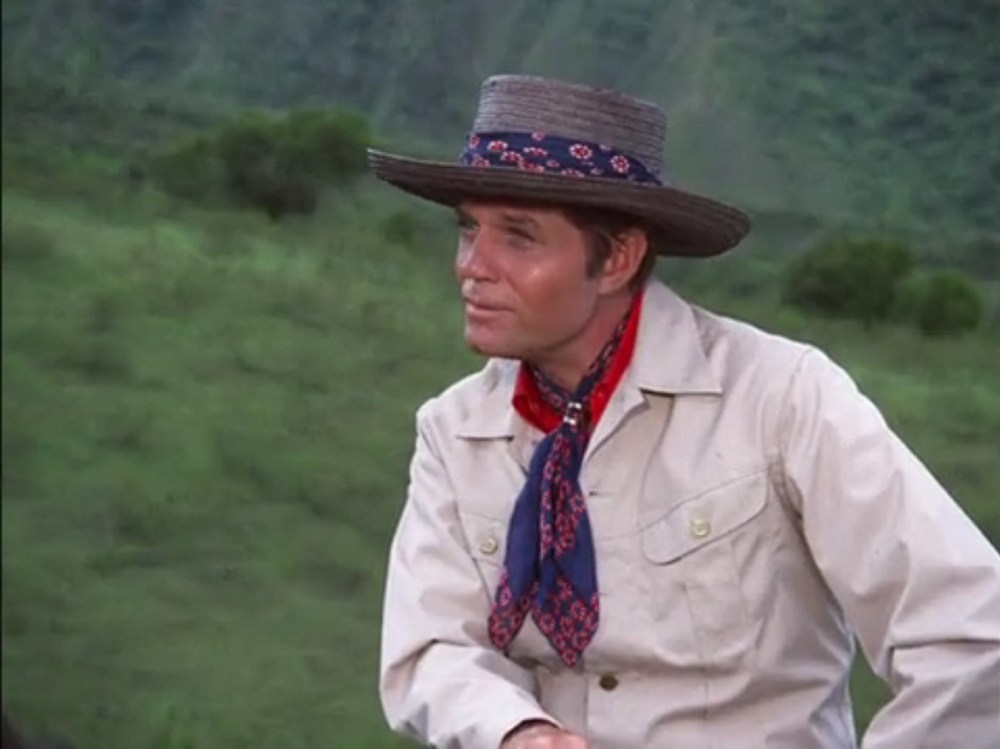
Please enjoy these visual references to certain points in my discussion of the episodes. Steve’s tracking outfit in “Paniolo”, a shirtless Tim O’Connor in “Ten Thousand Diamonds and a Heart” for those who never knew they needed it, and the framing that really struck me in “To Kill or Be Killed”.

steve paniolo

tim oconnor shirtless

steve no war

Police Involved Shooting

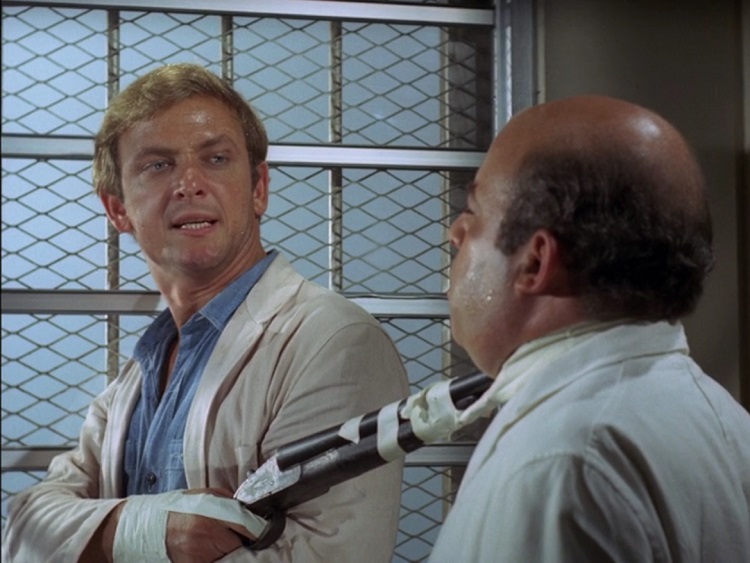
In the world of cop shows, there are two kinds of very special episodes: a cop gets shot or a cop shoots somebody.
This post is about the latter.

Here’s how the episode usually goes: One of our cop heroes shoots somebody. There is then an investigation into the shooting in which there’s an underlying implication that this investigation isn’t fair because our good guys always have good shoots. There’s some drama. Then our shooter is once again declared a cop hero.

Obviously, there are variations and not every episode follows this format, but that’s basically it for many of the episodes I’ve seen.

The police involved shooting episodes of Dragnet and Adam-12 are probably the most technical I’ve ever seen due to Jack Webb’s dedication to the manual. While we do have that little bit of angst that comes from our hero being questioned, there’s still an objectivity about it. This is how the process is supposed to work. Jack Webb very much so believed that police officers were meant to be held to a higher standard which is why these episodes stand out. This treatment of our good guys isn’t exceptional -it’s routine.

Despite Jack Webb’s good intentions, this sort of intense scrutiny is an idealization of what we’d like to believe happens during these investigations, but we know doesn’t.

I pointed this out when I was covering the Hawaii Five-O first season episode “And They Painted Daisies on His Coffin” on Book ‘em, Danno that the investigation into Danny shooting the supposedly unarmed young man and him subsequently getting arrested for murder was idealized. It’s only in the most extreme circumstances that a police officer is arrested for this kind of shooting today. You can’t tell me that it happened more often when there wasn’t the prevalence of video.

A first season episode of Starsky and Hutch called “Pariah” dealt a little with the public fallout of a police involved shooting. Starsky ends up shooting an armed robber who turns out to be only sixteen. The kid’s mom is devastated and Starsky feels incredibly guilty over the death. The public isn’t exactly thrilled with the circumstances, particularly one guy with an agenda who says if Starsky is cleared, he’ll start killing cops. Starsky is cleared of any wrongdoing because of course and the killing spree begins and will continue until Starsky resigns. So this is an example of taking our very special episode and upping the ante by adding in public scorn and then throwing in a vendetta for good measure.

The police involved shooting episodes are always very special episodes because they’re the only episodes in which the violence our heroes inflict on the criminals is ever questioned. In any other episode, they’re offing the bad guys without even the slightest mention of the paperwork. Every other shooting is completely justified, no question.

One exception to this rule (at least that I know of because I haven’t seen every cop show–yet) is Barney Miller. Possibly because it’s a comedy that primarily deals with the mundane and oddball aspects of police work, the show had a unique take on the police involved shooting.

For one, perps weren’t getting shot every week. The members of the 12th precinct got shot at more than they shot and even those instances ended up funny and mild. So, they didn’t need a very special episode about a police involved shooting to separate it from all of the other police involved shootings that were never questioned.

Because in the entire run of the show, there were only three episodes in which a member of the 12th shot someone. In the first season “Hero”, Chano infiltrates a hostage situation in a bank and ends up killing the two would-be robbers. It’s quickly apparent that Chano isn’t handling it well at all despite the incident being considered a good shoot. By the end of the episode, he breaks down into sobs in his apartment.

Dietrich has a similar reaction to his shooting in the seventh season episode “Resignation”. After shooting a suspect in the backside, Dietrich decides that this part of the job goes against his morals and attempts to submit his resignation. Though Barney susses out the real root of Dietrich’s angst, which goes a little sideways from just his morals, it still illustrates the negative effect of a shooting on the firing officer.

In the eighth season episode “Inquiry”, Wojo faces an investigation after shooting a suspect, winging him in the arm. In this episode, there’s doubt that Wojo was justified in the shooting, particularly with his history of being rough with suspects. We’re also introduced to the then-current requirements for the investigation: Wojo is suspended, put on desk duty, has his sidearm confiscated, and advised of his rights before he’s questioned. What’s startling is that during the questioning, a clearly frustrated Wojo admits that he was trying to kill the suspect. Which is what the police are trained to do. Center mass. Shoot to kill.

Everything turns out in Wojo’s favor, of course, but he’s still rattled and to be honest, so are we. Our Wojo can be rough, but a killer? It’s hard to believe. It’s harder to acknowledge that our good guys were trained that way.

Which is probably why the police involved shooting episodes of Barney Miller are so much more impactful than the very special episodes from other cop shows. They aren’t shooting it out every episode. There’s barely any shooting during an entire season.

Which is more true to life than you might think.

But this is fiction.

And in fiction, tension comes from putting our heroes under the gun.

So to speak.

Rerun Junkie Confession–I Don’t Like Your Favorite Sitcom

I am currently enamored with two TV comedies, What We Do in the Shadows and Ghosts. This probably hasn’t happened since the ’80s. Because the truth is that I’m not a real big fan of sitcoms.

Now, that’s not to say that I don’t like them at all, obviously. It’s just that when it comes to sitcoms and the like, I’m very picky and particular. Comedy is hard and I’m a persnickety bitch.

Which means I probably don’t like your favorite sitcom.

We’ve already established that I don’t love Lucy. Or even like her. I’m also not a big fan of Cheers. Even first run, I didn’t really want to watch it with the rest of the family when it was on (ah, the days when we had only one TV and no say about what was on it). Seinfeld? I don’t think I’ve seen an entire episode. Ditto Friends. And I don’t have any desire to.

On school days back in the long, long ago of grade school, my mother would put on a particular channel and that’s how we timed ourselves getting ready for school. The channel played Bewitched, I Dream of Jeannie, Happy Days, Laverne & Shirley, and when Little House on the Prairie came one, we left for school at the first commercial break. Of those four classic sitcoms, I only really liked Laverne & Shirley. It’s still the only one I really like.

It’s not that I think the shows are bad or that I hate them or anything like that. I just don’t care for them. Or about them.

My Three Sons, Mr. Ed, Make Room for Daddy, The Andy Griffith Show, Gomer Pyle, and The Honeymooners just don’t do it for me. I only like The Dick Van Dyke Show when he’s at the office. I never hit it off with The Partridge Family or The Odd Couple. All in the Family, The Jeffersons, Good Times, and Maude are all fine, I’m just not compelled to watch them. Ditto The Mary Tyler Moore Show and Rhoda. Throw Welcome Back, Kotter in there, too. I’ve seen them all and they all have episodes I like, but I wouldn’t exactly call myself a fan.

There are a lot of sitcoms I watched first run back in the ’80s and ’90s as a kid -The TGIF line-up, Mr. Belvedere, Family Ties, Head of the Class, Gimme a Break, Kate & Allie, The Cosby Show, Alf, Married…with Children– that I really enjoyed at the time, but either have no interest in revisiting them or I have, but now don’t enjoy them as I once did.

Of course there are exceptions to all of these. I watched The Golden Girls first run and I still love it. I discovered The Addam’s Family, The Monkees, and Gilligan’s Island reruns when I was a kid and they remain my faves. I was grown when I found F-Troop and Barney Miller and quickly fell in love.

So, I do like some sitcoms.

Just not your fave.

Shades of McGarrett

Thanks to Charge! and my habit of leaving the TV on in the background while I work, I’ve been half-ass rewatching CSI:Miami. I watched this show first run back in the aughts (though I was in and out on the final few seasons) and it is just as bonkers as I remember it. Which is absolutely not a bad thing. Of the three CSIs that were running at the time, it definitely trotted into nighttime soap territory while proceduraling and I find that to be good fun.

As I’ve been rewatching it, I find myself remembering some of the episodes and the character arcs. But I’m also picking up on things I didn’t really notice before. Or maybe care about.

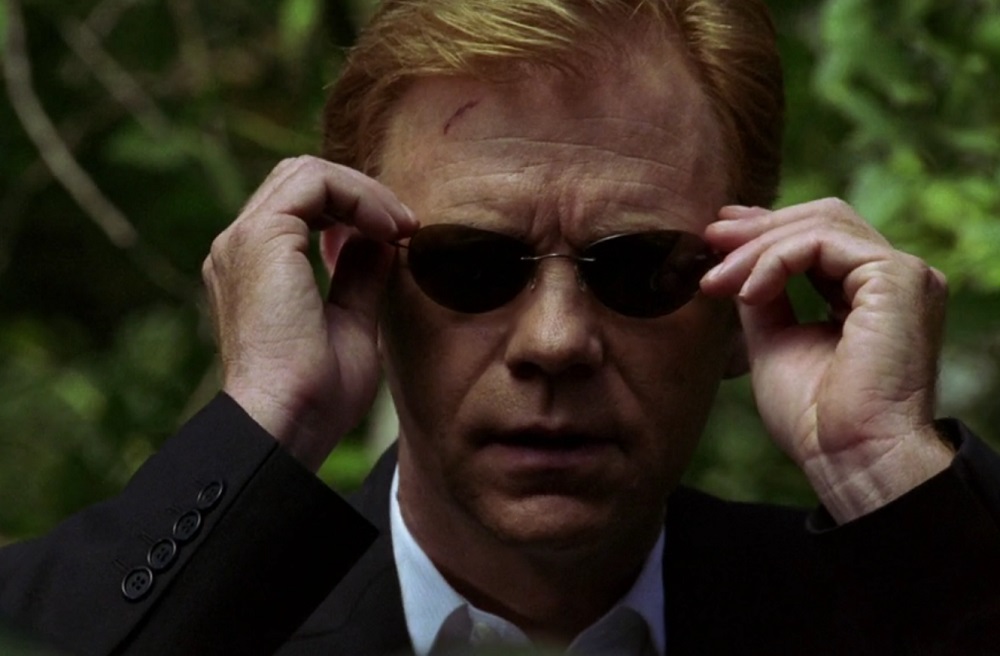
This time through, I’ve found myself somewhat captivated by Horatio Caine aka David Caruso. Now, I’m not a main guy kinda gal, so it’s not surprising that I didn’t pay that much mind to him during my original watch. No slight against him. His sunglasses-quip one-two is iconic, after all. But the main has never been my bag.

(If memory serves, my favorite character back in the day was Tripp, and if you’re wondering why I would pick this sarcastic, no-patience, no fucks to give detective over the young, pretty CSIs, let me tell you that even in my twenties, that man spoke to my soul. It’s speaks even louder now that I’m his age.)

So, I’ve been puzzling about this. Because there’s something about Horatio Caine that’s caught my eye now, something that’s captured my attention that didn’t before, and I haven’t been able to put my finger on it.

Until the other night when it hit me and the epiphany lit up my brain in such a way that I think I might have actually cried out “Eureka!” Also, my eyes might have bulged out of my skull. It wasn’t pretty, but it was satisfying.

There is something very Steve McGarrett about Horatio Caine.
Obviously, this is probably just me, though it could be argued that Jack Lord set a certain standard when it came to good looking justice seekers with fab hair and impeccable style when playing Steve McGarrett, and David Caruso kind of followed along with that with Horatio Caine. But truly, this is an all-in-my-head vibe kind of thing that I now cannot unsee and so I shall gift it unto you.

I’m not apologizing.

Here’s my vibe comparison.

Steve McGarrett and Horatio Caine have a lot in common. They’re both the leaders of their law enforcement teams, something they take very seriously. They both take their jobs as a whole seriously. They are justice seekers and that is serious business. They have a tendency towards stoicism when they’re hunting down bad guys, and it’s no surprise that since they’re the pinnacle of good guys, they almost always get their quarry. And damned if they don’t always have the line that puts anyone and everyone in their place.

This, of course, is sort of the backbone to the leads on this sort of show. That strong, in charge, can’t be beat personality.

But, both Steve McGarrett and Horatio Caine have softer sides that tend to be forgotten amongst the Book ’em, Danno and sunglasses of pop culture.

For all of their tendency to the serious, both men have a sense of humor. They find things funny. And there’s something sweet and glorious when they smile. Perhaps because they’re so serious so much of the time a quirk of the lip means that much more.

The way Horatio Caine interacts with children is reminiscent of the way Steve McGarrett interacts with them. Both men have the ability to be soothing without being condescending. They have a knack for making a kid feel safe. Also, the little ones seem to adore them. I don’t know what faces they’re making when we’re not looking, but babies and toddlers think they’re great. Likewise, these serious business, childless men (okay, Horatio acquired a teenage son in the later seasons thanks to a before-times thing with Elizabeth Berkley because why the fuck not) are just as happy with the little ones. They look nothing but completely comfortable with them and their reputations do not suffer a bit for it.

The biggest vibe for me, though (aside from the smiling thing because my laws the sweetness) is the affection and even tenderness each man has for the members of his team. It’s anticipated that they will have their team’s backs if someone comes for them or implies that they are anything other than terrific humans. There are no doubts that these two men will have the heads of anyone who hurts one of their crew. And that injured party in peril will have the love and support of their leader. Always.

But it goes beyond that given.

These two men care about their team beyond the work and it’s shown in ways both surprising and mundane. Steve thanking Danny for a birthday party at the office with sincere gratitude and a touch of physical affection is as sweet as it is surprising (almost as surprising as Steve getting blown up 30 seconds later…well, as surprising as it can be when it happens once a season). He’s truly touched. Meanwhile, Horatio offering to be the DD during a night out could be written off as a Drive Sober PSA and a given for a responsible cop. However, the implication goes beyond that. He’s there to make sure his team gets home safely. Period.

It’s a likeness that struck me hard.

As iconic as Steve McGarrett is, I never thought anyone could, intentionally or not, compare.

Leave it to a ginger in Miami with a pair of excellent shades to do just that.

Book ’em, Danno–Episode 33

Book 'em Danno Podcast

Here we are over half-way through Season 3.

Episode 13 “The Payoff” has Albert Salmi and Madlyn Rhue double-crossing their fellow felons in order to keep a huge ransom for themselves. Episode 14 “The Double Wall” sees an innocent Monte Markham behind bars and driven to extremes in order to prove it.

The star power in these two episodes, particularly the latter, is incredible.

Listen and enjoy.

Soundcloud iTunes Spotify Stitcher

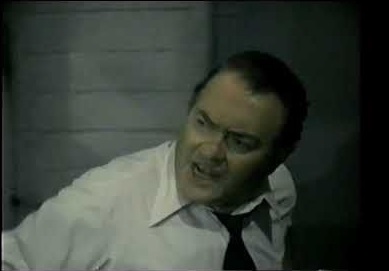
Here is a visual representation of Monte Markham’s desperation. He’s holding Boss Hogg hostage. That’s desperate.

monte markham sorrell booke

Heteronormativity Is a Helluva Drug

I didn’t expect to like the reboot of Magnum PI. I only gave the pilot a shot because I’d been watching the 1980 series and decided to compare and contrast. I already knew that Magnum was now Latino and Higgins was now a woman. I went into it thinking it’d be fine, but not for me, like most reboots.

The pilot was a fun ride. I gave it the three episode test (pilot establishes the show; second ep is the adjustments; third ep is the vibe) and ended up hooked.

My one hope for the show was that they wouldn’t default to hooking up Magnum and Higgins.

Well, it was good while it lasted and it lasted until early in the 2nd season. Once it became clear that the endgame is Magnum and Higgins are omg-meant-to-be (and that it’s apparently going to be played out in poorly executed fanfic tropes), it then became a countdown until I got fed up and quit watching. That lasted until half-way through the 4th season. I haven’t given up entirely but I am absolutely half-assing it and I don’t care about the show like I once did.

It’s a shame, but thems the breaks.

And there’s plenty of history behind the continuation of the heteronormative narrative that defaults opposite sex leads or lead/supporting into a romantic tension leading to a relationship.

Obviously, the most known example of this is Dave and Maddie on Moonlighting, a show that so depended on the will-they-or-won’t-they, that when they did, it pretty much cancelled the show (to be fair there were other behind-the-scenes issues that contributed to the show’s demise, too). Also, Agnes and Herb had the much better relationship.

Scarecrow and Mrs. King and Remington Steele drew from the same playbook. On Barney Miller, it played out over five episodes between Wojo and Wentworth before Linda Lavin left to be Alice.

In the case of shows like Tales of the Gold Monkey, it’s less of a will-they-or-won’t-they and more of a when-will-he-commit. Because there’s obviously something going on between Jake and Sarah (hell, they kiss in the pilot), but it’s a situationship that allows Jake to kiss other ladies depending on the plot. There’s a similar sort of set-up happening with Walter and Roxanne on Automan. Are they dating? Kinda, maybe, it depends.

Emergency! actually began with Dr. Kelly Brackett and Nurse Dixie McCall in a romantic relationship, which was dropped in later episodes without explanation (read: break-up). From that point on, Brackett and Dixie were friends and colleagues, caring for and respecting each other in both professional and platonic ways, showing that, hey, it could be done.

I’m not saying that it wasn’t. There were series that didn’t necessarily default to the romantic relationship. Della Street didn’t get involved with Perry Mason or Paul Drake (though Paul did nickname Della “Beautiful” and there was some joking that might be considered flirting). Likewise Britt Reid clearly cared about Miss Case and vice-versa, but there was nothing but boss-secretary friendship happening with The Green Hornet. Clearly, it could be done.

But there’s no denying that it could be a struggle. For most of Hunter‘s seven season run, Rick Hunter and Dee Dee McCall were partners and friends, a caring and satisfying platonic relationship that Fred Dryer and Stepfanie Kramer were happy with. But as the story goes, the network and the fans wanted more. As a result, a Season 6 episode informed the audience that Hunter and McCall had once slept together, but it caused an issue with their work relationship.

It’s the default aspect of the hetereonormative narrative, the well-worn path of it, the perpetuation of the idea that the only chemistry that exists between opposite sexes is sexual and the only important relationships are romantic that really grates. Worse, it’s dull. And it’s dull because it’s expected. No other options are presented or considered.

Magnum PI had an opportunity to explore something beyond the default, to establish a couple of opposite sex platonic soulmates without some sort of caveat or exemption (like one or both of them being queer), to really dig into that kind of relationship and do something different.

Instead, it fell for the same quick and easy high that’s been dulling senses for decades.

It really is a helluva drug.

Rerun Junkie Show–CHiPs

chips

Back in the long long ago of my childhood of the late ’80s/early ’90s, I discovered many of my beloved reruns thanks to my grandma’s much better cable and living close enough that I could spend weeks in the summer at her house. One of those shows was CHiPs. Oh yes. My love of ’70s cops shows started when I was quite young. I can remember watching this show during the summer at grandma’s house (along with a slew of other reruns) and then being thrilled a few years later when it ended up on a line-up on a channel I got at home and could watch after school. I believe it was on after Starsky and Hutch.

Anyway.

CHiPs follows two officers of the California Highway Patrol, Officer Jon Baker (Larry Wilcox) and his partner Officer Frank “Ponch” Poncherello (Erik Estrada) as they fight crime under the watchful eye of Sgt. Joseph Getraer (Robert Pine) and alongside their fellow officers including Officer Arthur Grossman (Paul Linke), Officer Barry Barizca (Brodie Greer), Officer Bonnie Clark (Randi Oakes), Officer Jebediah Turner (Michael Dorn), Officer Gene Fritz (Lew Saunders), Officer Kathy Linahan (Tina Gayle), Officer Sindy Cahill (Brianne Leary), and Officer Benjamin Webster (Clarence Gilyard Jr.). Baker also partnered with Officer Steve McLeish (Caitlyn Jenner) for some episodes (Estrada was sitting out due to a contract dispute) and Officer Bobby “Hot Dog” Nelson (Tom Reilly) stepped in after Baker left the CHP to go back to Wyoming (Wilcox left the show), bringing along brother Officer Bruce Nelson (Bruce Penhall) as a trainee. And of course, the whole squad was kept running by the brilliant Harlan Arliss (Lou Wagner). It should be noted that Michael Dorn sported a magnificent cop mustache during his run on the show and I appreciate that dedication.

Since the show is all about the highway patrol, there was a lot hot freeway action with chases and accidents. And while many of the crimes dealt with some sort of moving violation, be it speeding, racing, car theft, or trafficking of some sort, some of the storylines moved off the road, so to speak. There was always a main story weaved into the other minor crimes along with whatever shenanigans Ponch and/or Jon were getting into. Sometimes everyone got in on the shenanigans. For example, I just watched an episode that involved the CHP helping to care for a bunch of orphaned babies. Yes, really. Robert Pine demonstrating how to most effectively soothe a baby (“skate and sway”) is something we all need in our lives.

But there were also drag racers, stunt drivers, off-road racers, and demolition derbies, and we need that in our lives, too. Thank goodness this show provided. Not one to shy away from the things that made the ’70s great, Ponch and Jon often found themselves doing the latest hip things, like land boarding or hang gliding, either undercover or just for fun.

Because of the nature of the show, it was easy to work in guest stars for not only the main storylines, but for the smaller crimes, too. And since the show’s six seasons ran during the late ’70s and early ’80s, we’re talking the cream of the rerun crop here.

Just a scant few of the guest stars that cruised through include Gwynne Gilford (Robert Pine’s wife playing Sgt. Getraer’s wife); Larry Linville, Herb Edelman, William Schallert, Shelley Berman, Tom Poston, George Lindsey; teenagers Danny Bonaduce, Robbie Rist, Leif Garrett, Christopher Knight, and Moosie Drier; William Smith, Robert F. Lyons, Don Stroud, Mills Watson; Halloween franchise alums Pamela Susan Shoop, Nancy Stephens, Tony Moran, Hunter von Leer, Cliff Emmich, and Kyle Richards; Katherine Cannon, Christine Belford, Mary Crosby, Joanne Linville; future Growing Pains stars Tracey Gold and Joanna Kerns; Reb Brown, Richard Roundtree, Alex Rocco, Brion James; Emergency! vets William Boyett, Tim Donnelly, and Vince Howard; Jenny O’Hara, Elaine Joyce, Anne Lockhart, Anne Francis; Escape to Witch Mountain kids Kim Richards and Ike Eisenmann; The Howling stars Dee Wallace and Christopher Stone; Troy Donahue, Rudy Vallee, Dough McClure, Edd Byrnes; Poltergeist stars Dominique Dunne and Heather O’Rourke; Ed Harris, David Caruso, Michelle Pfeifer, Kelly Preston, Bryan Cranston; Black Sheep Squadron vets Simon Oakland, Robert Ginty, and Dirk Blocker; Clu Gulager, Robert Englund, Kip Niven; Welcome Back, Kotter graduates Ron Palillo and Robert Hegyes; Dwight Schultz, A Martinez, Fred Dryer, Gary Sandy, Edward James Olmos, Gerald McRaney, Markie Post, Martin Kove, Anne Ramsey, Soleil Moon Frye, Moon Unit Zappa, Keenan Ivory Wayans; Ironside alums Don Galloway and Don Mitchell; Sonny Bono, Eric Braeden, Julie Newmar, Miguel Ferrer, Royal Dano, Ellen Travolta; Gilligan’s Island castaways Tina Louise and Jim Backus; Alice Ghostly, Richard Deacon, Don Most, Alan Sues; F-Troop vets Ken Berry and Larry Storch; and comedy legends Milton Berle, Phil Silvers, Rich Little, and Phyllis Diller.

Believe me when I say that I didn’t include everyone I wanted to. The show really is a gold mine for guest stars.

Part of that is because it was easy for celebs to do a cameo or in the case of a couple of episodes, uncredited appearances thanks to the CHP charity efforts.

There are at least two of these episodes I can think of off the top of my head. Both of them were two-parters, but one is legend.

The Season 4 episode “The Great 5K Race and Boulder Wrap” features Ponch trying to recruit celebrities for a charity function, a couple of thieves with a fancy motorcycle and side car, and a boulder threatening Milton Berle’s house. Don’t worry, everything works out okay, of course, and we get treated to our CHP officers getting dunked in a dunk tank by the likes of Michael Cole, Todd Bridges, Richard Kline, and one of the Landers sisters. The fun and games is also attended by Cindy Williams, Rose Marie, Peter Marshall, Ruth Buzzi, Vic Tayback, Betsy Palmer, Marcia Wallace, Merlin Olsen, Conrad Bain, and Dean Butler.

However, the Season 3 opener “Roller Disco” is the ’70s glam and WTF that dreams are made of. In addition to a group of roller skating thieves (Jim Brown and Fred Williamson on skates!), a really annoying roller skating brat, a whiplash guy looking for revenge, and a burnt out rock star, Ponch is in charge of the Skate with the Stars charity event. That’s right! Stars on skates! Melissa Sue Anderson, Richard Hatch, Victor French, Wesley Eure, Nancy Kulp, Phillip McKeon, Brett Somers, Dick Van Patten, George Peppard, Jo Anne Worley, and more. Yes, it is as glorious as it sounds. Only a disco ball glitters more.

Of course, most episodes weren’t this glitzy. Even though Ponch and Jon were the focus of the show, the secondary characters got their chances to shine in episodes, too. Bonnie thought about joining a stunt show; Barizca helped out his parents; Getraer had his hands full with his own kids as well as Ponch and Jon; and Grossman…well, he’s Grossman.

And since this is a cop show featuring traffic, there were also plenty of peril episodes. Everybody wrecked at least once, and some of those wrecks weren’t accidents. In one episode, someone deliberately targeted our CHiPs and ended up taking out Jon and Grossman. Some wrecked worse than others. Ponch, Jon, Bonnie, Sindy, Gertraer, and Grossman all ended up in the hospital at one point in time or another. Poor Sindy ended up being accused of causing an 11 car pile-up and it took the Chippies working the MAIT team investigation to clear her.

One of the more memorable wrecks, at least memorable to me, was when Ponch ended up crashing into a store and ended up with a display case poised to decapitate him. Thanks to Jon, Barizca, Turner, and Grossman, Ponch escaped without a physical scratch, but the mental wounds nearly kept him from doing his job. And there were episodes that were a little more emotionally involved for our CHiPs, in between the romances, daredevils, wayward kids, pranks, motor cycle gangs, martial arts, pot farmers, and road rage.

I’m sure back in the day women, men, and enbys of the guy-liking persuasion probably sorted themselves into one of two categories: Ponch or Jon. I admit that in my teen years, I went between the two. But ultimately, my heart belonged to Grossman. When it comes to my fictional men, there’s something about a chubby, awkward one that wins me every time. Plus, he was in Motel Hell. My opinion hasn’t really changed much in my elder years, though now I definitely have a thing for Bonnie, too, and I totally see the appeal of Getraer. Take that Chris Pine. Your dad will always be cooler.

But whichever category you fall into, you know that these Chippies will be keeping you safe on the freeway.

Grab your skates.

chips roller disco ad

Policing Copaganda

It’s no secret that one of my favorite TV genres is ‘70s cop shows. I don’t know why. You can say it’s because my father was a police officer for twenty-five years, but I think that has little to do with it considering very little of what I’ve seen on the screen reflected what he dealt with policing my small town in the middle of a cornfield.

But that could be why even though I love these shows, I never really thought about them accurately reflecting reality. Maybe because my dad would point out the inaccuracies in these shows. Maybe because as soon as I got my license, my dad drilled it into me that if I got pulled over not to allow the cop to search my car without a warrant. Maybe because my dad has always told me never talk to cops without a lawyer.

I’m sure that’s why I get all swoony when I see someone exercise their rights on these shows. That is like reality in that it doesn’t happen often. Most people don’t know them, let alone use them.

The point of these shows is entertainment, of course. Even Adam-12, which had episodes shown in police academies to illustrate certain situations because it was so accurate to uniformed officer life, had more hostage situations and shoot outs than even a cop in the busiest metropolitan area would encounter.

Action, drama, a witty one-liner or seven, and the good guys (usually) win. I can’t help it. I’m a sucker for it.

And it’s all, of course, fiction.

I think of it as the depiction of ideal policing and justice. It’s what we want it to be, what it’s supposed to be, what the people in power try to convince us that it is (when it’s absolutely not). The police are there to protect and serve, the justice system is fair, the good guys get the bad guys, and the bad guys get punished. It’s all make believe and I prefer to see it on the small screen. Sort of like my affinity for slasher movies. I prefer my violence to happen fictionally.

I blame Jack Webb for some of that. He was a devout believer in law enforcement and the justice system. The Los Angeles police department was wildly corrupt back in the long, long ago (save your jokes) and underwent a huge reform (I said save your jokes), which made an impression on Webb. While Dragnet and Adam-12 depicted a lot of the work detectives and uniformed officers do accurately, it was still idealized. A sanitized depiction of the job, the life, and justice. This is the way things work when everything works as it’s supposed to.

The police involved shootings on most of these cop shows is where this idealization is most evident. Adam-12 probably had the best technical depiction, though Hawaii Five-O had a thorough one as well with “And They Painted Daisies on His Coffin”. Even Joe Friday himself had to have his shooting of a burglary suspect investigated. And while they all present the idea that lethal force is harshly scrutinized and thoroughly investigated, these episodes are also constructed to insure the audience’s maximum sympathy to our protagonist cops. Of course, every shooting is always justified.

It’s been said that cops (including my father) felt that Barney Miller is probably the most accurate and realistic when it comes to the depiction of law enforcement. Maybe because it was a comedy it had no trouble depicting some of the mundane realities of police work: the paperwork, the bureaucracy, the budgets, the lack of manpower, the limitations and inadequacy of the law and the justice system. The 12th precinct wasn’t dealing with non-stop homicides like most cop shows. They were dealing with what cops actually deal with the most: petty shit. The show might be a little too honest to be pure copaganda, but it still does its part, if only in a ‘not all cops” kind of way.

The ideal depiction of police and justice continues today.

According to this article, police procedurals today distort the view of how policing and the justice system actually work. These shows don’t accurately reflect the imbalances in the justice system, the abuse of power by the police, the inherent racism, white supremacy, and wealth-bias that’s integral to the system.

And if you watch enough reruns of cop shows, particularly from the ‘70s, you can see how that groundwork was laid. It’s easy to forgive and/or overlook our protagonists playing fast and loose with the law and people’s rights because they’re the good guys.

After all, they’ll tell you that themselves.

Book ’em, Danno–Episode 32

Book 'em Danno Podcast

Episode 32 welcomes back Dan Budnik of Eventually Supertrain, which means only one thing.

We’re talking my favorite episode of the season.

Hume Cronyn is the master of disguise in “Over 50? Steal” and Danno suffers a heartbreaking loss in “Beautiful Screamer.” These are two fantastic episodes and we had a ball talking about them. There are spoilers for both episodes, so check the episode description for the time stamps.

Listen on Soundcloud, iTunes, Spotify, and Stitcher.

Allow me to take a moment to hype up Dan, who is an excellent podcaster and writer and deserves to be hyped. Obviously, you need to check out all of his podcasts under the Eventually Supertrain umbrella. There’s Eventually Supertrain, of course, which covers short-lived series that didn’t get enough love; Rockin’ All Week with You: A Happy Day’s Podcast, which covers the series; and he’s currently doing not one, not two, but THREE minute-by-minute podcasts (these are always super fun) covering a total of SIX movies: A Spookie Minute Spent in a Ghosthouse covers Spookies and Ghosthouse; ’70s Friends of Frankenstein covers Blackenstein and Frankenstein ’80; and Howling 2 and 7 Too covers, obviously Howling 2 and Howling 7.

The grammar of that sentence is a logistical nightmare. I’m sorry.

Speaking of the English language, Dan has also configured and placed it in a new book, From Beverly Hills to Hooterville: Exploring TV’s Henningverse from 1962-1971, which I’ve given a glowing review and I encourage you to acquire it posthaste if you have not yet done so.

So, please go indulge in Dan’s works.

Or else this Lewis Avery Filer disguise will haunt your dreams.

lewis avery filer