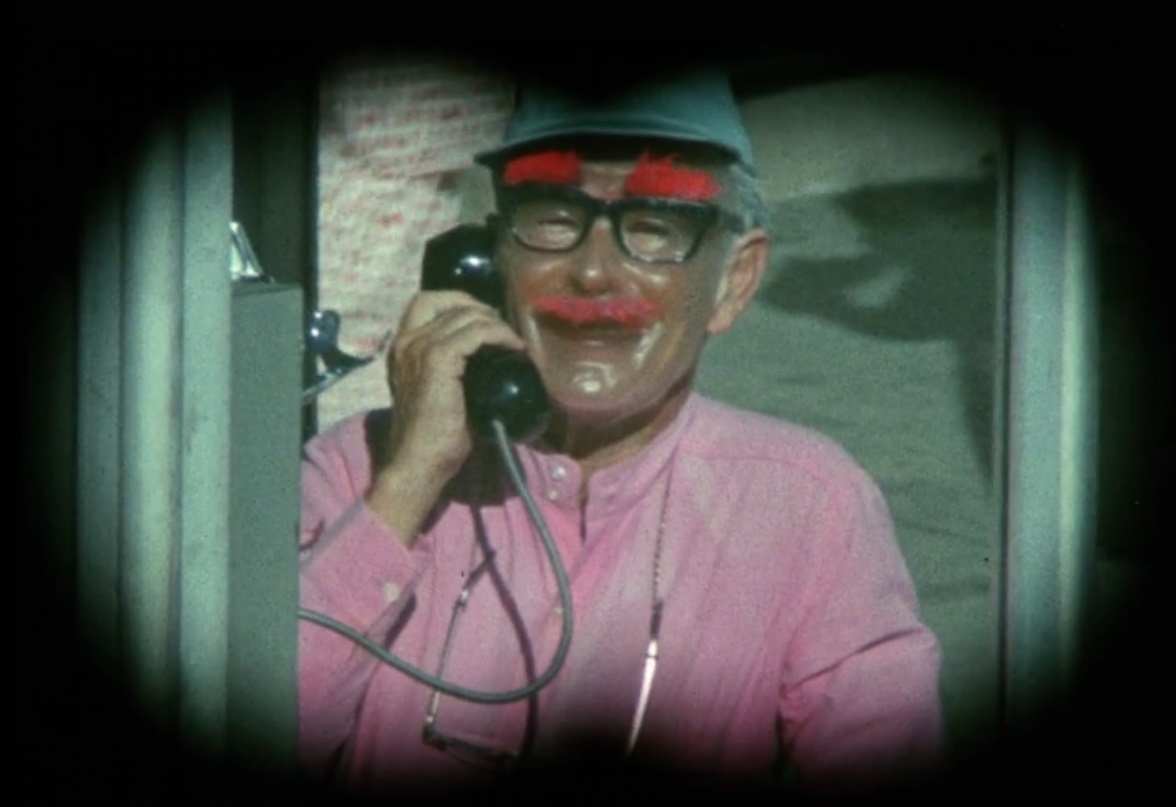
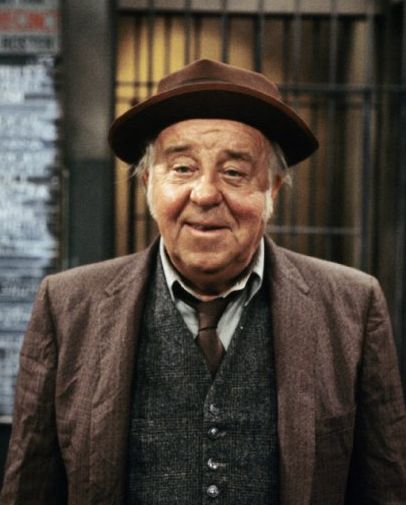
Rerun Junkie Guest Stars–J. Pat O’Malley

Since I’ve already written about J. Pat O’Malley once when I discussed “The Fugitive” episode of The Twilight Zone, it’s only right that I go all in and do a guest star post about him. After all, he is one of my favorites anyway.
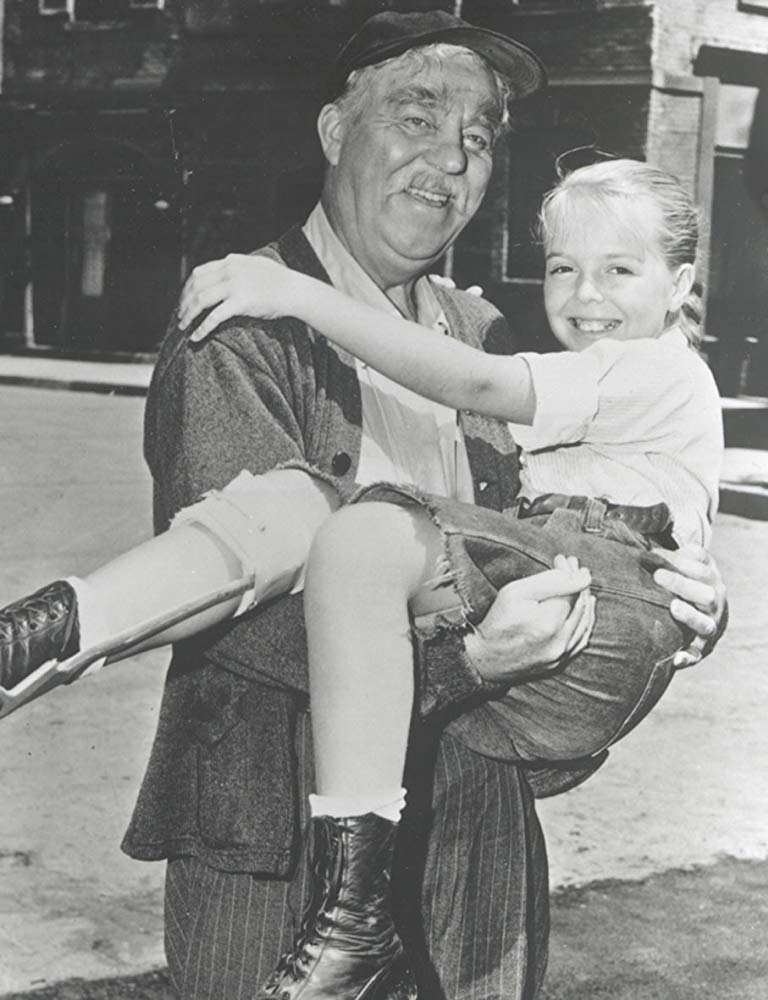
The adorable, sweet-faced actor has 242 credits listed on IMDB, and many of those are in TV Land, including recurring roles on Maude, A Touch of Grace, Wendy and Me, My Favorite Martian, Frontier Circus, Black Saddle, and The Adventures of Spin and Marty.

He also had the tendency to appear on shows multiple times, but as different characters. He appeared at least three times on Rawhide, The Twilight Zone, Death Valley Days, The Fugitive, The Real McCoys, The Virginian, Adam-12, Emergency!, Bonanza, Gunsmoke, and Barney Miller.

Of his three appearances on Barney Miller, his role as Mr. Holliman in “Dirty Rat” is probably my favorite. He plays a lovable ol’ houseless man who goes to a department store for the free samples and ends up falling asleep. When he wakes up, the store is closed until Monday. He makes himself at home while waiting for the store to open, but unfortunately, he couldn’t find an alarm clock so he could wake up in time to sneak out of the store. It’s a sweet, funny character, which is usually what I think of when I think of J. Pat O’Malley.

His appearance as Old Bill in the “Messing Around” episode of Emergency! is another one of my favorites. A sweet gent who entertains the folks waiting in the ER at Rampart General while seeking treatment for the persistent ailment of loneliness, Old Bill’s health takes a turn for the serious later in the episode and the paramedics have to intervene. What I like so much about it is not just his portrayal of Old Bill, but also everyone else’s response to him. They know he’s lonely and looking for a little attention, but they also don’t doubt him when he presents with an actual health concern. It’s just that he leaves to go home before he’s seen because he doesn’t think it’s anything to worry about. I can’t imagine pulling that twist off with another actor because of how endearing Old Bill has to be for it to work.

J. Pat did a tour of the Henningverse, appearing on The Beverly Hillbillies, Green Acres (4 times), and Petticoat Junction (2 times); was a medicine man on F-Troop; he welcomed the Bradys to TV in the pilot for The Brady Bunch; was Rob Petrie’s grandfather on The Dick Van Dyke Show; and attempted to con Barney Fife’s landlady on The Andy Griffith Show.
His cherub face graced Westerns like Alias Smith and Jones, The Big Valley, Wagon Train, Wanted: Dead or Alive, The Rebel, Daniel Boone, Maverick, Stoney Burke, and The Wild Wild West; sitcoms like Three’s Company, Taxi, One Day at a Time, I Dream of Jeanie, Bewitched, and Hogan’s Heroes; law and order shows like Perry Mason, The Untouchables, Burke’s Law, Ironside, Quincy ME, and The Mod Squad; and PI classics like Barretta, The Rockford Files, Banacek, and Mannix.

He got soapy on Soap, thrilled on Thriller, tested his luck on Mr. Lucky, duked around with The Dukes of Hazzard, and batted around with Batman. He even had a brush with zombies on Kolchak: the Nightstalker.

And if you somehow still don’t recognize J. Pat’s face, you’ll probably recognize his voice. This singer provided the voices for characters in Disney classics such as One Hundred and One Dalmatians, Robin Hood, Mary Poppins, The Jungle Book, and Alice in Wonderland.

Maybe J. Pat O’Malley didn’t stray much from type (at least not in the many things I’ve seen him in), but he played that type so well that it’s hard to think of him as anything other than somewhat lovable. And memorable.

After all, I named one of the neighborhood cats J. Patch O’Malley after him.

The Unconventional Bromance of Thomas Magnum and Jonathan Higgins

Not everyone believes in soulmates and that’s fine. I’m not judging you. People can’t even seem to agree on the definitive definition of a soulmate. My preferred explanation is that a soulmate is a person who comes into your life to stimulate your growth. Maybe it’s just for a short time, maybe it’s forever, but they are there for a purpose and that purpose is to nudge you into being a better version of yourself.
Most people who buy into the concept of soulmates focus on romantic soulmates, twin flames burning in the night, but they are not the only kind. There are also platonic soulmates (think your best friend) and antagonistic soulmates.

It would be that last category that Thomas Magnum and Jonathan Higgins fall into.

During the eight season run of Magnum PI, the relationship between Magnum and Higgins evolved from purely antagonistic to friends of a sort. Not the hang out and have a beer kind of friends, or the invite to them to your party kind of friends. But still, friends. Sort of.

The first episodes of the series establish that Higgins and Magnum are to be each other’s foil and their dislike is mutual. Magnum is a thorn in Higgins’s side and Higgins is a constant cramp in Magnum’s style. The only reason they’re in each other’s lives is because they work for the same man (though Higgins might argue that what Magnum does constitutes work), and Higgins is usually dragged into Magnum’s shenanigans against his will.

However, even in those earlier episodes it’s established that there’s at the very least a certain understanding between the two men.

My favorite first season example of this is an episode called “Thicker Than Blood”. TC gets busted smuggling an AWOL buddy who once saved his life into Hawaii and he looks ready and willing to take the fall. Magnum and Rick are desperate to help him. In the course of their investigation, Magnum needs to use the dark room to blow up photos of the ship TC picked up his buddy on, but he has to get through Higgins to get the name of the vessel. The typical bartering is thrown off because Magnum’s need to help TC overrides everything and he offers to move out of the guesthouse, which trips up Higgins even though he accepts. In the end, Magnum stays put because Higgins claims he can’t move out until he does a proper inventory and that will take a while.

But we all know it was because Higgins understood what Magnum was going through trying to help a friend. Being a military man himself, it’s not stretch to surmise that he understands the depths of the bonds created during service.

In the second season episode “Tropical Madness”, a young woman takes a liking to Higgins, which makes Magnum suspect that she’s up to no good. Though Higgins insists that it’s Magnum’s ego driving him, Magnum’s persistence uncovers that the young woman does have an ulterior motive. Okay, maybe Magnum’s ego does play into it, but there’s also a sincere concern for Higgins there, too. He doesn’t want to see the man get hurt, broken heart or something worse.

This is the rhythm of their dynamic. The aggravate each other, antagonize each other (sometimes intentionally), barter with each other, but there’s a mutual respect that’s built on that develops into a more genuine, if odd, kind of friendship.

Part of this understanding is because Magnum knows what kind of man Higgins is. He’s uptight and proper and has some control issues, but Magnum also knows that he’s a good man, one that lives by a strict moral and ethical code. Why else would Magnum work so hard to clear Higgins’s name in the Season 3 episode “Foiled Again”, in which it looks like Higgins is responsible for the death of an old rival during a fencing match. Magnum knows that Higgins didn’t intentionally kill the man and he refuses to let him take the fall for it, even if Higgins is doing it to protect someone else.

In another Season 3 episode, “Black on White”, Magnum goes to extreme lengths to protect Higgins from an apparent attempt on his life without his knowledge. What starts off as a bit of a silly ploy to capture the assassin -Magnum faking an illness to have himself and Higgins quarantined in the guest house- gets very serious when the whole plot is revealed to Higgins and then Higgins reveals that a massacre in Kenya during the Mau Mau uprising happened on his watch. Magnum is the one helping to coax Higgins into opening up. For someone who often tells stories at a drop of a hat, this is one tale that Higgins didn’t want to tell.

Magnum is on the receiving end of another personal story from Higgins in the Season 4 episode “Holmes is Where the Heart Is”. Magnum is obsessed with getting into Higgins’s office to retrieve a camera lens, but Higgins has locked himself away to work on a very specific story for his memoirs, one about an old friend named David Worth who thought himself to be Sherlock Holmes. Eventually, Magnum gets in the office and reads the unfinished story, not taking it seriously until he sees the state Higgins is in and the absolute ire of his reaction to Magnum’s intrusion. However, Magnum is able to coax the rest of the story from Higgins, helping to relieve the emotional burden the man has been carrying.

Likewise, Higgins gains an understanding of what kind of man Magnum is. He might be irresponsible, uncouth, and a bit of leech on his friends, but he also has a deep sense of justice and loyalty, particularly for those his cares about.

Which is why Higgins is also affected when Magnum ended up stranded at sea in the Season 4 opener “Home from the Sea”. Though at the time no one knew that Magnum was in trouble, Rick, TC, and Higgins all have unexplained, uneasy feelings about him. In Higgins’s case, it’s right after he says something unpleasant about Magnum that he suddenly regrets it. He’s just as plagued by the feeling that something is wrong as Magnum’s two besties and joins them in their search. In fact, it’s Higgins that jumps in and does the ultimate save. Whether either man would admit it, it’s that loyalty that bonds them.

That loyalty is also why Higgins joins Magnum, Rick, and TC in what they’re told is a rescue mission for an old friend in Cambodia in the Season 5 two-parter “All for One”. Higgins has no obligation to go (and first season Higgins almost assuredly wouldn’t go) and yet he shows up just the same. Maybe a little bit of his motivation is to go on one more adventure like those of his youth, but the bigger part is that he cares about these men, in particular Magnum. He’s not going to let them go off without him, even if this isn’t his fight.

As the seasons go on, we see just how much these men care for each other, in big and small ways.

Higgins doesn’t fret any less than anyone else in the Season 5 episode “Mac’s Back”. Magnum swears he’s seen Mac, who’s been dead for a couple of seasons by this point, and his friends worry about his sanity. While Higgins chastises Rick for pacing and TC for working his hat, TC points out that Higgins has been drinking out of an empty tea cup for 30 minutes. He’s just as concerned for Magnum’s mental health than the other two.

In the Season 6 opener “Deja Vu”, Magnum and Higgins are in England. Magnum is investigating his friend’s death while Higgins is trying to help the major domo of another of Robin Masters’s estates. One part of the B-story is that Higgins is finally in a position to visit his father and heal a decades old rift, but is reluctant to do so. Magnum is the one who gives him that push (or more accurately, kidnaps him and dumps him on the doorstep). Magnum gives Higgins a similar push in the Season 7 finale “Limbo”, in which it’s revealed that Magnum sent Higgins’s memoirs to a publisher.

Throughout the series Magnum and Higgins find ways to help each other like that. Magnum taking on cases to help Higgins or his friends; Higgins helping Magnum out with cases; Magnum helping Higgins deal with all of his half-brothers; Higgins giving Magnum advice or a few words of wisdom.

By Season 7, their relationship has evolved to the extent they have a prank war in “Paper War”, evidence of their interactions having grown from mostly antagonistic to something approaching good-natured.

The Thomas Magnum and Jonathan Higgins we see in the series finale “Resolutions” are not the same Thomas Magnum and Jonathan Higgins we’re first introduced to in the series premier “Don’t Eat the Snow in Hawaii”. No, they haven’t changed so much that we don’t recognize them. They’re still fundamentally the same and they still get on each other’s nerves.

But Higgins isn’t quite as uptight as he used to be.

And Magnum isn’t quite as immature as he used to be.

It’s a growth that they couldn’t have achieved without each other.

Rerun Junkie Confession–I Love to See My Faves in Peril

One of my favorite episodes of The A-Team is the Season 2 finale “Curtain Call”. In it, Murdock is shot during a job and the team has to figure out how to get him help while being pursued by Decker. It’s actually just an excuse to have a clip show. But the whole time, Murdock is bleeding to death and I love it.

See also: Hawaii Five-O Season 1 episode “King of the Hill” (Yaphet Kotto has a psychotic episode which leads to Danny being shot and held hostage); Starsky and Hutch Season 1 episode “Shootout” (Starsky is shot as a killers take everyone in an Italian restaurant hostage); and The Green Hornet episode “Bad Bet on 459-Silent” (Britt Reid is shot while being The Green Hornet and they have to figure out how to get him help while he’s preoccupied with catching the bad guys).

I know. It sounds sick and cruel and while I am both of these things, there is actually a very good, less evil reason for my enjoyment.

What it boils down to is that it’s an emotional extreme happening in a fictional context. Like watching horror movies. You can be terrified, but in the end, it’s a safe environment. You’re never in any real danger. Same deal. I and my faves are being put through it emotionally, but in the end, everybody’s okay!

Take “Home From the Sea” for example, the Season 4 premier of Magnum PI. Probably my favorite episode of the series; the ending is an absolutely gut punch. But the whole thing hinges on the fact that Magnum is stranded in the middle of the ocean, caught in a dangerous current pushing him further out to sea. At one point, he’s even bumped by a shark. Ultimate peril that we all know that he’ll survive, but it’s the getting there that we love. Okay, maybe I love it.

Another one is Adam-12 Season 4 episode “The Search”. Reed and Malloy are called to a robbery in progress. Reed catches one suspect while Malloy chases the other in the squad. However, the squad has a dodgy mic so dispatch and other officers have trouble keeping up with Malloy’s location, which proves to be a problem when he rolls the car and is badly hurt. Obviously, Malloy is going to be found in time, but you still hold your breath when he’s found first by someone with less than honorable intentions.

The peril doesn’t even have to be that immediately deadly either. Take for instance the Season 2 Gilligan’s Island episode “Quick Before It Sinks”. It looks like the castaways are in for a watery doom because the island is apparently sinking. Obviously, not the case because the show went on for another season and a half and a few TV movies. And as per show rules, it was a Gilligan goof that led to the incorrect assessment. Now, it’s a sitcom, so the danger is amusing at best, but there’s still something about watching first the men try to keep it from the women, and then the women coming up with a solution (build an ark!) and everyone working together before the inevitable. The inevitable being finding out that Gilligan is the cause of everyone thinking they’re about to bite it.

“The Sniper” episode of M*A*S*H is another good example. Though the dramedy had its serious moments, in this Season 2 episode, there’s more laughs despite the impending threat of being gunned down by a sniper. Though we know nobody is going to be shot and/or killed, there’s still something about watching the doctors, nurses, and patients cope with a situation that’s out of the life or death scenarios in the operating room that they’re used to. The show would do several episodes like this, including another favorite of mine, “The Army-Navy Game” in Season 1.

Whether light or dark, watching my faves in peril is a favorite of mine. It’s almost like a bonding experience in a way, living through that dangerous episode with these fictional characters and coming out on the other side closer than ever.

In case you’re wondering how sadistic I am, when I was watching Tales of the Gold Monkey and got to the episode “Escape from Death Island”, I saw that Corky was going to be bitten by a poisonous snake and actually rubbed my hands in glee. By this point in the series, I adored Corky, so to see that he was going to be in peril thrilled me.

Sure I knew he was going to be okay.

But for a little bit, I got to fret over him.

And then feel that rush of relief when he lived to see another day.

Book ’em, Danno–Episode 31

This episode of Book ’em, Danno is full of twists!

In “The Late John Louisiana”, two lovers are on the run after they kill a man who was following them. But it turns out there’s more to this couple than meets the eye. A lot more.

In “The Last Eden”, Jimmy Nuanu, nightclub singer and loud mouth environmentalist, apparently gets drunk and blows up a sewage plant after one of his shows. But he swears he’s innocent. The fix is in and it’s a new take on corporate greed.

Listen on Soundcloud, iTunes, Spotify, and Stitcher.

Fair warning, Ray Danton plays Jimmy Nuanu in “The Last Eden”, so if you’ve seen the Secret Agent Super Dragon episode of Mystery Science Theater 3000, you will be singing the theme song Joel and the bots perform during the episode. It’s not a bad thing. Just a thing.

Also a thing, this disguise. It’s 1970. Nobody even looked twice.

Have Yourself a Jeanette Nolan Christmas

I think I’ve made it pretty clear that Jeanette Nolan is one of my favorites, so it should be no surprise that I could find a way to elevate your holiday TV viewing with her presence.

Here are two Christmas-themed episodes of television shows featuring this holly jolly lady.

Okay, maybe she’s not so holly jolly in “PS Murry Christmas”, a Season 17 episode of Gunsmoke. In between appearances as Dirty Sally (and three years before her spin-off series of the same name), Jeanette played Emma Grundy, strict headmistress of a group of orphans that included Erin Moran, Jodie Foster, Willie Aames, and Todd Lookinland (Mike “Bobby Brady” Lookinland’s brother). In her employ is a handyman by the name of Titus Spangler, played by Jack Elam. That casting right there guarantees a hit.

When Titus, who is Jack Elam and therefore anything but subtle, embarrasses Emma in front of the orphanage’s benefactors during their annual Christmas visit, she fires him. The children, orphaned and impoverished, decide that going on the lam with Titus is a much better life and they convince him to take them along. Naturally, they all end up in Dodge City with Emma following. The plight of the children comes to light when Titus is arrested and Miss Kitty attempts to give the children a decent holiday with a party at the Longbranch Saloon, a gesture Emma refuses. It seems like she’s a straight up Scrooge, but there’s something a little more to Miss Emma than meets the eye.

It’s a sweet episode. You’ve got cute kids, the meaning of Christmas, and Jack Elam being Jack Elam. And at the heart you have Jeanette Nolan playing this very uptight character that goes beyond the stereotype of a heartless orphan-minder.

Jeanette isn’t who she seems to be in the MacGyver Season 5 episode “The Madonna” either. MacGyver takes a break from saving the world to try to bring a little holiday joy to some kids at an underfunded youth center. Sadly, the place is in danger of closing due to those lack of funds and kids like Katherine Isabelle (of Ginger Snaps fame) and Alessandro Julio (who went on to play Lt. Felix Gaeta on the 2004 Battlestar Galactica series) won’t have a place to go. And it’s tough out there on them streets! As we witness a couple of young punks roughing up an old homeless lady who appeared not long after a Madonna statue went missing from a local church. Nothing suspicious about that.

Turns out that everyone BUT Carol the homeless lady is short on Christmas spirit. MacGyver has a case of the holiday blues. The youth center needs $9,000 to stay open. Cynthia (Roxanne Reese), who runs the center, is at the end of her rope. Breeze (Charles Andrew Payne) has no love for the holiday he’s never had. The man who carved the Madonna, Vincent Battaglia (Anthony Holland), is all over sour. And Father Pat (Jackson Davies) isn’t too hopeful about the missing Madonna being returned before Christmas morning. Hell, even the Santa ringing a bell for money is down on his luck.

MacGyver works to both find the missing Madonna for his friend Father Pat and help the young people work to put on their Christmas show to get funds for the youth center, where Carol is now staying. And she helps out in her own special way.

It’s also a sweet episode with cute kids and Pete dressed as Santa and it ends just like you think it will (happy endings all around), but that doesn’t lessen the enjoyment. And Jeanette Nolan shines as the fount of Christmas Spirit. I mean, she takes a broom to a drunken Santa Claus and hustles 8 ball. Can’t get more spirited than that.

So, deck your halls, jingle your bells, trim your tree, and have yourself a Very Merry Jeanette Nolan Christmas.

Rerun Junkie Books–The Electronic Mirror by Mitchell Hadley

As a listener of (and sometimes guest on) Eventually Supertrain, I’ve been introduced to several knowledgeable people. Dan Budnik does a fab job of finding guest hosts to discuss his short-lived TV shows. It’s an eclectic mix of voices, which I appreciate.

One of those voices is Mitchell Hadley of It’s About TV (absolutely check out his site; it’s super cool and informative). And when Mitchell said he wrote a book about TV, I knew I had to get it.

I actually acquired and read it a while ago, but I was a person who’d gotten lax with her blog then. That’s why I’m writing the book up now. I’m a new person.

Anyway.

The Electronic Mirror: What Classic TV Tells Us About Who We Were and Who We Are (and Everything In-Between!) is a collection of essays that gives the reader a cultural context of television. Organized by channels (which I love), the book covers topics such as the concept of classic television, the impact television has on us, communism, censorship, politics, violence, religion, and the various personalities who’ve made their marks.

Nothing occurs in a vacuum and television definitely didn’t. Mitchell provides so much context for a lot of the television that happened back in the day, stuff that people my age experienced in reruns. For example, there’s an essay called “Man on the Run” about The Fugitive and how ground breaking it was at time when the justice system and all of its components were seen as the ultimate authority. To say that it was fallible because an innocent man had been convicted of a horrible crime was kind of a big deal. This is a show that I used to watch in high school when I had insomnia. It’s a good show. I like it. But the context of it never really occurred to me until I read the essay. Yeah, it would kind of be a thing in 1963, wouldn’t it?

There’s a lot of history packed into these pages, which I appreciate. As someone who likes to learn things, I ended up acquiring a bunch of knowledge from the book. Some of the history is to provide context, but some of it is because television made history itself. Or was used to make history.

It’s fascinating to put all of those pieces together to create a much fuller picture of life not only at that time, but also how that picture informs the picture we’ve got going on today.

It’s an informative book and if you’re looking to go a little deeper into your TV knowledge, it’s definitely a read for you. Acquire it!

Book ’em, Danno–Episode 30

Season 3 of Book ’em, Danno and Hawaii Five-O chugs right along with two more episodes.

In “Force of Waves”, Steve is blown up, but survives, a show tradition. However, his companion isn’t so lucky and Danno takes the lead while Steve is supposed to be recuperating. This episode also features a shirtless John Vernon, if you ever needed that in your life.

In “The Reunion”, a businessman being terrorized by an unknown stalker coincides with a World War II veterans reunion in the worst way. What seems like a crime born of opportunity and mistaken identity turns out to be the greatest long game ever played.

Listen on Soundcloud, iTunes, Spotify, and Stitcher.

Mild trigger warning for both episodes as each deals with mental illness and PTSD. While the former happens towards the end of the episode so I really don’t talk about it much, the latter deals with PTSD and the horrors of war heavily and I do discuss it quite a bit. Gird your loins accordingly.

In conclusion, John Vernon shirtless everybody.

Also, just a couple of pics of Steve’s outfits (which I forgot to include when I originally posted this…oops). Like I said, he was in all of his off-duty glory in this episode. The ascots!

steve in white

steven in green

The Addict’s Morality Tale

Cautionary tales and morality tales have evolved from stories and plays to television and movies. Makes sense. Go where the people are. And in theory, the tales themselves should also evolve to fit the current times. However, sometimes that doesn’t happen. Sometimes, they stagnate.

When it comes to depictions of drug use and addiction on TV, it can be argued that there has been progress. Addiction is recognized now as a complicated disorder rather than just a conscious bad choice. There are shows out there willing to depict the complexities of addiction now, and even some reruns that took to tackling the topic with the humanity and understanding it deserves.

However, that hasn’t always been -and isn’t always- the case. There’s still a certain stigma around addiction, a residue left behind by the old thinking of previous times, much of which was propagated by television back in the day.

A lot of these episodes were presented as cautionary tales. Drugs are bad and if you do drugs, bad things will happen to you. Over the years, these cautionary tales became morality tales, with only one possible redemption for the addict.

Death.

Obviously, overdose or some other death by drug-induced misadventure would be the ultimate bad thing that could happen. But it also became the only possible outcome to totally free a person struggling with addiction from that fight. Rehab is nice, but that whole relapse thing…not the nice neat ending one requires in 30 to 60 minutes of television.

For example, in the Season 3 Hawaii Five-O Episode “Trouble in Mind”, there’s some tainted heroin going around the islands and it’s believed that pianist Mike Martin is in the cross hairs. He’s been picked up for heroin before and did some time in rehab. However, it’s later revealed that Mike took the fall for his love, singer Eadie Jordan. She’s got the problem.

Eadie isn’t depicted like the typical addicts that you’d see on TV (and even on the show). She’s not some hippie looking for a high or some stupid kid who thinks drugs are fine and they’re immortal. It’s implied that it’s her job in show business that’s gotten her hooked and she functions quite well as an addict. Steve never suspected her being a heroin user until it was too late.

The depiction of Eadie’s addiction as something sinister. One lapse in judgment condemns an otherwise good person. And even though Mike is trying to help her quit, she still needs it just to keep the edge off of the withdrawal, which the episode doesn’t shy away from depicting.

But this is an addict’s morality tale and as much as we like Eadie, and as much as we want Steve to save the day, there’s only one way this ends.

Perhaps an even more tragic example is that of the story arc of Lt. Aiden Ford on Stargate: Atlantis. During the three-part Season 1 finale/Season 2 opener “The Siege”, Lt. Ford nearly dies while battling a Wraith. The Wraith attempts to feed on Ford just before they plunge into the icy ocean waters. The two of them are recovered in a dormant state with the Wraith still attached to Ford. Dr. Beckett is able to successfully separate them and save Ford, but unfortunately, Ford has received a massive dose of a Wraith enzyme that strengthens their victims so they don’t die too quickly during the feeding.

As a result, Ford becomes addicted to the enzyme. Similar to a person becoming addicted to pain killers after a horrific accident, Ford had no say in this suddenly being thrust upon him. This wasn’t a conscious choice. However, like an addict in denial, Ford is convinced that the enzyme is soldier’s little helper.

The result is him abandoning his friends and his life on Atlantis (and any life and family he might have on Earth). Obviously, the Atlantis crew go looking for him in an attempt to get him help, but in the end Ford escapes. He falls in with (or creates) a group of fellow enzyme addicts and their constant need of the enzyme leads them to riskier and riskier plots, endangering his old friends, which ultimately leads to his downfall, after a brief glimpse at redemption.

Given that this arc played out in the mid-2000’s, it would have been much more interesting to see Ford’s arc resolve in a different way, allowing him to come to terms with his addiction and get the help he needed. But I suppose, there’s fewer explosions in that.

As you may have noticed, the two examples I cited involve people of color portraying the addicts. I don’t think it’s necessarily a coincidence as race plays a part in the stigma of addiction and the portrayal of it. After all, the crack epidemic resulted in a lot of people going to prison and the opioid epidemic generated a lot of discussion about rehab and the nature of addiction. That wasn’t just because we learned something about addiction in the ensuing years.

However, being white doesn’t always save you from the inevitable fate of an addict in TV land. Just think of “Blue Boy” in “The LSD Story” episode of Dragnet.

I have no problem accurately portraying the struggles of addiction. Overdosing or relapsing after rehab is a very real danger. But death is not the only redemption available to an addict.

Our morality tales should reflect that.

Book ’em, Danno–Episode 29

It’s a tale of two ransoms!

First, a priceless violin is inadvertently stolen in “The Guanerius Caper”. The missing instrument has major political implications, but it’s the thieves that are perhaps the most interesting aspect of the episode, especially since they never intended to steal the violin in the first place.

And then our beloved Kono gets taken in “The Ransom”. It’s a standard kidnapping case until the ransom drop goes all wrong and Kono ends up joining our missing boy. Kono is the hero, but man does he go through hell.

Listen on Soundcloud, iTunes, Spotify, and Stitcher.

Fun connection with “The Ransom” (okay, fun for me): In the Season 1 NCIS: Hawai’i episode “The Tourist”, the NCIS team ends up going undercover looking for a woman in the same place that Five-O has staked out for the ransom drop: the dolphin show at Sea Life Park.

The NCIS team wasn’t sporting the undercover aloha shirts, though. Disappointing.

Let Steve show you how it’s done.

Rerun Junkie Confession–I Don’t Like Them Kids

I’m not talking about the Brady kids, or the Drummonds, or Punky Brewster and her friends, or even Cousin Oliver. I don’t mind the children on their sitcoms where they’re meant to be. I’m talking about the kids that show up on my grown-up shows only to irritate the hell out of me because their spoiled antics and precocious nature are played for laughs or worse, for them to learn a life lesson that I’d rather not witness.

Now, I don’t hate all children that end up on my shows because not all of them are written to irritate me (and I don’t hate any of the actors whether they’re portraying a kid I like or not; I shouldn’t have to say that, but I am). Some of them I do quite like. Tran Quoc Jones in the Magnum PI Season 5 episode “Tran Quoc Jones” is a great example of a kid I like. He doesn’t dominate the screen time, he’s street savvy without being obnoxious, he’s sweet without it being saccharine or fake, and his story has an emotional depth that Roland Harrah III plays well.

Butch Patrick as Melvin in The Monkees Season 2 episode “The Christmas Show” is another example. The whole point of the show is to teach Melvin the meaning of Christmas and Melvin is basically an uptight forty-five year old executive in a 12 year old’s body. Melvin is dismissive, but does nothing to actively sabotage the guys working their Christmas magic. They’re just thwarted at every turn, which is why the humor works so well. And the pay off is a very sweet ending.

However, not all child characters are written with such care.

My least favorite child to show up on my grown-up shows are the spoiled, entitled children. Yes, they’re usually played for laughs because what’s not hilarious about watching our favorites attempt to placate such children except everything. Bonus points if the child is manipulative on top of it.

My best example of this is the Season 4 episode of Stargate: Atlantis, “Harmony”. John and Rodney are tasked with escorting a young princess (Jodelle Ferland, who is excellent in the role) to perform some sacred ritual that will make her queen. In addition to the princess being demanding and spoiled, as princesses tend to be written, she’s also awful towards Rodney, and then uses his rightful anger to play up to John. Yes, it makes for a funny punchline at the end, but the getting there is tiresome. We’re supposed to be amused by Rodney’s torment, but I spend the episode wanting something terrible to happen to a child.

My second least favorite child is a teenager. Perhaps that’s because it seems that all teenagers that pop up on my big people shows are written with their lack of fully formed brain in mind. They end up being rebellious, angsty, defiant, as well as spoiled, entitled, and all around unpleasant. Are teenagers this way in real life? Sure. But there are at least four who are not and they deserve representation.

Usually, these teenagers are there to learn a hard lesson. That’s why they’re so defiant and rebellious. Because they’re heading down the wrong path and it’s our favorites’ job to save them. Most of the time I don’t want them to be saved. I want life to chew them up and spit them out. You get what you pay for, junior.

Let’s go back to Magnum PI for this example. In the Season 6 episode “Summer School”, Robin Masters’s bratty nephew RJ (Tate Donovan, who plays it well) is sent to Robin’s Nest so Higgins can instill some discipline in the lad. After all, he keeps getting kicked out of school and getting into trouble. RJ is a prat from the word go and ends up impersonating Magnum on a case, creating all sorts of problems. And the best/worst part? He doesn’t learn shit from anything. He puts everyone in jeopardy and his parting shot is stealing one of Robin’s cars. Ha ha! What a scamp!

I’m not one to advocate violence against children, but that fictional boy could have ate shit and I would have been fine with it.

I admit that the writing of children and teenagers has gotten better in recent years. Writers have finally started to realize that the young people are actually nuanced little individuals with depths of personalities and emotions and experiences. However, I’ve still managed to run into a few lingering stereotypes.

Despite the improvements, though, I think my first reaction to seeing a child or a teenager in the guest credits is always going to be me wanting them to get off my TV lawn.