Wasn’t That Guy Already On This Show?

Drawing of an old school TV with antenna, a dark orange casing, brown legs, and a grey screen.I was scrolling through Instagram one day, afflicted by the way it insists on showing me posts from people I do not follow, when I happened across a video in which a young person was questioning a TV show’s choice of using an actor that had already guest starred on the show once to guest star again in a different role. They went so far as to question whether or not the casting department should keep a list so things like this don’t happen.

And I thought, “You sweet summer child. You absolute infant. Let me show you the history.”

Because this was the rule not the exception back in the long, long ago, and even the not-so-long ago, and I had no idea (thanks to my lack of watching many current shows) that it has become something not as common in the present tense.

My first thought upon seeing this video, the first example that popped into my mind was Gunsmoke. It was the source of employment for many actors in the course of its 20 years on the air, and had frequent repeat guest stars who showed up in multiple episodes and never played the same character twice.

My dad is currently binge watching this series, so it feels like every time I come into the room, Victor French (18 episodes), Morgan Woodward (19 episodes), Jack Elam (15 episodes), Denver Pyle (14 episodes), John Dehner (12 episodes), and John Anderson (12 episodes) are on. I’m not complaining. I love them all. But binge watching makes it obvious just how much they were on and how many of those episodes were in the same season.

It was commonplace, particularly in long running shows, to have those kinds of repeats. In the case of Hawaii Five-O and Magnum P.I., the location made it necessary to use a lot of the local talent multiple times. Not only are they showing off the unique and diverse culture of Hawai’i, but also, not everyone could be flown in from the mainland.

When you find a good actor, you want to keep them around. Jack Webb had a sort of stable of actors that he would draw from. Tim Donnelly and Marco Lopez, for example, appeared in multiple episodes of both Dragnet and Adam-12. And those guest spots scored both men a regular gig on Emergency!

Which brings me to the next recurring guest star practice that might blow this questioning young person’s mind.

Guest starring is how some actors found their regular gig. Both Ken Curtis and Buck Taylor appeared as different characters on Gunsmoke before landing their regular roles of Festus and Newly, respectively. Harry Morgan appeared as a general before being cast as Colonel Potter on M*A*S*H.

And sometimes you get the flip side of that.

An actor that had been a recurring character coming back later as a different character. On The Monkees, Henry Cordon spent the first season playing the band’s landlord in several episodes before coming back as a completely different character (in another location even!) in the second season. John Orchard was Captain “Ugly John” Black in the first season of M*A*S*H before coming back much later in the 8th season as a completely different character for an episode.

And even though I can’t think of an example off the top of my head (because I’m too lazy to do actual in-depth research), I’m positive I’ve come across instances in which an actor played a recurring character, guested as a different character in an episode, and then resumed their recurring role. Drop me a comment if you think of one.

I suppose what I’m getting at is that this is the nature of the business and our part is to suspend our disbelief and pretend that Ed Flanders is a different guy every time he decides to take on Steve McGarrett.

Let’s have some fun.

Hyperfixation Reruns

I’ve talked before about how I can’t answer the question of what my favorite TV show is. I realized recently that I don’t have favorites because I have hyperfixations.

I’ve never been officially diagnosed with any neurodivergency, but my tendency to hyperfixate on things has been with me all of my life. When I find something that truly grabs my attention for whatever reason, I can and will deep dive on it for days, weeks, months, and sometimes, off and on for years.

With this knowledge, it should come as no surprise that some reruns have reached hyperfixation level.

There are two kinds of hyperfixation for me when I fixate on a rerun. One kind has me watching the show repeatedly and picking it apart, wanting to analyze it and write about every conclusion I come to. I don’t share everything I write, obviously, but believe me, it happens. CSI: Miami is probably the most recent hyperfixation rerun of this type. I’ve pulled that show apart and looked at it from all angles and analyzed all sorts of bits and pieces. I’ve written about it. I’ve kept much of what I want to write about it to myself because I don’t want to overwhelm you. My analysis is stunning in a “get a life” sort of way.

The other kind of hyperfixation is when merely watching and analyzing isn’t enough. I have to learn everything I can about the show, the behind-the-scenes stories, and the people who made it. Jack Webb shows fit this bill. It wasn’t enough for me to watch Dragnet, Adam-12, and Emergency! multiple times and analyze the episodes and characters and cases. I had to dig into the background of the shows and learn about the creator and the actors. I had to know more about them than would be asked on Jeopardy. And then once that was satiated, I was able to move on.

Why do I fixate on the shows that I do? I have no idea. Something about them captures my attention and triggers something that makes it hard for me to let it go. I do not know what that magical attribute is because I’ve fixated on a variety of reruns over the years. Okay, yes, there have been a lot of cop shows, but there have been other, decidedly not cop shows, too. The answer isn’t that simple.

How long do the fixations last? It depends. When it comes to reruns, it averages a few months. Typically, enough time to watch the series through multiple times and let my brain mull it over and pick its bones clean. Some shows stay in my brain for much longer; others fall out of my head in record time. The length of time I spend fixating on a show doesn’t seem to affect the intensity. It’s called a hyperfixation for a reason. Regardless of the time spent, the focus is intense.

The one good thing about this particular hyperfixation thing is that it sometimes makes for some interesting blog posts about reruns. The other good thing is that I learn new things and it puts my critical thinking skills to good use in a different way.

It won’t get me rich, but I’ll have some really offbeat trivia to share in conversation.

Brace yourselves.

It’s Okay! They’re the Good Guys!

It’s a common scene in a cop show.

The cops arrest someone and maybe it’s during the arrest, maybe during the interrogation, one of our guys loses his cool and gets a little rough with the suspect. And, you know what? We’re fine with that! Punk had it coming.

It’s yet another way that copaganda inures us to questionable police conduct.

We are firmly on our good guys’ side. We understand their frustration when a suspect won’t give up information or if they run and have to be chased down. These are bad guys after all. We’d lose our cool, too. Especially when some punk won’t talk and there’s a bomb about to go off or some kidnapped person’s minutes are ticking away. If our guys get a little aggressive in the pursuit of justice, it’s all good. After all…they’re the good guys. Sometimes a choke hold is necessary.

The shows are great at normalizing this. It makes sense that our cops would get a little rough while arresting a suspect, especially if they ran or were resisting. It makes sense that our cops might need to utilize a little physical persuasion during an interrogation. Lives are on the line. And besides, these are the BAD guys. Who cares if they get a little roughed up?

Except how often do we watch those arrests and those interrogations and the suspect in question turns out to NOT be the bad guy of the episode? Pretty often considering the first person arrested is seldom the culprit in an hour long police procedural. You can argue that it’s all in the pursuit of justice, but that argument doesn’t hold up against a person’s rights.

Ah, yes, those pesky rights that apply to everyone, not just the good guys. How our cops often lament how they’re forced to observe a suspect’s rights when they’d really rather smack them around.

And how often they ignore those rights and go right ahead.

We all know how much I love Horatio Caine, but the man crosses lines like he’s running a touchdown. Given that his line-crossing increases as the seasons progress, I could argue that his increasing disregard to the rights of suspects is a response to traumas he suffers over the years, but that’s a post for another day. The point is that Horatio has no problem threatening physical violence or getting outright physical with a suspect. In one episode, it’s insinuated that he beats the shit out of a pedophile for “resisting arrest”. Another insinuates he does the same to a guy who abused his girlfriend, but at that point, he was no longer even a suspect in her death. And in yet another episode, Horatio and Boa Vista get a guy in the backseat of one of the Hummers and it’s implied that they inflict some pain in order to extract information.

These three incidents are presented without any question to Horatio’s actions. Because we sympathize with him and in fact, identify with him. We’d beat the shit out of a grown man preying on teenage girls. We’d beat the shit out of a guy who was fond of DV. We’d do a little painful persuasion to get crucial information from someone already in custody.

However, we are not law enforcement. And there are very good reasons why law enforcement is not allowed to do such things.

But this is the standard for these shows. There’s no real attention brought to this sort of police violence other than mild warnings as a means of twisting the tension and providing a barrier to our good guys saving the day.

Unless they happen to be falsely accused of police brutality.

In a third season episode of CSI: Miami, Horatio is accused of police brutality and Calleigh has to clear him, which she does, of course, because in this instance Horatio hasn’t done the violence that he’s accused of.

It seems like every cop gets falsely accused at least once. Ponch and Jon. Starsky and Hutch. Reed and Malloy. It’s a rite of passage for a TV cop, like a police involved shooting. The focus of these episodes is always the same: the injustice and unfairness of our heroes being accused of brutality and how easy it is for people to make those claims. These people are only saying these things because they have an agenda. They hate the police. They’re petty. They’re either seeking retribution for getting caught committing their own illegal transgressions or trying to detract from them. Because only bad cops engage in brutality and our heroes are never bad cops.

Inevitably, like Horatio Caine, they’re cleared of any wrongdoing.

And then right back at manhandling the next week.

One cop show that didn’t really normalize police violence was Barney Miller. First of all, we didn’t see any of the arrests. We were told that the suspect had to be chased or that the suspect resisted, but it was understood that no violence ensued during these apprehensions. At least there was no apparent evidence or mention. Second of all, a preponderance of the criminals the 12th precinct dealt with where, well, harmless. There were some armed robbers and assaulters and the like, but this is a comedy. Most of the perps that the detectives arrested were of the nature of blind shoplifters and women throwing toilet seats out of the window because their husbands locked them in the bathroom and sugar addicts who fall off the wagon in hilarious fashion.

When the subject of police brutality came up in conversation, Wojo was usually the detective mentioned, particularly in the early seasons. He had a tendency to be aggressive in his arrests and it got him into trouble more than once. Inspector Luger was a great champion of police violence as that’s how things were done back in his heyday. He was painted as out of touch and his methods antiquated. The policing techniques of the 12th didn’t require rubber hoses or anyone “falling down” the stairs. Policing had evolved beyond that.

Which wasn’t an accurate reflection of reality, but it was a decent attempt at providing a counter thought to plant into people’s heads.

Police violence isn’t normal and we shouldn’t accept it as such.

Not even from our law enforcement faves.

Rerun Junkie Confession–Gimme That Found Family Vibe

I’ve written before about how Gilligan’s Island was the first rerun that really made an impression on me, something that I totally fell in love with even though I was so young. It is most likely responsible for my love of reruns today.

It’s also one of the earliest indications that shows with a found family vibe were going to be in my wheelhouse.

Maybe it’s my own strong desire to belong somewhere, but those shows that feature a group of people coming together to form a family get me on a soul level.

Look at Gilligan’s Island. Seven people thrown together in an unlikely and extreme situation, forced to survive. Okay, that’s a dramatic explanation for a sitcom, but it’s not wrong. They have to come together as a family to survive. Sure, they bicker and quarrel and many times want to drown Gilligan after one of his fuck ups, but ultimately, they care about each other. This never would have happened if they hadn’t gotten shipwrecked. They’d have completed their 3 hour tour (with an unnecessary amount of luggage) and then gone their separate ways. Fate (and Sherwood Schwartz) threw them together and gave them a bond that even being rescued couldn’t break.

But it’s not just that extreme found family vibe I’m looking for. Chosen family is a kind of found family and that works for me, too.

Take for example another early love of mine, The Monkees. It’s a show about a band trying to make it. Obviously, these four guys came together to form a band, so they must have at least known and liked each other before they moved into a beach house together. It’s less fate and more struggling dream that has them scraping together rent and playing gigs. But they’re no different than four brothers, squabbling on occasion, but always having each other’s back. Just look at the episode “Success Story”. Davy’s grandfather is going to take him back to England and the fellas do everything they can to keep him in America. After all, they may not be blood, but they love each other like they were.

It’s this found family/chosen family vibe that could account for my love (at least in part) of cop shows. Be it partners, a team, or a whole squad room, you end up with people who come for the job and stay for the family.

Barney Miller is a great example of this. There’s a squad room of detectives who are paid to be there, but the nature of the job means that they have to have each other’s backs. It’s inevitable that this would eventually extend into their personal lives to an extent. When the final episode sees the precinct closed and everyone split up, you still get the sense that even if they aren’t working together, and maybe if they never see each other again, they all hold a very special place in each other’s lives. The way blood bonds family, they’re bonded by experience.

CSI: Miami not only has a similar vibe, but even has Ryan saying that they’re his family in the final episode.

Starsky & Hutch are akin to blood brothers given how many times one has been near death and the other has bailed him out. Adam-12 has a similar feel even though most of the series focused on the mundane aspects of the job. When you’re riding in a car with a guy for 8-12 hours a day, there’s only a couple of ways your relationship is going to go.

Emergency!, The A-Team, The Golden Girls, Stargate: Atlantis, F-Troop, Magnum PI…the one thing they have in common is that they all have a found family/chosen family vibe.

And I simply cannot get enough of it.

Policing Copaganda

It’s no secret that one of my favorite TV genres is ‘70s cop shows. I don’t know why. You can say it’s because my father was a police officer for twenty-five years, but I think that has little to do with it considering very little of what I’ve seen on the screen reflected what he dealt with policing my small town in the middle of a cornfield.
But that could be why even though I love these shows, I never really thought about them accurately reflecting reality. Maybe because my dad would point out the inaccuracies in these shows. Maybe because as soon as I got my license, my dad drilled it into me that if I got pulled over not to allow the cop to search my car without a warrant. Maybe because my dad has always told me never talk to cops without a lawyer.

I’m sure that’s why I get all swoony when I see someone exercise their rights on these shows. That is like reality in that it doesn’t happen often. Most people don’t know them, let alone use them.

The point of these shows is entertainment, of course. Even Adam-12, which had episodes shown in police academies to illustrate certain situations because it was so accurate to uniformed officer life, had more hostage situations and shoot outs than even a cop in the busiest metropolitan area would encounter.

Action, drama, a witty one-liner or seven, and the good guys (usually) win. I can’t help it. I’m a sucker for it.

And it’s all, of course, fiction.

I think of it as the depiction of ideal policing and justice. It’s what we want it to be, what it’s supposed to be, what the people in power try to convince us that it is (when it’s absolutely not). The police are there to protect and serve, the justice system is fair, the good guys get the bad guys, and the bad guys get punished. It’s all make believe and I prefer to see it on the small screen. Sort of like my affinity for slasher movies. I prefer my violence to happen fictionally.

I blame Jack Webb for some of that. He was a devout believer in law enforcement and the justice system. The Los Angeles police department was wildly corrupt back in the long, long ago (save your jokes) and underwent a huge reform (I said save your jokes), which made an impression on Webb. While Dragnet and Adam-12 depicted a lot of the work detectives and uniformed officers do accurately, it was still idealized. A sanitized depiction of the job, the life, and justice. This is the way things work when everything works as it’s supposed to.

The police involved shootings on most of these cop shows is where this idealization is most evident. Adam-12 probably had the best technical depiction, though Hawaii Five-O had a thorough one as well with “And They Painted Daisies on His Coffin”. Even Joe Friday himself had to have his shooting of a burglary suspect investigated. And while they all present the idea that lethal force is harshly scrutinized and thoroughly investigated, these episodes are also constructed to insure the audience’s maximum sympathy to our protagonist cops. Of course, every shooting is always justified.

It’s been said that cops (including my father) felt that Barney Miller is probably the most accurate and realistic when it comes to the depiction of law enforcement. Maybe because it was a comedy it had no trouble depicting some of the mundane realities of police work: the paperwork, the bureaucracy, the budgets, the lack of manpower, the limitations and inadequacy of the law and the justice system. The 12th precinct wasn’t dealing with non-stop homicides like most cop shows. They were dealing with what cops actually deal with the most: petty shit. The show might be a little too honest to be pure copaganda, but it still does its part, if only in a ‘not all cops” kind of way.

The ideal depiction of police and justice continues today.

According to this article, police procedurals today distort the view of how policing and the justice system actually work. These shows don’t accurately reflect the imbalances in the justice system, the abuse of power by the police, the inherent racism, white supremacy, and wealth-bias that’s integral to the system.

And if you watch enough reruns of cop shows, particularly from the ‘70s, you can see how that groundwork was laid. It’s easy to forgive and/or overlook our protagonists playing fast and loose with the law and people’s rights because they’re the good guys.

After all, they’ll tell you that themselves.

Rerun Junkie Confession–I Love to See My Faves in Peril

One of my favorite episodes of The A-Team is the Season 2 finale “Curtain Call”. In it, Murdock is shot during a job and the team has to figure out how to get him help while being pursued by Decker. It’s actually just an excuse to have a clip show. But the whole time, Murdock is bleeding to death and I love it.

See also: Hawaii Five-O Season 1 episode “King of the Hill” (Yaphet Kotto has a psychotic episode which leads to Danny being shot and held hostage); Starsky and Hutch Season 1 episode “Shootout” (Starsky is shot as a killers take everyone in an Italian restaurant hostage); and The Green Hornet episode “Bad Bet on 459-Silent” (Britt Reid is shot while being The Green Hornet and they have to figure out how to get him help while he’s preoccupied with catching the bad guys).

I know. It sounds sick and cruel and while I am both of these things, there is actually a very good, less evil reason for my enjoyment.

What it boils down to is that it’s an emotional extreme happening in a fictional context. Like watching horror movies. You can be terrified, but in the end, it’s a safe environment. You’re never in any real danger. Same deal. I and my faves are being put through it emotionally, but in the end, everybody’s okay!

Take “Home From the Sea” for example, the Season 4 premier of Magnum PI. Probably my favorite episode of the series; the ending is an absolutely gut punch. But the whole thing hinges on the fact that Magnum is stranded in the middle of the ocean, caught in a dangerous current pushing him further out to sea. At one point, he’s even bumped by a shark. Ultimate peril that we all know that he’ll survive, but it’s the getting there that we love. Okay, maybe I love it.

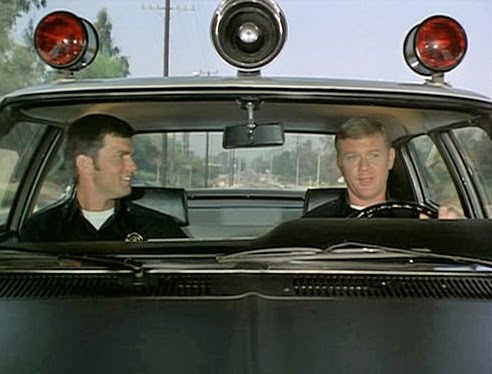
Another one is Adam-12 Season 4 episode “The Search”. Reed and Malloy are called to a robbery in progress. Reed catches one suspect while Malloy chases the other in the squad. However, the squad has a dodgy mic so dispatch and other officers have trouble keeping up with Malloy’s location, which proves to be a problem when he rolls the car and is badly hurt. Obviously, Malloy is going to be found in time, but you still hold your breath when he’s found first by someone with less than honorable intentions.

The peril doesn’t even have to be that immediately deadly either. Take for instance the Season 2 Gilligan’s Island episode “Quick Before It Sinks”. It looks like the castaways are in for a watery doom because the island is apparently sinking. Obviously, not the case because the show went on for another season and a half and a few TV movies. And as per show rules, it was a Gilligan goof that led to the incorrect assessment. Now, it’s a sitcom, so the danger is amusing at best, but there’s still something about watching first the men try to keep it from the women, and then the women coming up with a solution (build an ark!) and everyone working together before the inevitable. The inevitable being finding out that Gilligan is the cause of everyone thinking they’re about to bite it.

“The Sniper” episode of M*A*S*H is another good example. Though the dramedy had its serious moments, in this Season 2 episode, there’s more laughs despite the impending threat of being gunned down by a sniper. Though we know nobody is going to be shot and/or killed, there’s still something about watching the doctors, nurses, and patients cope with a situation that’s out of the life or death scenarios in the operating room that they’re used to. The show would do several episodes like this, including another favorite of mine, “The Army-Navy Game” in Season 1.

Whether light or dark, watching my faves in peril is a favorite of mine. It’s almost like a bonding experience in a way, living through that dangerous episode with these fictional characters and coming out on the other side closer than ever.

In case you’re wondering how sadistic I am, when I was watching Tales of the Gold Monkey and got to the episode “Escape from Death Island”, I saw that Corky was going to be bitten by a poisonous snake and actually rubbed my hands in glee. By this point in the series, I adored Corky, so to see that he was going to be in peril thrilled me.

Sure I knew he was going to be okay.

But for a little bit, I got to fret over him.

And then feel that rush of relief when he lived to see another day.

The Ghosts of Shows Past

This post features spoilers for the season 4 episode of NCIS: New Orleans, “Viral”, which aired October 24, 2017. Read at your own risk.

One of the interesting tics of being a rerun junkie is seeing the ghosts of episodes of shows long past in current shows. I have no idea if these influences are intentional or not, if the writers of these current shows have these old episodes in mind when they’re writing or if they’re unconsciously haunted by the phantoms of them or if they even know about them at all. The idea that I’m projecting isn’t something I’ve dismissed.

But my brain still makes connections whether they’re there or not, intentional or not.

For example, the other night I was watching NCIS: New Orleans, which is one of the few currently-in-production shows I watch with any regularity. In this episode called “Viral”, my beloved Sebastian, forensic field agent extraordinaire, shot someone during the course of a chase. If that wasn’t bad enough, it looked like he shot an innocent, unarmed man, not the armed and dangerous suspect he’d been chasing.

A cop shooting a suspect or an innocent person is a common story, both in the news and on police shows. However, this episode reminded me of two bygone episodes of cop shows from over forty years ago.

After the shooting, Sebastian is interrogated by an FBI agent about what happened. The way he’s questioned reminds me of an episode of Adam-12, “Log 33: It All Happened So Fast” (air date February 1, 1969). In that episode, Officer Jim Reed shoots a young man who’s shooting at him and his partner (also my TV boyfriend) Pete Malloy. A majority of the episode shows the repeated questioning that Reed is subjected to, some of which infuriates him because of the insinuations that he’s not telling the truth. He’s also upset over the fact that he had to shoot someone (as was Sebastian). Sebastian is subjected to similar questioning, though not for as long, obviously. There’s a mystery to be solved and a dangerous assassin to catch.

The real hitch in clearing Sebastian is, though he swears the suspect shot at him and that he saw him with a gun, there’s no gun to be found. This reminds me of an episode of Hawaii Five-O, “…And They Painted Daisies on His Coffin” (air date November 7, 1968). In that episode, my TV boyfriend Danno chases a young man with a gun into his apartment. When Danno shoots the lock, he believes he unintentionally shoots the man. However, there is no gun found on the suspect. Why? His girlfriend has taken it and fled the scene (running to the notorious Big Chicken), something that also happens to Sebastian when the wife of the dead “innocent” man (it turns out this couple isn’t so innocent) takes the dropped gun to protect herself and her husband and then shows up a few minutes later as the wildly grieving wife.

The twist in this case is less cop show, more masked hero adventure. The “innocent” couple was supposed to deliver the gun to the assassin so he could do a job. The shooting interrupts things and the assassin ends up killing the wife in order to get the gun. The gun is an air gun that shoots glass bullets. That made me think of The Green Hornet episode “The Silent Gun” (air date September 9, 1966). As the title suggests, the gun in question is a rare 17 caliber gun that’s absolutely silent when fired. This leads to a lot of people wanting this gun. (You can listen to me and Dan talk about this episode and all of the many names of people therein on Episode 33 of Eventually Supertrain.) The gun in “Viral” is just as coveted, at least by the assassin, and equally unique, though a little more believable. An air gun gets through security and glass bullets “disappear” on impact.

Like these old episodes, this new one ends happily. Sebastian is cleared (like Reed and Danno) and the bad guy is caught (the Green Hornet gets the gun AND Lloyd Bochner).

Because the good guy winning is an ending worth repeating .

Rerun Junkie Show–Adam-12

When Jack Webb decided to shine a spotlight on the beat cops of LA, he created Adam-12.

"Adam-12 continue patrol and handle this call..."

“Adam-12 continue patrol and handle this call…”

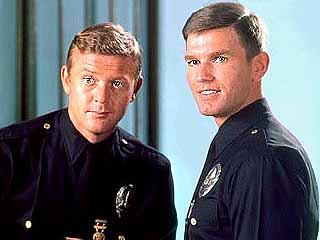
The show featured veteran officer Pete Malloy (Martin Milner) and his novice (and later fellow veteran) partner Jim Reed (Kent McCord) handling the every day street work of two uniformed officers under the direction of their supervisor Sgt. MacDonald (William Boyett) and sometimes with the help of fellow officers Wells (Gary Crosby) and Woods (Fred Stromsoe). They received calls from real-life LA dispatcher Shaaron Claridge (I love it when she denies them a dinner break; her word is law!).

Our brave boys in blue on patrol.

Our brave boys in blue on patrol.

Unlike Dragnet, viewers weren’t treated to one case seen all the way to completion. Instead they got what beat cops got: sent out on several calls during the episode with no follow-up later on. And though there were some high-action, dangerous episodes, there were a lot of episodes that featured the every day, mundane calls that every cop in uniform has handled: traffic stops, domestic disputes over the stupidest things, theft calls in which there was no theft, lonely old ladies needing someone to talk to, nosy ladies constantly ratting on their neighbors.

My favorite was the two ladies fighting over a bruised melon. One wanted the other one arrested for taking it out of the store without paying for it and the other one wanted the owner to get into trouble for selling crap fruit. Malloy had a look of pure “You have GOT to be kidding me” during the whole thing.

You also had the pleasure of watching Malloy and Reed’s relationship develop from student-mentor to true partners. The chemistry between the two was fantastic and the good-natured ribbing is real.  Married Reed could be quite dedicated to convincing bachelor Malloy to join the club sometimes.

They clean up nice, too.

They clean up nice, too.

Like Dragnet before it and Emergency! after it, the show did wonders to boost the public’s understanding of how those jobs paid for by the taxpayers, this one being uniformed officers, worked. It was as much instructional as it was entertaining and I believe episodes are still shown to police officers as examples of how to handle certain situations.

As this was a Jack Webb show, several of his regulars showed up, including: Virginia Gregg (of course!), Burt Mustin, and James McEachin. Marco Lopez, Tim Donnelly, Bobby Troup, Ron Pinkard, and Randolph Mantooth all appeared in episodes as non-Emergency! characters (Kevin Tighe, Julie London, and Robert Fuller made their appearances during the cross-over episode “Lost and Found”). For Emergency! fans, the episode “Log 88-Reason to Run” is a highlight because Randolph Mantooth, Marco Lopez, and Tim Donnelly are all in it, though none of them share a scene. Fun!

Other familiar faces that popped up during the seven season run include: Larry Linville; Maidie Norman; my favorite guest-star J. Pat O’Malley; Frank Sinatra Jr; June Lockhart; Rose Marie; Jean Allison; Butch Patrick; Ellen Corby (before she was Grandma Walton); Keye Luke; future teen idols Willie Aames, David Cassidy, and Barry Williams; baby versions of Ed Begley Jr, Tim Matheson, and A Martinez; Karen Black; Cloris Leachman as a real crap mother; Tony Dow; Angela Cartwright; Barbara Hale; Robert Conrad sans Ross Martin (unless he was in disguise somewhere); George Murdock;

*takes a deep breath*

Micky Dolenz not Monkee-ing around; Harry Dean Stanton (who never looked young); Lindsay Wagner before she was Bionic; Sharon Gless; Scatman Crothers; Vitto Scotti because he was in everything; Dabbs Greer; Dick Clark; Brucke Kirby; Jo Anne Worley playing another roller derby girl; Mark Harmon; Mark Harmon’s sister Kristin Nelson; and Kent McCord’s daughter Kristen.

It was a good guest-breeding ground.

This is one of those shows that I only had the opportunity to start watching recently. And I’m grateful for that. I’ve developed quite the soft spot for Jack Webb and company shows anyway, but as a cop’s kid, this is one I can really relate to.

It also gave me the greatest intoxication measure ever.

Matador-in-an-intersection-drunk.

‘Cause that’s drunk.

These guys, though, they're drunk on justice.

These guys, though, they’re drunk on justice.