Battle of the Sexes

When I watched the first season of Baa Baa Black Sheep, I dreaded getting to the episode titled “W*A*S*P*s”. Right there in the episode description it said that “a battle of the sexes lands on the frontline”.

I loathe a battle of the sexes.

I make no secret of the fact that much of the rerun content I watch (and some of the current content) is “male-oriented”. It’s action stuff. It’s police stuff. Classic cis het guy fare. So there isn’t a lot of quality women content or input. And yes, some of it can be eye rollingly bad. But nothing quite irritates me like the battle of the sexes.

The context is typically of women doing man’s work, whatever the hell that is. I wasn’t raised with gendered work. I was raised with work and somebody better do it and don’t make me tell you twice.

Think of “St. Gilligan and the Dragon”, which I talked about in this post. The women go off on their own because the men are being pricks The women are able to hack it and the men are useless. The implication, of course, is that the men don’t know how to do things like cook and do laundry because it’s something women do and is therefore beneath them. Starving and stinking for their mancards.

Naturally, it’s played for laughs because the battle of the sexes is a frequently used theme in sitcoms.

One such episode that has always stuck with me is The Brady Bunch episode “The Liberation of Marcia Brady”. Basically, Marcia goes on the record that she thinks women can do anything men do and then Greg ends up goading her until she decides to prove herself by joining The Frontier Scouts. For the final initiation, Marcia has to use her Frontier Scout skills to navigate through the woods following a trail that Greg has left.

The twist? Greg has purposely made the trail as hard as possible to follow without breaking the rules. And to everyone’s surprise, Marcia succeeds.

Marcia’s initiation is a perfect example of how the patriarchy works. In order to prove that women can do anything men can do, Marcia actually had to do better than what the guys had to do because the boys were so threatened by the idea of a girl joining their little scouting group they had to actively sabotage her.

Something similar happens in many episodes of Barney Miller whenever there’s a female detective. I can remember it happening with Wentworth, Batista, and with the two officers in “Hot Dogs”. All of the women were seen as overly enthusiastic and aggressive in doing their jobs because it went right over the heads of their male counterparts that they had to be. They had to do everything the men did, but they had to do it more and they had to do it better -and in heels!- lest they be considered failures and ruin it for every other woman on the force.

There’s a similar vibe in the Emergency! episode “The Indirect Method”. Roy and Johnny are charged with training a female paramedic who is described as hard-nosed. Is it any wonder? The pressure is intense. She’s doing man’s work, after all.

As for the Baa Baa Black Sheep episode, I was pleasantly surprised at how much I didn’t hate it. The women were not only good at their job, but also serious about it in a way that was less about being as good as the men, and more about showing their passion for flying. Yeah, the guys tried to treat the ladies like they would any pretty face in the vicinity, but it turns out the women were more like them than they realized. Translation: our fellas got hoodwinked by them.

This battle of the sexes was a little more evenly matched. And while it did have it’s hang-ups and of course, the guys had to save the ladies (though, they didn’t really do anything that fighter escorts wouldn’t do for transport planes other than be a little mushy), at least the respect cultivated between the two groups was genuine and not based on arbitrary standards of excellence.

As a result, the episode got my respect, too.

Police Involved Shooting

In the world of cop shows, there are two kinds of very special episodes: a cop gets shot or a cop shoots somebody.

This post is about the latter.

Here’s how the episode usually goes: One of our cop heroes shoots somebody. There is then an investigation into the shooting in which there’s an underlying implication that this investigation isn’t fair because our good guys always have good shoots. There’s some drama. Then our shooter is once again declared a cop hero.

Obviously, there are variations and not every episode follows this format, but that’s basically it for many of the episodes I’ve seen.

The police involved shooting episodes of Dragnet and Adam-12 are probably the most technical I’ve ever seen due to Jack Webb’s dedication to the manual. While we do have that little bit of angst that comes from our hero being questioned, there’s still an objectivity about it. This is how the process is supposed to work. Jack Webb very much so believed that police officers were meant to be held to a higher standard which is why these episodes stand out. This treatment of our good guys isn’t exceptional -it’s routine.

Despite Jack Webb’s good intentions, this sort of intense scrutiny is an idealization of what we’d like to believe happens during these investigations, but we know doesn’t.

I pointed this out when I was covering the Hawaii Five-O first season episode “And They Painted Daisies on His Coffin” on Book ‘em, Danno that the investigation into Danny shooting the supposedly unarmed young man and him subsequently getting arrested for murder was idealized. It’s only in the most extreme circumstances that a police officer is arrested for this kind of shooting today. You can’t tell me that it happened more often when there wasn’t the prevalence of video.

A first season episode of Starsky and Hutch called “Pariah” dealt a little with the public fallout of a police involved shooting. Starsky ends up shooting an armed robber who turns out to be only sixteen. The kid’s mom is devastated and Starsky feels incredibly guilty over the death. The public isn’t exactly thrilled with the circumstances, particularly one guy with an agenda who says if Starsky is cleared, he’ll start killing cops. Starsky is cleared of any wrongdoing because of course and the killing spree begins and will continue until Starsky resigns. So this is an example of taking our very special episode and upping the ante by adding in public scorn and then throwing in a vendetta for good measure.

The police involved shooting episodes are always very special episodes because they’re the only episodes in which the violence our heroes inflict on the criminals is ever questioned. In any other episode, they’re offing the bad guys without even the slightest mention of the paperwork. Every other shooting is completely justified, no question.

One exception to this rule (at least that I know of because I haven’t seen every cop show–yet) is Barney Miller. Possibly because it’s a comedy that primarily deals with the mundane and oddball aspects of police work, the show had a unique take on the police involved shooting.

For one, perps weren’t getting shot every week. The members of the 12th precinct got shot at more than they shot and even those instances ended up funny and mild. So, they didn’t need a very special episode about a police involved shooting to separate it from all of the other police involved shootings that were never questioned.

Because in the entire run of the show, there were only three episodes in which a member of the 12th shot someone. In the first season “Hero”, Chano infiltrates a hostage situation in a bank and ends up killing the two would-be robbers. It’s quickly apparent that Chano isn’t handling it well at all despite the incident being considered a good shoot. By the end of the episode, he breaks down into sobs in his apartment.

Dietrich has a similar reaction to his shooting in the seventh season episode “Resignation”. After shooting a suspect in the backside, Dietrich decides that this part of the job goes against his morals and attempts to submit his resignation. Though Barney susses out the real root of Dietrich’s angst, which goes a little sideways from just his morals, it still illustrates the negative effect of a shooting on the firing officer.

In the eighth season episode “Inquiry”, Wojo faces an investigation after shooting a suspect, winging him in the arm. In this episode, there’s doubt that Wojo was justified in the shooting, particularly with his history of being rough with suspects. We’re also introduced to the then-current requirements for the investigation: Wojo is suspended, put on desk duty, has his sidearm confiscated, and advised of his rights before he’s questioned. What’s startling is that during the questioning, a clearly frustrated Wojo admits that he was trying to kill the suspect. Which is what the police are trained to do. Center mass. Shoot to kill.

Everything turns out in Wojo’s favor, of course, but he’s still rattled and to be honest, so are we. Our Wojo can be rough, but a killer? It’s hard to believe. It’s harder to acknowledge that our good guys were trained that way.

Which is probably why the police involved shooting episodes of Barney Miller are so much more impactful than the very special episodes from other cop shows. They aren’t shooting it out every episode. There’s barely any shooting during an entire season.

Which is more true to life than you might think.

But this is fiction.

And in fiction, tension comes from putting our heroes under the gun.

So to speak.

Heteronormativity Is a Helluva Drug

I didn’t expect to like the reboot of Magnum PI. I only gave the pilot a shot because I’d been watching the 1980 series and decided to compare and contrast. I already knew that Magnum was now Latino and Higgins was now a woman. I went into it thinking it’d be fine, but not for me, like most reboots.

The pilot was a fun ride. I gave it the three episode test (pilot establishes the show; second ep is the adjustments; third ep is the vibe) and ended up hooked.

My one hope for the show was that they wouldn’t default to hooking up Magnum and Higgins.

Well, it was good while it lasted and it lasted until early in the 2nd season. Once it became clear that the endgame is Magnum and Higgins are omg-meant-to-be (and that it’s apparently going to be played out in poorly executed fanfic tropes), it then became a countdown until I got fed up and quit watching. That lasted until half-way through the 4th season. I haven’t given up entirely but I am absolutely half-assing it and I don’t care about the show like I once did.

It’s a shame, but thems the breaks.

And there’s plenty of history behind the continuation of the heteronormative narrative that defaults opposite sex leads or lead/supporting into a romantic tension leading to a relationship.

Obviously, the most known example of this is Dave and Maddie on Moonlighting, a show that so depended on the will-they-or-won’t-they, that when they did, it pretty much cancelled the show (to be fair there were other behind-the-scenes issues that contributed to the show’s demise, too). Also, Agnes and Herb had the much better relationship.

Scarecrow and Mrs. King and Remington Steele drew from the same playbook. On Barney Miller, it played out over five episodes between Wojo and Wentworth before Linda Lavin left to be Alice.

In the case of shows like Tales of the Gold Monkey, it’s less of a will-they-or-won’t-they and more of a when-will-he-commit. Because there’s obviously something going on between Jake and Sarah (hell, they kiss in the pilot), but it’s a situationship that allows Jake to kiss other ladies depending on the plot. There’s a similar sort of set-up happening with Walter and Roxanne on Automan. Are they dating? Kinda, maybe, it depends.

Emergency! actually began with Dr. Kelly Brackett and Nurse Dixie McCall in a romantic relationship, which was dropped in later episodes without explanation (read: break-up). From that point on, Brackett and Dixie were friends and colleagues, caring for and respecting each other in both professional and platonic ways, showing that, hey, it could be done.

I’m not saying that it wasn’t. There were series that didn’t necessarily default to the romantic relationship. Della Street didn’t get involved with Perry Mason or Paul Drake (though Paul did nickname Della “Beautiful” and there was some joking that might be considered flirting). Likewise Britt Reid clearly cared about Miss Case and vice-versa, but there was nothing but boss-secretary friendship happening with The Green Hornet. Clearly, it could be done.

But there’s no denying that it could be a struggle. For most of Hunter‘s seven season run, Rick Hunter and Dee Dee McCall were partners and friends, a caring and satisfying platonic relationship that Fred Dryer and Stepfanie Kramer were happy with. But as the story goes, the network and the fans wanted more. As a result, a Season 6 episode informed the audience that Hunter and McCall had once slept together, but it caused an issue with their work relationship.

It’s the default aspect of the hetereonormative narrative, the well-worn path of it, the perpetuation of the idea that the only chemistry that exists between opposite sexes is sexual and the only important relationships are romantic that really grates. Worse, it’s dull. And it’s dull because it’s expected. No other options are presented or considered.

Magnum PI had an opportunity to explore something beyond the default, to establish a couple of opposite sex platonic soulmates without some sort of caveat or exemption (like one or both of them being queer), to really dig into that kind of relationship and do something different.

Instead, it fell for the same quick and easy high that’s been dulling senses for decades.

It really is a helluva drug.

Policing Copaganda

It’s no secret that one of my favorite TV genres is ‘70s cop shows. I don’t know why. You can say it’s because my father was a police officer for twenty-five years, but I think that has little to do with it considering very little of what I’ve seen on the screen reflected what he dealt with policing my small town in the middle of a cornfield.

But that could be why even though I love these shows, I never really thought about them accurately reflecting reality. Maybe because my dad would point out the inaccuracies in these shows. Maybe because as soon as I got my license, my dad drilled it into me that if I got pulled over not to allow the cop to search my car without a warrant. Maybe because my dad has always told me never talk to cops without a lawyer.

I’m sure that’s why I get all swoony when I see someone exercise their rights on these shows. That is like reality in that it doesn’t happen often. Most people don’t know them, let alone use them.

The point of these shows is entertainment, of course. Even Adam-12, which had episodes shown in police academies to illustrate certain situations because it was so accurate to uniformed officer life, had more hostage situations and shoot outs than even a cop in the busiest metropolitan area would encounter.

Action, drama, a witty one-liner or seven, and the good guys (usually) win. I can’t help it. I’m a sucker for it.

And it’s all, of course, fiction.

I think of it as the depiction of ideal policing and justice. It’s what we want it to be, what it’s supposed to be, what the people in power try to convince us that it is (when it’s absolutely not). The police are there to protect and serve, the justice system is fair, the good guys get the bad guys, and the bad guys get punished. It’s all make believe and I prefer to see it on the small screen. Sort of like my affinity for slasher movies. I prefer my violence to happen fictionally.

I blame Jack Webb for some of that. He was a devout believer in law enforcement and the justice system. The Los Angeles police department was wildly corrupt back in the long, long ago (save your jokes) and underwent a huge reform (I said save your jokes), which made an impression on Webb. While Dragnet and Adam-12 depicted a lot of the work detectives and uniformed officers do accurately, it was still idealized. A sanitized depiction of the job, the life, and justice. This is the way things work when everything works as it’s supposed to.

The police involved shootings on most of these cop shows is where this idealization is most evident. Adam-12 probably had the best technical depiction, though Hawaii Five-O had a thorough one as well with “And They Painted Daisies on His Coffin”. Even Joe Friday himself had to have his shooting of a burglary suspect investigated. And while they all present the idea that lethal force is harshly scrutinized and thoroughly investigated, these episodes are also constructed to insure the audience’s maximum sympathy to our protagonist cops. Of course, every shooting is always justified.

It’s been said that cops (including my father) felt that Barney Miller is probably the most accurate and realistic when it comes to the depiction of law enforcement. Maybe because it was a comedy it had no trouble depicting some of the mundane realities of police work: the paperwork, the bureaucracy, the budgets, the lack of manpower, the limitations and inadequacy of the law and the justice system. The 12th precinct wasn’t dealing with non-stop homicides like most cop shows. They were dealing with what cops actually deal with the most: petty shit. The show might be a little too honest to be pure copaganda, but it still does its part, if only in a ‘not all cops” kind of way.

The ideal depiction of police and justice continues today.

According to this article, police procedurals today distort the view of how policing and the justice system actually work. These shows don’t accurately reflect the imbalances in the justice system, the abuse of power by the police, the inherent racism, white supremacy, and wealth-bias that’s integral to the system.

And if you watch enough reruns of cop shows, particularly from the ‘70s, you can see how that groundwork was laid. It’s easy to forgive and/or overlook our protagonists playing fast and loose with the law and people’s rights because they’re the good guys.

After all, they’ll tell you that themselves.

Best Characters to Join a Show After the First Season

One day a question floated across my Twitter timeline: Who’s the best character to join a show after the first season?

And my immediate response was, “I can’t answer this with a tweet. I need a blog post!”

So here I am, months later, finally getting around to answering that highly subjective question. In order to keep from rambling, I only picked characters from shows I’ve written about here. And even then, I restrained myself to keep it down to a dull roar.

Let’s start off with a couple of the more subjective ones and work our way (okay, my way) closer to objective.

Ben Kokua (Al Harrington) and Duke Lukela (Herman Wedemeyer), Hawaii Five-OYeah, you’re going to have to fight me on this one. Ben replaced Kono (Zulu) at the beginning of the fifth season and stayed through the seventh season. I feel he made a nice addition to the team. Solid, native, not flashy, except when he was undercover and had to wear ugly shirts as part of the gig. Al Harrington had already been on the show a few times, playing other (and usually bad) guys, and has since had a recurring role on the new show (playing yet another character). Clearly, every version of this show needs Al Harrington in some form, though I maintain Ben was the best.

Duke is a legend in my mind. Though Herman Wedemeyer was there from the beginning, the character of Duke didn’t actually happen until the fourth season. Of the 155 episodes that Herman Wedemeyer is credited for, only seven were not as Duke Lukela. Better yet, we get to watch as Duke goes from uniformed officer bit role to a detective with a starring credit in the final season. How marvelous is that? And if you still doubt that Duke should be on this list, then let me point out that the current show also has a Duke Lukela and he’s played by Dennis Chun, the son of the original Chin Ho, Kam Fong. Now that’s legend.

Sheriff Mort Metzger (Ron Masak), Murder, She Wrote–When Tom Bosley left the show, Cabot Cove needed a new sheriff. With Amos Tupper retired, the new law in town came in the form of Mort Metzger, a city cop who didn’t understand why the murder rate of a small town was so high and why some old woman was so involved in solving them. It was the fish-out-of-water aspect of Ron Masak’s character that not only separated him from Amos, but from everyone else in town. He spent half of his time bewildered by the goings-on of the locals, his hard line approach not so effective in a town where everybody knows everybody. Considering Ron Masak was in episodes of both The Monkees and Land of the Lost, it’s no wonder he was able to bring a touch of brilliance to this character and even make his never-seen, often-referred to wife Adelle come to life.

Detective Arthur Dietrich (Steve Landesberg) and Officer Carl Levitt (Ron Carey), Barney Miller–Both Steve Landesberg and Ron Carey appeared on the show as different characters prior to becoming the two of the characters on this list. Steve Landesburg first appeared as Father Paul in the first episode of season 2. The 12th episode of that same season, he made his first appearance as Dietrich, a dry-humored, incredibly intelligent detective who came in as Fish was going out. Of course, the two would appear together for over a season until Abe Vigoda’s official departure at the beginning of season 4. Many of his first episodes involved him trying to find a place in the 12th precinct. By the time the show ended, it was hard to imagine what it was like without him.

Ron Carey’s first appearance was as a character called The Mole in the last episode of the second season. It was only the third episode of the third season when he made his first appearance as Carl Levitt, a short, overly-enthusiastic uniform keen on making detective some day and taking every available opportunity to get into plain clothes. Not just a punchline, Levitt got to be the hero by saving some kids, ratted out the squad room with petty grievances to both protect them and to express his displeasure from being put down all the time, and eventually made detective in the final episode. As well he should.

Festus Haggen (Ken Curtis), Gunsmoke–This twenty-year show was on the air nine years before Festus Haggen settled in Dodge City permanently. It’s hard to imagine Gunsmoke without Ken Curtis, especially since most of the syndication packages typically show the later episodes, but Dennis Weaver played Chester Good for 290 episodes (1955-1964). Festus’s first appearance actually came in 1962, but he became a regular in 1964 after Dennis Weaver left and ended up becoming such an iconic character that it’s hard to imagine Ken Curtis as anyone else (he was, though, playing a few different characters on the show before becoming Festus). Dodge City wouldn’t be the same without him.

This list is far from complete, of course. And it’s far from objective, as I warned. I might just answer this question again sometime in the future. New list, new shows, new characters. The answers are endless.

Who do you think the best characters are that joined a show after the first season?

Rerun Junkie Show Analysis–The Pride of the Ol’ 1-2

Since it’s Pride Month, I wanted to do a post on the gay representation on Barney Miller, just a quick overview of it because there’s really quite a bit I could pick apart and analyze and also because Marty Morrison really deserves his own character post.

Anyway.

Barney Miller was known for depicting the less dramatic, weirder side of law enforcement. It also pushed and poked at many social issues of the time. Some of them were very specific to that moment, like the budget crisis and the fallout from Vietnam, but many of the issues the show presented are still very relevant today. One striking aspect of the show is the representation of gay men in the form of recurring characters Marty Morrison (Jack DeLeon), Mr. Darryl Driscoll (Ray Stewart), and Officer Zatelli (Dino Natali). I read somewhere that show creator Danny Arnold worked with gay groups to get the portrayal of these characters right.  Instead of relying heavily on stereotypes (thought Marty is a classic catty gay man) or presenting them as unnatural or deviant, the show depicted them as humans facing societal challenges, bigotry, and discrimination due to their sexual orientation.

I love Marty Morrison and the pizzazz that Jack DeLeon brought to that character. He was out because it was impossible for him to be in. A petty criminal, he stole my heart as well as purses. In his first appearance on the show there’s a scene in which Barney tells Marty to get a real job and Marty tells him that he’s had “more jobs than you have hair on your head”. He also tells him that he tried to join the police force, but that they turned him down for being gay (“What’s wrong with a gay cop? There are gay robbers.”). Perhaps it’s just me reading into the scene, but there’s a suggestion there that part of the reason for Marty’s criminal behavior is because of his difficulty to hold a job as an out gay man in the 1970s. Or even get one. At the time, I would imagine that most jobs okay with his sexuality were few and far between and most likely limited to very specific industries.

It was through Marty that the show introduced Mr. Darryl Driscoll. The character was first somewhat effeminate, but throughout the appearances, that lessened in favor of Ray Stewart giving the character a more sophisticated personality. His first introduction to the squad room saw him being hustled by a fake cop, threatened with violence if he didn’t give the man money. His reluctance to actually go to the police to file a report echoes the real fear the gay community had (and still has) in regards to law enforcement. Later on in the series it was revealed that Mr. Driscoll had been married and had a son, something not uncommon for gay men. The resulting custody dispute on the surface seemed to be the result of the former Mrs. Driscoll’s opposition to Mr. Driscoll’s sexuality and shielding their son from that. In reality, the reason was more mundane: Mrs. Driscoll was tired of being the bad guy because Mr. Driscoll indulged his son during his visitations.

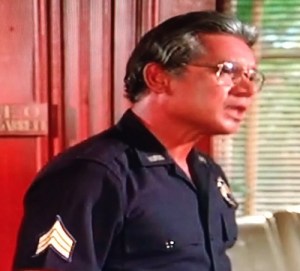
It was Officer Zatelli who got the truth from Mrs. Driscoll. A uniformed officer in a similar duty role to Ron Carey’s Officer Levitt, Officer Zatelli first showed up in the fourth season. However, it was in the 6th season that an anonymous letter claiming there was a gay police officer led to Zatelli outing himself as both the letter writer and the gay officer. Dino Natali’s portrayal of Zatelli was “straight”. He wasn’t much different from any of the other cops and that was the point. Though the detectives in the squad room knew he was gay and though he told  Mrs. Driscoll that he was gay when she was making a fuss about her son being around “those kind of people” and though Barney encouraged him to come clean to the department because policy prevented punishment for his sexuality (a policy change from the first season as indicated above), Zatelli couldn’t do it. As Barney warned, it was an accidental outing thanks to Wojo that exposed his secret. Instead of termination or forced resignation (like Lt. Scanlon wanted), Zatelli was transferred to a much cushier job, which he believed was a sign that he had a like-minded friend in high places.

Speaking of Wojo, Max Gail was presented with an interesting challenge for his character in regards to his evolution in opinion about gay men. The first season, particularly the first handful of episodes, saw Wojo as kind of a brutish caveman. His dislike of Marty came more from him being a thief rather than him being gay. However, the introduction of Mr. Driscoll, pairing the two men up the way they did, brought Wojo’s discomfort, ignorance, and prejudice into a sharper focus. In a two-part episode called “Quarantine” that saw the members of the 12th as well at Inspector Luger, Marty, Mr. Driscoll, and a sex worker named Paula Capshaw all -you guessed it- quarantined due to either smallpox or chicken pox depending on the outcome of the tests done on a sick criminal, Wojo insists that Marty and Mr. Driscoll sleep on opposite sides of the squad room. Like the two men would just bow-chicka-wow-wow right there if they were allowed to be in close proximity of each other when the lights went out. Wojo lost that argument, but it was an excellent illustration of his prejudice and misconceptions surrounding gay men. Over the course of the series, we got to see Wojo’s own learning experience and watch him as his opinions grew, matured, and evolved. In a way, he was almost a stand-in for no doubt many men in the viewing audience. (I’m singling out the men here because Wojo’s issues with homosexuality was very masculinity-based, but really, that’s another post for another time.)

Like I said, this is just a quick overview. There’s so much more I could get into and just might at some point in time. The gay representation on Barney Miller is really rather unique given the time period. It’s a reflection of the way social norms were evolving at the time as well as a bold step for both a cop show and a comedy.

The characters still resonate and the humor still plays today because the focus was always on the humanity, not stereotypes-as-punchlines.

And that’s pretty special.

All of Your Favorites Are Problematic

One of my favorite episodes of The Monkees is called “Monkees Chow Mein”. The four guys inadvertently intercept a fortune cookie filled with top secret information at a Chinese restaurant. The CIA get involved. BJ Hunnicutt is there. Hijinks ensue.

And Joey Forman plays the head Chinese guy, Dragonman.

If you’re not familiar with Joey Forman let me assure you that he is a very funny man who is definitely not Chinese. His portrayal of Dragonman involved scotch-taped eyes and a stereotyped accent. It’s a somewhat less obnoxious version of yellow face, but there’s no doubt that it’s yellow face.

It’s problematic, to say the very least.

So, how can it be one of my favorite episodes? Two reasons. One, it’s funny and most of the humor in it could have been achieved just as successfully by Joey Forman (and his right hand man, Gene Dynarski) not doing yellow face. The lines and the antics would have been just as funny because it had nothing to do with the stereotype they were portraying.

Yes, I realize there’s a lot of privilege involved that it allows me to approach this episode from that angle.

And two, being a rerun junkie means that I’ve learned to accept that my favorites are going to be problematic.

It’s a simple matter of history, really. These shows are a product of their time, whatever their time is. That’s why you see a lot of racist casting (e.g. white people playing minorities) in the ’50s, ’60s, and even into the ’70s. The stereotypes continued all through the ’80s and beyond.  Misogyny and sexism has run rampant for decades, so it’s always available in reruns. To be fair, the shows can’t help it. And it’s far too late for them to change.

That’s not to say any of it is right, of course. These things might have been common then, but even at the time, folks had problems with it. Pernell Roberts reportedly objected to the racist stereotypes of the minorities on Bonanza. And Van Williams repeatedly tried to get Bruce Lee a bigger role on The Green Hornet, which the producers reportedly refused because they didn’t want to give too much focus to a non-white actor instead of the star.

So, when it comes to reruns, it’s a matter of acknowledging that at the time this was the practice. They’re time capsules of cringe-worthiness, syndicated reminders of our sketchy, shady, seedy TV past.

Even shows that did their best to be socially conscious (for their time) still stumbled. For example, Barney Miller often tackled topical 1970’s issues, some of which are still relevant today. And it largely succeeded in addressing those issues, at least in an illuminating sort of way. But there are some episodes that missed the mark and as a result have aged terribly. The episode “Rape” attempted to address the laws (or lack of laws) pertaining to marital rape. However, done in the confines of a 30-minute comedy…yeah. The tone-deafness only rings clearer as the years go by.

These are the landmines you risk as a rerun junkie. It can make for uncomfortable viewing and in some cases all of the logical rationale can’t save you from the oogy feelings. There are now episodes of my favorite shows that I avoid because I just can’t.

Retaining perspective is the key. It’s a good thing that these issues are noticed and that they cause discomfort. It’s a sign that things have progressed (somewhat) and that the old status quo has long spoiled.

Ideally, I’d like to do in-depth posts about the different issues that crop while rerun-watching.

But for now, I continue to come to terms with my problematic favorites.

Rerun Junkie Characters–Stefan Kopeckne

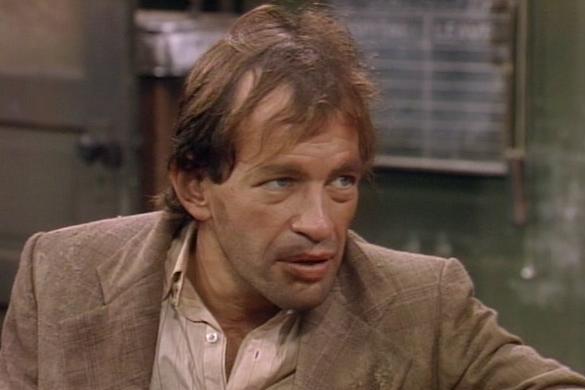
Mr. KopeckneA good character makes a lasting impression.  Like Big Chicken on Hawaii Five-0, Stefan Kopeckne (the other character that lead so many people to my blog) was only on two episodes of Barney Miller, but that was enough to make him memorable.

Kenneth Tigar was actually in five episodes of the show from 1976 to 1981, but it was his first and last appearances that he played the unfortunate Mr. Kopeckne.

His first appearance in the episode “Werewolf” was the more memorable of the two. Mr. Kopeckne, brought into the station after causing a commotion in a park (and ruining Detective Harris’s [Ron Glass] suit in the process).  Upon questioning, it’s revealed that Mr. Kopeckne believes he’s a werewolf, cursed from birth.  He’s put in the cage to fret about his impending transformation which will come at midnight while the police officers just wait for Bellevue to pick him up, not really taking his claims that seriously.

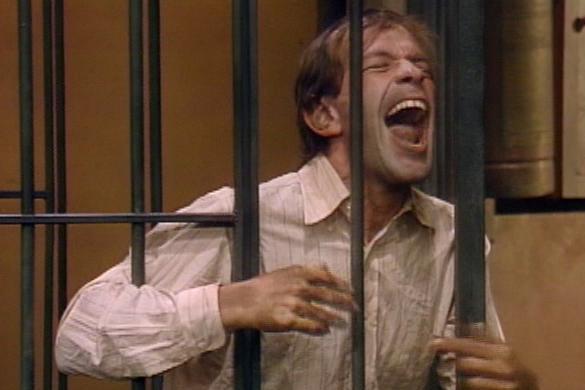
It’s the transformation scene that really makes the whole episode and makes Mr. Kopeckne someone to remember.  He claims he can feel the hair on his legs rustling and he starts panting because his tongue is sweating, all the while Nick (Jack Soo) is trying to talk him out of it. Mr. Kopeckne climbs the bars and starts to howl when Barney (Hal Linden) comes in and yells at him, saying this is a police station, not a horror movie.

Kopeckne the werewolfIn the end, Mr. Kopeckne goes off to Bellevue with some hope as Barney has pointed out that the lack of lycanthropy must mean they’ve made some progress with it.

Mr. Kopeckne returns in “Possession”. This time his arrested for disorderly conduct and claims that it’s because he’s possessed.  Sure enough, questionable things start happening in the precinct and Mr. Kopeckne demands that the police chaplain give him an exorcism. Not quite as good as “Werewolf”, but Mr. Tigar goes the distance with it, for sure.

Really, all of the credit in the world goes to Mr. Tigar. He’s one of those actors that you’ve seen before, probably multiple times, but probably don’t know his name. The kind of guy who is so good at his craft that you remember the character over the actor behind it. He took a character that could have been absolutely ridiculous and unbelievable and gave it enough realistic gravity to make it believable and let the comedy play.  It was easy to believe that this guy had a screw loose enough to think he was a werewolf, but could still function for the most part. He created a character that could have easily recurred once or twice a season without getting overdone or boring.

It’s kind of a shame they didn’t.

I’d have loved to see what else Mr. Kopeckne, and Mr. Tigar, could have come up with.

My Top Five Theme Songs

I like a good TV show theme song. It sets the tone, you know. There are some fabulous theme songs out there. There are some clear cut classics and everyone has their own preferences. And being a rerun junkie such that I am, you had to know that I would have my own list of the best.

This is a very subjective top 5 and it’s one that’s not in any particular order because I’m wobbly like that. But odds are if you ask me what my favorite theme song is on any given day, it will be one of these.

It’s the harmonica that really makes it.

Come on, who doesn’t love that killer opening?

That opening bass line…and then it just wails.

The military drum beat backing those horns. Perfection.

It tells you everything you need to know about the show. You can sing along AND dance to it. It’s gold.

Rerun Junkie Show–Barney Miller

That opening baseline. That opening shot of the New York skyline. That eclectic bunch filling a rundown squad room. Do you know what I’m talking about? Even if you don’t, you’ll be humming it soon enough.

Barney Miller is a 70’s classic, running from 1974 to 1982, that took place in the detective’s squad room of the 12th precinct in New York City. Cops cite the show as one of the most realistic cop shows to be on TV. It showed the funny, ridiculous side of crime. While other cop shows dealt with the more serious crime like murders and drug rings, Barney Miller and company dealt with blind shoplifters, philosophical bums, and purse snatching stockbrokers. And they did it all while dealing with staff shortages, budget cuts, and a poorly working toilet.

Though they occasionally tackled heavier subjects (racism, homicide, rape), the show mostly centered on the detectives getting by and dealing with a host of criminals and victims just as varied and interesting as they were.

The original cast consisted of Barney Miller (Hal Linden), Stan “Wojo” Wojciehowicz (Max Gail), Phil Fish (Abe Vigoda), and Chano Amaguale (Gregory Sierra). Ron Harris (Ron Glass) and Nick Yemana (Jack Soo) were officially added as regulars by the second season. In the beginning, Barney’s wife Liz (Barbara Barrie) played a bigger role, but by the second season had diminished.

In the beginning…

The cast changed over the seasons. Gregory Sierra and Abe Vigoda both left for other series, which led to Steve Landesburg as Arthur Dietrich and Ron Carey as the long suffering Officer Carl Levitt joining the show. James Gregory also joined as Inspector Frank Luger. Jack Soo passed away in 1979 and was never replaced.

…at the end.

The integration of the new characters was pretty smooth. It felt like what would happen at a real precinct. People get transferred or retire and new people move in. Personalities didn’t have to be replaced. This kind of show called for individuality. And it allowed for growth.

Barney was the wise leader, gifted with compassion and a desire to do the right thing. Wojo started off as kind of a thick-skulled muscle head, but over the seasons revealed a big heart and actually showed some growth. Harris was a styled intellectual with a gift for writing and a love for the stock market. Dietrich was also an intellectual, but he was more of a walking encyclopedia with a wit so dry it could be used for kindling. Chano was a street smart guy that never failed to go out on a limb to get his job done. Nick hated filing, made terrible coffee, and had a love for gambling. Fish may have acted like life was the pits, but he dreaded enforced retirement and even kidney stones couldn’t keep him off the job. Inspector Luger was always going on about the good ol’ days, but he always had his detectives’ backs. Officer Levitt longed to be a detective and was enthusiastic about his job, but was often overlooked (he felt because he was short).

The great part about the show was that the guest stars were as much fun as the detectives and many of the actors were on several times as different characters. Peggy Pope, Oliver Clark, Don Calfa, Florence Halop, Sal Viscuso, Doris Roberts, Michael Tucci, A. Martinez, Phil Leeds, and Christopher Lloyd were all on multiple times.

They also had some great recurring characters. Jack DeLeon and Ray Stewart as Marty and Mr. Driscoll are two of my favorites (and two of the few gay characters on at the time). They also had Florence Stanley as Fish’s wife Bernice, Stanley Brock as Bruno Bender, George Murdock as Lt. Ben Scanlon, and Jack Somack as the often robbed Mr. Cotterman.

So many of the episodes are fan favorites, such as “Hash” in which Wojo brings in brownies made by his girlfriend and the detectives eat them not knowing that they’re laced with pot, and “Werewolf” in which Kenneth Tigar brilliantly plays Stefan Kopeckne who believes he’s, well, a werewolf (he comes back in an episode in a later season as the same character, this time believing he’s possessed by a demon). All of the episodes are quotable. My personal favorites (that I watch over and over again online) are “Smog Alert”, “Rain”, “Hair”, “Group Home”, and “Bus Stop”. And of course, “Jack Soo, a Retrospective” is a touching, out of character episode reflecting on Jack Soo and the character of Nick Yemana after Jack Soo passed away from cancer. When they raise their coffee mugs to him in the end, it’s a guaranteed tear jerker.

Also, the last scene of the series is probably one of the best done in television. No gimmicks, no tricks, just turning off the light and closing the door.

The female cops were few and far between (Linda Lavin, June Gable, and Mari Gorman all did time at the 12th), but that never bothered me much. I’d rather have an all male cast than a woman shoehorned in just because they think they have to have a woman in there. Those cases never end well. (For the record, I didn’t care much for Linda Lavin’s Detective Janice Wentworth, but I did like June Gable’s Detective Maria Battista and Mari Gorman’s Officer Rosslyn Licori.) And not all of the serious material was handled well (“Rape” is an incredibly awkward and uncomfortable episode, even more so now because of just how differently things are handled and viewed now as opposed to how they were then).

But the shortcomings are easily overlooked (particularly if you just skip “Rape” all together, which hurts me to say it since Joyce Jameson is in it and I love her). Despite the 70’s suits and references, there’s a timeless quality to the stories and the jokes. Granted, you probably couldn’t take a bomb into a New York police department so easily today (it happened at least four times during the show that I can remember off of the top of my head), but we can relate to the budget cuts and the layoffs and trying to do right even if it is against the rules.

Not to mention the desire for a cup of coffee and a decent toilet.


Where I Watch It