Book ’em, Danno–Episode 50

Season 4 is fast coming to a close. But we’re riding high all the way out.

In “Didn’t We Meet at a Murder?”, an unusual trio comes together to assassinate a mob boss from Chicago. Five-O has their hands full with this clever plot.

And then Five-O goes gloriously undercover to bust a heroin ring in “Follow the White Brick Road”. So many beautiful aloha shirts and we all know that undercover aloha shirts are my favorite things.

Listen on Soundcloud, iTunes, Spotify, and Stitcher.

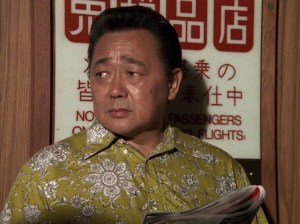
For your enjoyment, Steve and Danny playing sailor and a magnificent selection of the undercover aloha shirts. Not pictured: Steve’s fabulous white pants and Kono’s shirt because I couldn’t get a good shot of it. Yes, this pains me, too.


Book ’em, Danno–Episode 49

Book 'em Danno Podcast

Season 4 is almost over, but couldn’t end before I talked with Dan about my favorite episode. Between “Cloth of Gold” and “Goodnight, Baby- Time to Die!” we’ve got a whole lotta comeuppance happening.

Just a couple of heads up. Minor trigger warning for watching “Cloth of Gold” as it has mentions of sexual assault. This happens in spoiler territory, so I don’t discuss it. But just be warned if you’re watching the episode. Which you should.

Speaking of spoilers, Dan Budnik of Eventually Supertrain joins me to talk about my favorite episode of Season 4, “Goodnight, Baby-Time to Die!” and that means were talking spoilers. So, if you don’t want to be spoiled, avoid listening to us from about 1:02:18 to about 1:19:49. Also, both Dan and I strongly suggest that you watch this episode before listening to us anyway because it’s kind of hard to talk about without talking spoilers and really, it’s my favorite episode of the season for a reason.

Listen on Soundcloud, iTunes, Spotify, and Stitcher.

I also want to mention that when it comes to chatting with Dan, I don’t usually edit us too much, but this time I had to cut a lot of spoiler talk out because it came outside of the spoiler warning. I’m going to have to make a special spoiler minisode. Our brilliance deserves to be heard.

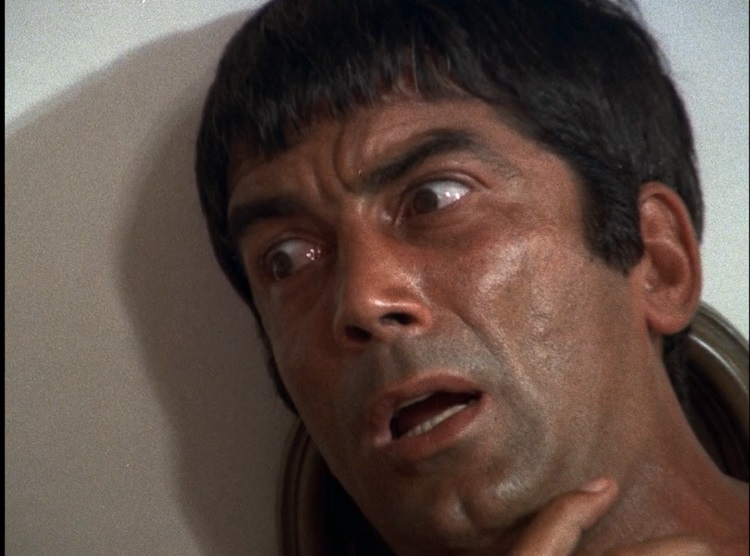
Look at Ray Danton. He’s shocked to death that I did that.

akamai death face

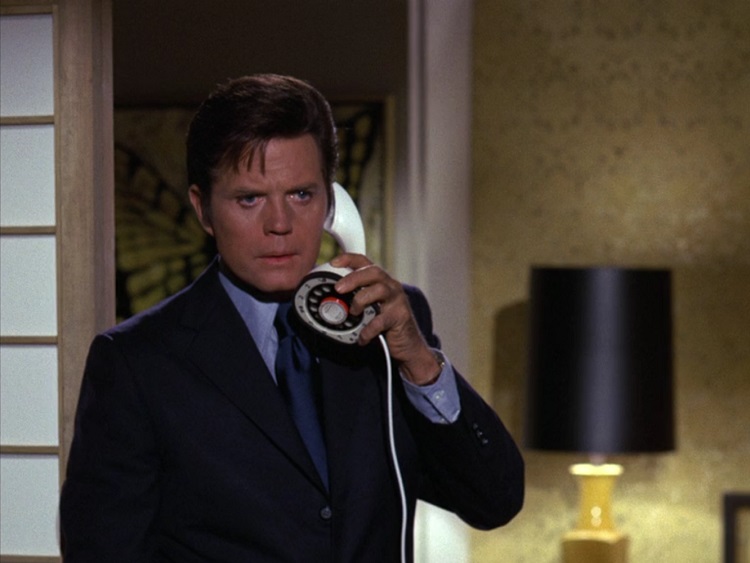
No worries, though. Steve’s on it.

steve mod phone

Summer Slow Down

You may have noticed in May that my post-a-week didn’t happen. Or you may not have. You may have just been thanking whatever deity you believe in for the reprieve.

The lack of posting was due to a combination of deadlines and health issues. Though the deadlines have been met, new ones have arisen and the health issues linger. As a result, priorities have shifted and blogging weekly can no longer be high on the list.

This does not mean I’m giving up blogging entirely. You couldn’t get so lucky. However, the weekly schedule is on hold. The new goal is at least one or two posts a month.

This new schedule will continue for the summer.

Hopefully by fall I’ll be back to blogging weekly again.

Until then…enjoy the slow down.

Book ’em, Danno–Episode 48

Book 'em Danno Podcast

Season 4 is winding down. First, Five-O attempts to put away a man who attacked a woman in “Skinhead”. Major Trigger Warning! This case is a sexual assault and though we don’t see it, the implication is upsetting enough, as is the treatment of the victim by the justice system after the fact. If you’re going to watch/listen, prepare yourself accordingly.

No prep necessary for “While You’re at It, Bring in the Moon”. Is wealthy recluse being framed for murder by his friends and associates, or is he banking on his bucks to get him out of trouble? This is a fun one, folks.

Listen on Soundcloud, iTunes, Spotify, and Stitcher.

When it comes to fake blood, ’70s TV is unmatched. Please enjoy this cherry slurpee crime scene.

cherry slurpee crime scene

The Laws of (TV Gunshot) Physics

Television takes liberties with reality for the purpose of storytelling. It requires a certain amount of suspension of disbelief. As a result, it ends up creating its own set of rules. My favorite set of these TV laws relates to being shot.
The real-life physics of gunshot wounds is too wild to properly translate to television. First of all, dying instantly isn’t something people do under most circumstances, let alone gunshots. We simply don’t have time for the necessary lingering unless there’s a confession or plot point to convey. Second of all, millimeters and luck play into the survival rate in such a way that people would likely struggle to find it believable if they saw it on their favorite procedural.

However, what does translate to screen is somehow easier for viewers to swallow. In addition to the prevalence of instant deaths, there’s also the understood notion that getting shot blows you off of your feet depending on the weapon used. I think it’s generally known that this doesn’t happen (more fascinating is the range of physical reactions gunshots survivors describe), but it’s something we as an audience have come to expect, especially when it’s the bad guy getting blown away. We prefer that dramatic liberty.

When it comes to the survivability of a gunshot, it’s guaranteed that our good guys will survive any wound inflicted unless they’re leaving the show. Bad guys, unless they’re a recurring threat, are probably dying instantly no matter where they’re hit. Westerns are my favorite example of this. Bad guys do not survive gut shots; good guys do. In reality, surviving a gunshot wound to the abdomen is a toss-up. There’s a lot of organs, arteries, and blood vessels packed in there. If you don’t bleed to death because the bullet nicked an artery or hit an organ, you just might die of sepsis, peritonitis, or some other kind of infection due to a perforated bowel. And then of course, the bullet might miss everything vital and you’ll be just fine.

Speaking of our good guys surviving their gunshot wounds, they rarely suffer any negative aftereffects unless the plot calls for it. So often they’re shot in one episode and then right back to work the next episode with nary a mention. When it comes to older reruns, this is more a matter of treating each episode as its own thing rather than adhering to any serious continuity. Look no further than our Five-O heroes for an example of this. In one episode, Steve McGarrett is shot three times and left for dead. In the next, he’s back to work and well-enough to be stabbed.

Or perhaps we can consider the interesting gunshot wound continuity of Eric Delko on CSI: Miami. He was shot twice at the end of the first part of a two-parter in the fifth season. During a firefight in a parking lot, he was shot once in the right thigh. Horatio Caine dragged him behind a car where Delko was then shot in the back of the head by a different, unseen shooter. During the second part, Delko fought for his life, rallied, and lived. However, they couldn’t get all of the bullet fragment out of his head and Delko did suffer aftereffects from this head wound. He lost memories from around the time of the shooting, had some confusion issues regarding aspects of his job, and had transitory hallucinations. In the eighth season, the fragment jarred lose during a shooting/car chase/car crash and he ended up on the operating table yet again to have it finally removed. He recovered from that without any issues. So, that one incident had long-lasting implications.

However, the gunshot wound in his leg was literally only addressed once…when he was initially shot. It was never mentioned again: not when Delko was in surgery, not when he returned to work a few weeks after getting shot, nada. It was as though it never happened. Setting aside the fact that it was dubious at best he’d be returning to work so soon after being shot in the head, Delko definitely would have been limping if he had. He’d probably know every time it was going to rain for the rest of his life, too.

Many of our law enforcement leads could find themselves in a similar situation, especially if they’ve been shot in the shoulder, which is a favorite target of the writers and bad guys it seems. Shoulder wounds are notoriously nasty as there’s a lot that can go wrong in that region and not much room for it not to. There’s the subclavian artery, which could easily have someone bleeding out in minutes, not to mention all of the muscles, tendons, and bones in that area that work together to move the arm. Starsky got shot in the shoulder on the first season of Starsky and Hutch, nearly died, was back to work in the next episode without a bandage, and never had a problem using his arm to enforce the law for the rest of the series. Heroes don’t get arthritis from traumatic injuries.

Rumor has it that the best place to get shot (aside from nowhere) is in the backside. The abundance of fatty tissue is ready-made for high-impact projectiles (good luck if you have a flat ass, I suppose), but rarely do shows, cop shows in particular, have one of their mains take one for the team in this fashion. I guess there’s something less dramatic about spending the week on their stomach than taking one in the gut or the shoulder and still managing to chase down and arrest/kill the bad guy. Or maybe spending most of the episode in a coma while their besties get justice for them for maximum viewer angst.

No matter where they get shot, we all know they’ll be back and better than ever in the next episode anyway.

Book ’em, Danno–Episode 47

Book 'em Danno Podcast

It’s finally time for Season 4’s two-parter and it’s a doozy! When “The Ninety Second War” starts off with a car wreck, you do not anticipate that it would end with a missile launch. The extensive frame job that dominates the first episode is exquisite, complete with doppelganger and trip to Switzerland. Who’s behind it all? Wo Fat, of course. And the second episode is all about figuring out what he wants with ninety seconds.

It’s a fun ride.

Listen on Soundcloud, iTunes, Spotify, and Stitcher.

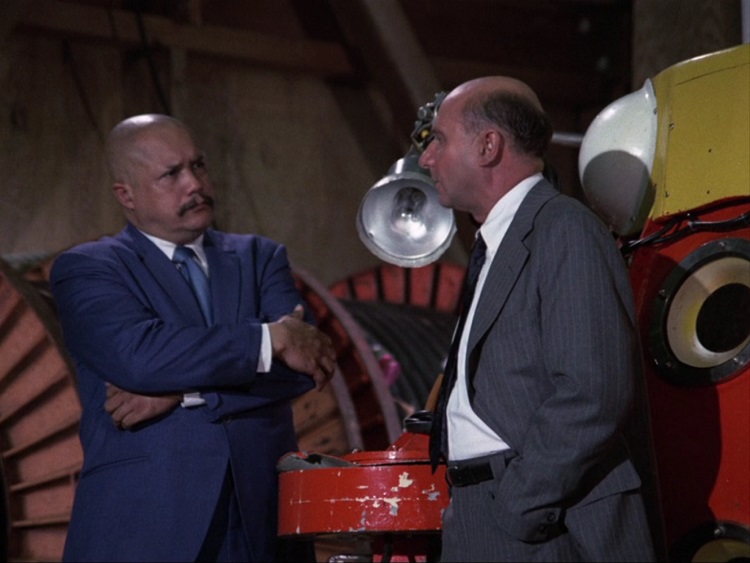
I mention that Donald Pleasence has a moment of looking unhinged. Of course, my words cannot do it justice.

donald pleasance unhinged

Also, here’s a picture of Wo Fat talking to Vogler in front of his kicky little sub. Just because.

wo fat sub meeting

How To Replace the Dearly Departed Character

The Two Darrins.

It’s become a pop culture touchstone. Rather than get rid of the character of Darrin Stephens on Bewitched when Dick York’s back health began to decline, the show simply hired Dick Sergeant to replace him for the rest of the series. However, this sort of swap happened earlier in the show’s run. Alice Pearce originated the role of nosy neighbor Gladys Kravitz, however sadly died of cancer after only two seasons. She was replaced by Sandra Gould, who remained Gladys for the rest of the show.

Replacing departing characters can be a challenge for a show, especially if the show is riding high in the ratings. One false move and the popularity can tank. Pick the wrong actor or create the wrong character, and the chemistry of the show is forever altered in a way that renders it unwatchable. But get the right person combined with the right character, and it’s like finding gold all over again.

Not all actor departures can be helped. Death is inevitable. It comes for us all and it comes at the most inconvenient times. It can leave shows in the lurch about what to do.

One of the earliest instances of death taking out a major player happened on Wagon Train when Ward Bond died. His Major Seth Adams had been leading that wagon train for years. Then one day he was gone and Christopher Hale, played by John McIntire, was in his place, and nobody said anything about the missing major. This approach would also become a tactic to deal with the departure of living actors as well. See Gutterman (James Whitmore Jr), TJ (Robert Ginty), and Anderson (John Laroquette) on Baa Baa Black Sheep.

But it’s not always handled that way.

Dan Blocker died suddenly just prior to the final season of Bonanza. The season premier was to feature his character Hoss and as a result had to be rewritten. Hoss wasn’t just a main character, but a beloved one, and there was no way his character could just disappear from the show without remark. So it was said that Hoss died in an accident.

Jack Soo’s death from cancer was not sudden or unexpected. As his illness worsened, his character Nick Yemana showed up less and less. The show broke form after Jack Soo’s death for the retrospective episode, with the ensemble highlighting their co-star’s best moments while also offering some words about him as a person and a friend. It was never expressly stated that Nick died, but it was definitely implied, and though the character of Care Levitt, played by Ron Carey, was seen more often in the squad room in a detective role, I don’t think it would be accurate to say that Nick Yemana was ever replaced.

Some actors do leave of their own accord and their characters are either killed off or sent off, creating a void that must be filled.

This did happen on Bonanza when Pernell Roberts chose to leave the show. Logic dictated to replace one Cartwright with another and since it would be awkward to pull another half-brother out of the hat, they brought in cousin Will Cartwright, played by Guy Williams. He lasted all of five episodes before being cut loose from the show, supposedly due to Michael Landon’s insecurities surrounding Williams’s good looks.

But usually, the replacement characters stick around a little bit longer.

Frequently, shows would attempt to replace one character with a similar character, sometimes in appearance, usually in personality. The idea was understandable: don’t shake up the vibe too much. They knew what worked and wanted to stick with it. And sometimes it worked and sometimes it didn’t.

If you ask my opinion (and you’re reading my blog, so clearly you’re here for my thoughts), M*A*S*H* set the gold standard when it came to character replacement.

Between the third and fourth season, the show lost two major players: McLean Stevenson’s Henry Blake was shipped home on an ill-fated trip in the third season finale, and Wayne Roger’s Trapper John McIntyre was shipped home in one piece before the fourth season premier and while Hawkeye was on R&R.

Instead of replacing these two popular characters with ones of a similar ilk, they chose to replace them with characters that were very different from their predecessors.

Colonel Henry Blake, whose leadership was once described by Hawkeye as being on a sinking ship and running to the front of the ship to find the captain was Daffy Duck, was a good doctor, but a lousy military man and struggled to be effective in a leadership role, and ended up being replaced by Colonel Sherman Potter, surgeon and career military man. Meanwhile, lady’s man Trapper John was replaced by dedicated family man BJ Hunnicutt.

Bringing in two new characters is a big challenge, but to make them quite different from the ones they replaced feels like something of a gamble. One that, of course, paid off. Sure there were some growing pains, as is natural when new people come into an established setting, but it wasn’t long before they found their places in the scheme of things.

This was repeated when Larry Linville’s Major Frank Burns was sent home when he kinda lost his head when Margaret got married and was replaced by Major Charles Emerson Winchester III, played by David Ogden Stiers, who was literally assigned to the 4077th because he beat a colonel at cribbage.

Frank Burns was a unique weasel of a character that loved the authority because of the importance it gave him, but whose plans to acquire it backfired typically through his own incompetence or because of Hawkeye, Trapper, and/or BJ. Not to mention he was a lousy doctor. Though he had his moments of humanity, Burns was a largely insufferable, irredeemable character and Larry Linville portrayed him brilliantly for five seasons.

On the flip side, Winchester was a much more formidable adversary against Hawkeye and BJ when it came to shenanigans, as he was just a smart, and he was a gifted surgeon as well. He, too, could be insufferable, his arrogance usually getting the best of him, but he was much more human than Burns could ever be. Winchester was also more frequently an ally to Hawkeye and BJ. Though Charles was often the foil, there was a mutual respect at play, something that never would have happened with Burns.

One replacement that kind of wasn’t a replacement served to be a very interesting replacement. If you follow me.

Usually when we think of replacements, we think of one character leaving and a whole new character coming in. However, when Gary Burghoff left the show, his character Radar O’Reilly going home to take care of his mother and the family farm after his Uncle Ed died, the 4077th didn’t get a brand new company clerk. They got Klinger.

In-house promotions happen and we got to see that adjustment in real time, with Klinger struggling to learn a new job and the rest of the camp to struggling to to deal with Klinger’s struggles. The change got Klinger out of the dresses for the most part, but allowed his character to grow in an unanticipated way without losing the guy we’d come to know and love, the guy who’d had a friendship with the character he replaced.

M*A*S*H did a lot of things right -it’s got the 11 seasons and Emmy awards to prove it- but the way the show replaced characters in a way that reflected how people come and go in life, with new personalities replacing old, dynamics shifting, and new normals being established, was supreme. Like I said -the show set the standard.

Replacing dearly departed characters is a challenge and every show meets that challenge differently. Sometimes it works, sometimes it doesn’t. Sometimes we’re gifted in with characters that exceed our expectations and steal our hearts. And sometimes we wish they’d never been written.

But I guess that’s a little like how life works, too.

Rerun Junkie Guest Star–Peggy Pope

When I was writing about Don Calfa and Oliver Clark on Barney Miller, I made the note that I needed to write about Peggy Pope. She was another frequent guest star on the show (she did six episodes) and one of my favorites. Though Ms. Pope doesn’t have the robust guest star resume like some of the other actors I’ve profiled, she more than makes up for it with quality.

Given her talent, it’s unfortunate that her only regular roles were on short-lived series. She was Alice Fisher on Billy with Steve Guttenberg and Elain Fusco on Calucci’s Department with James Coco and fellow Barney Miller frequent flyer Candy Azzara. She also had a short five episode stint on Soap.

As I said, I know her best from Barney Miller and though I usually pick one appearance on a show when I do guest star posts like this, I can’t pick just one for Peggy Pope. She played a variety of wonderfully idiosyncratic characters in her six episodes.

She played a woman who fell victim to a romeo who then robbed her. But this didn’t deter her or her lovelorn ways and when the thief was apprehended, she still pursued a love connection. She then played a cat burglar’s widow who took up the family business after her husband’s demise. She followed that up by playing a woman who reported crimes that were occurring on soap operas. In her penultimate appearance, she held the 12th precinct hostage with a bomb she made in a pressure cooker, demanding a hospital’s nuclear medical department that she felt was responsible for her husband’s intimacy issues be brought to justice. And in her final appearance, she played a woman looking for her husband who’d run out on her and ended up finding a different one with the same name who’d been mistakenly reported as dead. It turns out she liked the reportedly dead one much more than the her actual husband.

Her sweet voice and sweeter face allowed Ms. Pope to play characters that were unsuspectingly devious.

The one guest spot I’m thinking of came on The Golden Girls. She played Gladys Barton, wife to Leonard (played by Gordon Jump) who decided to be an ass about his tree falling into the girls’ yard, leading to Sophia putting an evil eye curse on him. Ms. Pope is only in the episode briefly, but our first encounter with her leads us to believe that she’s helpless in the face of her loud, bullying husband. However, when Leonard returns after suffering a string of bad luck, including flat tires, missing golf clubs, and a boil on his butt, it’s revealed that Sophia’s curse had a lot of help from Gladys, something you wouldn’t suspect from such a meek lady. Well, except for the boil, of course. That was just her good luck.

Ms. Pope also appeared on The Golden Girls spin-off Empty Nest and the Empty Nest spin-off Nurses; got soapy on Knot’s Landing and Santa Barbara; tangled with the law on The Trials of O’Brien, Hill Street Blues, Tough Cookies, and Night Court; found religion on Highway to Heaven and Have Faith; privately investigated on The Outsider, Barnaby Jones, and Hart to Hart; checked in on St. Elsewhere and ER; made a name for herself on Rhoda, Hope and Faith, Amanda’s, and Kate & Allie; found family on Eight is Enough, Too Close for Comfort, and Sisters; went into the office on Nine to Five and Anything But Love; got a little unreal on Bewitched, Mork and Mindy, and the ’80s Twilight Zone; and ran the L&O gamut on Law & Order, Law & Order: SVU, and Law & Order: Criminal Intent.

Whenever Peggy Pope pops up in one of my reruns, I immediately think of an angel. An angel that’s a little off-beat and sometimes a little devious, but still an angel. She’s a delight and we’re all blessed by her work.

Rerun Junkie Episodes–“Out of Time”

There’s a genre of TV show episode that I like to think of as “How the Band Got Together”. It’s basically a flashback episode (not a clip show) showing how characters that we’ve always seen to have known each other first met. A great example of this is the first season finale of The Golden Girls. It literally shows how Blanch, Rose, Dorothy, and Sophia all came to live together.

The eighth season premier of CSI: Miami, “Out of Time”, is one of these episodes, but it does a lot more and I love it.

Season 7 ends with Delko helping his Russian mob connected father escape from a shootout and in the process gets shot at by Calleigh (which put a damper on their relationship). Delko ends up wrecking the car and goes wading off in a marsh, leaving his unconscious father inside, and Horatio and the team searching for him.

Season 8 opens with them finding an unconscious Delko on a road by the marsh. The bullet shrapnel left in his head from being shot in Season 5 has shifted and put his life in danger. As Delko fights for his life, we see how the band got together back in 1997.

We see the lab before it was The Lab, before CSI was actually a thing. It was literally a broom closet. We meet Detective Horatio Caine without his trademark sunglasses and his partner Detective Sullivan. We meet the fresh-faced, enthusiastic lateral transfer Calleigh Duquense. We meet Jesse Cardoza on his last day as he’s transferring to L.A. We meet Officer Frank Tripp in uniform and sporting an amazing mustache. We meet Dr. Alexx Woods working in a much less nifty basement morgue. We meet Eric Delko…who’s not in law enforcement. He’s driving a tow truck and recovering items he finds that people have ditched. When he goes to pull an old stove out of the marsh -yes, the same marsh where Horatio found him unconscious at the beginning of the episode- he finds a submerged car. He tows it out, sees bloody water pouring out of the trunk, and calls it in. From the way Delko greets Sully and Horatio, and teases Horatio about not having sunglasses with Horatio coming right back by saying he’s supposed to find some for him, it’s clear that they’re not strangers. But at the same time, this case will be the first time Horatio and Calleigh meet.

The case of the murdered woman found in the trunk illustrates how far the team and CSI and forensics as a whole has come as we go between the past and the present of Delko fighting for his life and the rest of the team keeping watch. While old school Sully prefers the obvious suspect -the husband- Horatio, Jesse, and Calleigh follow the evidence to the killer -the gardener. With Delko’s help. At the conclusion of the case, Jesse leaves for L.A., recommending a guy by the name of Tim Speedle who’s working in St. Petersburg for Horatio’s newly established CSI department. Horatio, recognizing talent when he sees it, also encourages Delko to become a police officer and then come find him.

We’re also gifted with the beginnings of Horatio’s style as he ditches his tie and accepts a pair of sunglasses that Delko recovered during one of his salvages. They are THE sunglasses famed in gif and meme and they’re made even more special knowing that they came from Delko. And Delko’s life becomes even more precious knowing that it was Horatio who got him started in law enforcement.

Because this episode does more than just show how the band got together. It’s always been clear that Horatio has a special relationship with his team, but here it’s established just how special his relationship with Eric is. One of the few present day scenes is Horatio talking to a comatose Eric after brain surgery, begging him to stick around and fight because he can’t lose him after losing Marisol, Ray, and Speed. It’s an unexpectedly tender scene that I love and makes the final scene of Delko waking up surrounded by the entire team even sweeter.

The episode also establishes the groundwork for the season despite spending most of the time in the past.

Delko’s injury paves the way for him to take a leave of absence from the team as post-surgery he feels less enthusiastic about the job. Obviously, he doesn’t stay away, but it was a convenient storyline for Adam Rodriguez to step away from the show for most of the season. At the same time, it introduces us to Jesse Cardoza as his character is first leaving for L.A. in the past and returns in the present of the next episode with Eddie Cibrian joining the cast for the season. And Sully, who could have been a one-off past character, ends up being a familiar face who returns a few times later in the season.

Now does the ep have its faults and fudge the facts and timeline some? Yeah. Whatever de-aging they did to David Caruso makes him look like he escaped Whoville part of the time (I said what I said). I also feel they could have gone more late ’90s with everyone’s wardrobe, particularly Calleigh’s, but that’s neither here nor there.

It’s said that Horatio is going to head up the newly established CSI at the end of the 1997 portion of the episode, but as the first episode established, Megan Donner was actually in charge until she took a leave of absence due to her husband’s death and Horatio ended up with that job (Horatio does mention her in this episode, though, saying she’s out in the field and that’s why he needs Jesse’s help on the case). There’s also the insinuation that Horatio went right from the bomb squad to CSI, but during the course of the series, he also spent some time being a detective in NYC, but was working Miami at least in 1987. He has a very interesting career history.

Also, the 1997 start date is questionable. Horatio and Megan both worked the ValuJet crash of ’96 and it’s insinuated that CSI was a thing then. Also, Delko mentions playing baseball for the Miami Hurricanes for a couple of seasons (consistent with something said in a first season episode), but if you go by the birth year on older sister Marisol’s headstone, 1978, then Delko is at most 18 in ’97. So, either he graduated high school early, or I’m paying more attention than I’m supposed to.

I’m also not fond of them putting Natalia in the flashback. They could have just kept her in the present like Ryan and it would have be fine. But I recognize that this complaint is a me-thing, not an actual issue.

But obviously, none of this detracts from my enjoyment of the episode or how well it was done. Seeing the team come together and the birth of the Horatio that we know is terrific. Getting to see Calleigh at her most bubbly, which by this point in the show had decreased in the face of her lived experience, is so wonderful. Also the hilarious wink wink nudge nudge when she says that she’d never even think of socializing with anyone remotely connected with her work when the three men we actually see her in romantic relationships with -Hagen, Berkeley, and Delko- are her coworkers. And that instead of this episode being a stand alone emotional gut punch, it actually puts in place multiple pieces for the season is clever and well-done.

Also the fact that they used Chumbawumba’s “Tubthumping” to establish the 1997 vibe is nothing short of magical.

horatio new 1997

Book ’em, Danno–Episode 46

Book 'em Danno Podcast

Steve finds himself being used to help eliminate a witness in “Bait Once, Bait Twice”. This episode is an instant classic for two reasons: we learn that Steve gets his hair done weekly and we’re gifted an assassin with the shortest shorts known to man. Truly distracting. I ranted about them twice.

And the reboot crew tackles an assassination plot during Thanksgiving in “Hau’oli La Ho’omaika’i”. I picked this Season 4 episode because Carol Burnett’s Aunt Deb is magnificent and I want everyone to know her.

Come for the short shorts, stay for the turkey shenanigans.

Listen on Soundcloud, iTunes, Spotify, and Stitcher.

Behold the short shorts. If I had to see them, so do you.

assassin short shorts