Book ’em, Danno–Episode 66

Book 'em Danno Podcast

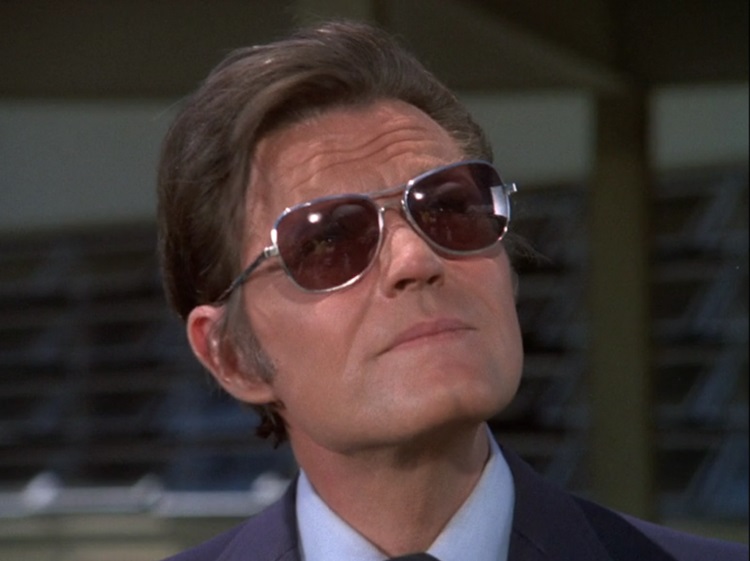
Season 6 starts to find its groove with this episode. First up, we’ve got murderous hillbillies in “One Big Happy Family”, and then arson with an agenda in “The Sunday Torch”. Heads up for some racism in the former and mental illness discussion in the latter.

Listen on Soundcloud, Apple Podcasts, and Spotify.

In the meantime, please enjoy Slim Pickens and Barbara Baxley straight up ruining a snobby hotel clerk’s day.

slim pickens and barbara baxley

Pimpin’ Ain’t Easy

Let me just disclaimer this by saying that I haven’t thoroughly researched this post. I’ve just been thinking about it.

And what got me thinking about the depiction of sex work in cop shows, particularly pimps in the ’70s, was an episode of Hawaii Five-O that I just covered for an episode of Book ’em, Danno called “Tricks Are Not Treats”. The basic plot of the episode is a group of pimps (called “macks” in the episode for some reason because they’ve had no problem calling a pimp a “pimp” in previous episodes) led by Harley Dartson, played by Glynn Turman, are at odds with a loan shark named Lolo, played by Gregory Sierra, who is taxing their business.

The episode was shot and aired in 1973. Without watching it, I bet you know what the pimps look like, act like, and sound like. There is a certain image that’s been embedded into popular culture when it comes to pimps, particularly of the 1970s variety. These pimps fit that image.

Most of the pimps in this co-op are Black, though there is at least one Native Hawaiian, one Asian, and one token white guy with a ‘fro. All of them are decked out in the classic pimp styles: slick suits, bright colors, fab shoes, and fetching hats. Oh, the hats! It may be stereotypical as hell, but they had style. These Honolulu pimps would have been able to blend into any city on the mainland. They had the look.

The characterization of the pimps of this time period in particular lends them to be very convenient bad guys on cop shows. Just get them in the right outfit and the audience doesn’t need much more than that. It was understood that pimps were bad because prostitution was against the law. Pimps exploited the women who worked for them and weren’t above using violence to get the women to turn their tricks. Frequently, it was these violent tendencies that had them crossing paths with our police heroes. And it was probably not an accident that it seems like a majority of pimps depicted on TV at this time were Black. It seemed like if it was a white pimp as a main villain -and this is just my impression as I have no scientific data or research to back this up because I’m lazy- that he was depicted more as a businessman. He had “escorts”. He had an office. He wore respectable suits. He might not be above committing violence, but at least he was “classier” when he did it.

In “Tricks Are Not Treats”, Harley Dartson is positioned as sort of a good guy in comparison to Lolo, an unlikely and uncommon position for a pimp at the time. The pimps in the episode are humanized beyond the stereotypes that they’re usually presented as. Their line of work isn’t excused and it’s mentioned that they are still willing to use violence against the women in their stables to keep them in line, but that isn’t the focus. It’s them against Lolo and the writers want you on their side. So, they make them likeable, relatable. J. Paul (Ron Glass), prior to his demise, comes across as a funny, friendly guy. Wunton (Moe Keale) is deeply affected by his friend’s death, to the point of losing his cool to defend J. Paul’s memory.

Harley, our main mack, is given a normal home life with a wife, who used to be on the streets as one of his girls, and two children. Sure, Semantha (Lynn Ellen Hollinger) is still very much involved in the administration aspect of the business, keeping track of the women in Harley’s stable and the jobs they’re doing (or should be doing, as she does threaten one woman over the phone to get to a hardware convention before Harley takes a coat hanger to her), but it’s treated as a normal Mom and Pop kind of business. Pimps are having a meeting out on the lanai and Semantha is tracking tricks while the kids eat lunch at the kitchen counter and Harley fusses at the older boy about doing his homework. It’s a rare depiction to get that much into a pimp’s personal life and have it be so suburban.

(It’s also worth mentioning that Harley and Semantha were an interracial couple with biracial children, something else not often seen on TV in 1973.)

There’s a pimp with a heart of gold in an episode of Barney Miller as well. In “The Hero”, Carl Gibson’s mack character Mayflower is arrested for pushing a trick out of a window and ends up helping the guys put a baby Todd Bridges back on the straight and narrow. Sure, he’s doing it in part to ease his own punishment, but a pimp on another cop show wouldn’t have done it at all.

The bad buy blueprints for cop shows are interesting in how they both contribute to stereotypes and then deviate from the stereotypes they helped create. The way pimps are used in these shows is a great example of that.

Imagine what I might discover if I actually applied myself and researched it.

Book ’em, Danno–Episode 63

Book 'em Danno Podcast

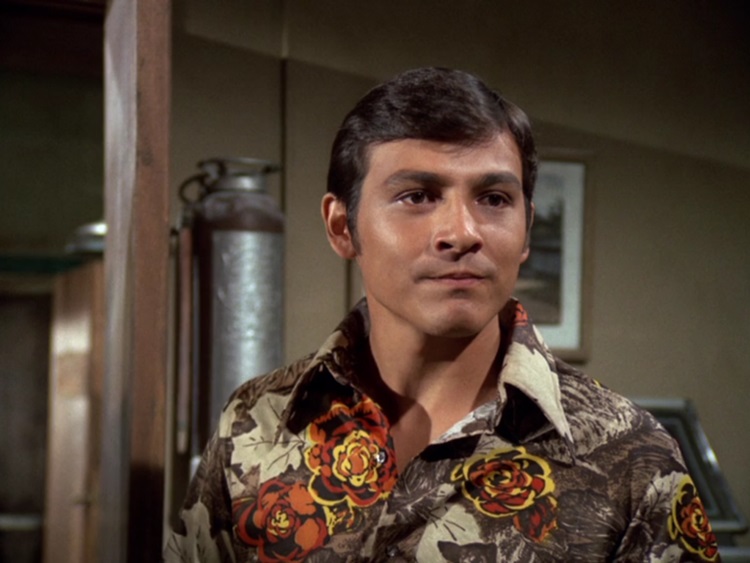
Season 5 comes to a close with a couple of really good episodes. First, Five-O is baffled by a stolen diamond necklace in “The Diamond That Nobody Stole”. We are once again graced by the presence of Eric Braeden in magnificent outfits with bonus Beulah Quo being absolutely regal.

Then Five-O tries to determine which juror has been compromised in “Jury of One”. Both of these episodes featured toothless men who met unfortunate ends, but brought me great joy for the brief time they were with us.

And of course, my season wrap-up that nobody asked for.

Listen on Soundcloud, Apple Podcasts, and Spotify.

To close out Season 5, here’s Eric Braeden pulling off a look that few would even dare attempt.

See you in Season 6.

eric braeden in white

Rerun Junkie Character–Wo Fat

Police procedurals will sometimes brush their heroes up against the international. However being set in Oahu during the Cold War, it made sense that Hawaii Five-O would feature perhaps more than the average politically based storylines. So, naturally, a recurring villain of this caliber would be a perfect nemesis for the great Steve McGarrett. Enter the most diabolical foreign agent to ever grace the Hawaiian Islands: Wo Fat.

Played impeccably by the wonderful Khigh Dhiegh, Wo Fat is introduced to us in the very first episode of the series, “Cocoon”, as the mastermind who uses sensory deprivation to break people for useful information. The cocoon set-up is something out of a horror film -the victims fitted in a wet suit, their ears and nose filled with a kind of putty, blindfolded, placed in a tank of water, breathing through a tube- and Wo Fat is the perfect man to implement such a horrific torture. He’s dressed in a suit and his almost relaxed demeanor about the horrific psychological torture he’s inflicting on his captive speaks to how comfortable the man is with cruelty in the pursuit of his goals. He’s ruthless, but he’s no brute. Intelligent and sophisticated, Wo Fat sets himself up as a formidable foe from the very beginning.

Unlike other villains who might be motivated by vengeance or the need for power, Wo Fat’s motivation comes from patriotism. Just as Steve McGarrett loves and wants to defend his country, Wo Fat loves and wants to empower his. In a way he’s seeking power, but not necessarily personally. He benefits as his country benefits. It’s an interesting motivation because when viewed through a certain lens, one could say that Wo Fat is merely an employee who excels at and takes joy in his job. We love a person who takes pride in their work.

And Wo Fat puts in the work. What sets him apart from other operatives of the time is his investment in his work. In the two-part episode “The Ninety-Second War”, it was revealed that Wo Fat had spent years investing in a frame job against Steve McGarrett, an elaborate, labor-intensive scheme that necessitated the creation of a doppelganger, a Swiss bank account, millions of dollars of apparent bribes and payoffs accumulated over three years, and a staged car accident to trigger the culmination of this plot -a distraction to divert attention away from a Chinese missile test. With McGarrett occupied with clearing his name, he won’t have time to even realize that Wo Fat has strong armed a scientist by kidnapping his daughter into purposely blacking out the Pacific missile tracking system for ninety-seconds, the time China needs to perform their test.
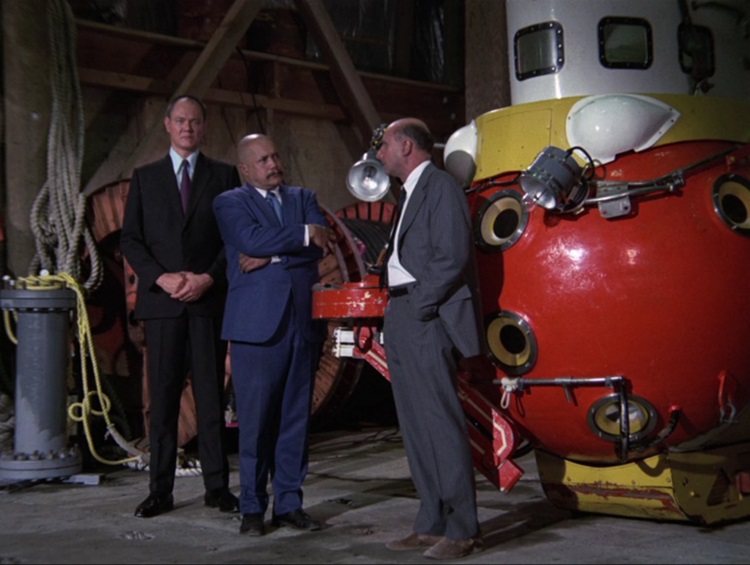
It’s intricate, meticulous planning that proves to be a Wo Fat trademark. The man would rather go big and then go home. Whether it be an elaborate frame, faking a tidal wave, using his spies to brainwash people into murder, kidnapping children as a form of leverage, working with the Russians to obtain counterfeit currency plates, orchestrating two murders to smuggle a device out of the country, stealing deadly toxins, Wo Fat’s flair for the dramatic is on display. What else could you expect from a man with his own submarine and a few doubles of his own?

I think the episode “…And a Time to Die” gives the audience an excellent insight into Wo Fat’s character. In order to guarantee that a man dies on the operating table after a botched assassination attempt, Wo Fat kidnaps the brain surgeon’s daughter, calmly explaining to the agonized parents that it would be in the child’s best interest if the doctor allows the man to die during surgery. It’s such a well done, well-written, well-acted scene because Wo Fat explains this entire heinous act as an unfortunate, but necessary step to gain his objective. At one point, he actually says that he’s as much of a victim as the parents and the child are, insinuating that if the assassin had done his job, then none of this would be happening.

However, my favorite line from that scene is Wo Fat clarifying the trustworthiness of his word.

“You’re wondering if you can trust me to keep my word. I can assure you…you can. I would genuinely hate to harm your child. But more important, in my profession, a man cannot be afforded a credibility gap. He must keep his promises if he wants anybody to believe his threats.”

It is such a good line and it’s delivered so beautifully.

As for the child in question, we learn even more about Wo Fat from his interaction with the little girl, Ellen. He doesn’t want her to be frightened of them and even offers her some lunch. He then tells her how important it is to be brave, telling her a story about a little girl he knew a long time ago, about how he and the child’s mother tried to keep her safe and teach her to be brave during “a time of great war” in his country. He doesn’t finish the story, getting choked up at the unsaid fate of the little girl after she ran out into the street during the fighting. The implication is that Wo Fat’s daughter was killed during the war, and that his patriotism is, at least in part, motivated by her death.

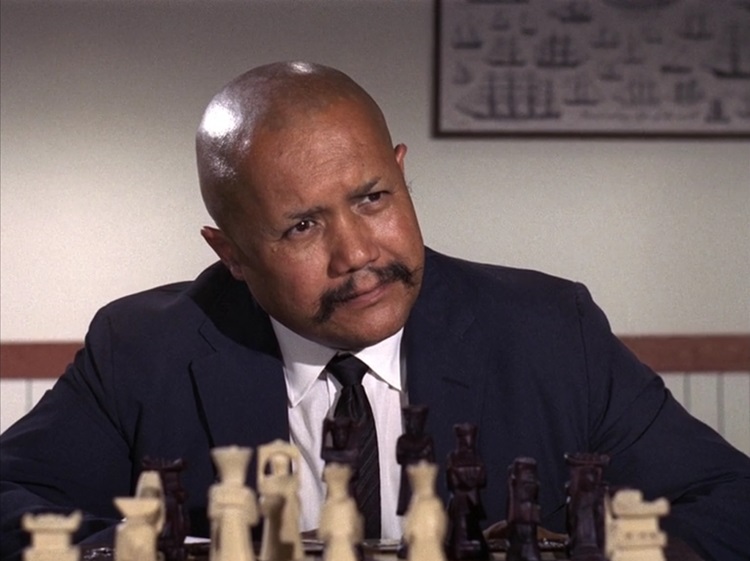
Wo Fat is then delighted to find out that Ellen plays chess and offers to play her a game. When he finds out that she likes chess best when her mother lets her win, he agrees that winning is the most important thing, but after a beat admits he doesn’t always enjoy it, inferring that while Wo Fat is invested in being excellent at his job, he’s not always at peace with what he has to do to accomplish his objectives. I’m guessing kidnapping and harming children would fall into that category.

That one scene adds so much complexity to an already intriguing character. His actions -his elaborate plots and plans executed over the course of 12 seasons and 13 episodes- take on a new depth when viewed through that framework.

Even though Wo Fat was Steve McGarrett’s greatest nemesis, he wasn’t even in every season of Hawaii Five-O, failing to appear in the 6th, 10th, and 11th seasons. However, in a fitting farewell to the show, as it began, so it ended, with Steve McGarrett facing off with Wo Fat. In the final episode of the series, McGarrett finally gets his man, going undercover as a scientist in order to be kidnapped by Wo Fat, who’s going full Pokemon trying to collect the whole set in order to have the four men create a space-based laser weapon.

Go big and then take it on home.

The series ends with McGarrett finally getting his man, a fitting end to the show and a satisfying conclusion to the relationships between the two men. While Steve has no love for Wo Fat, Wo Fat has a certain amount of admiration and respect for Steve. He sees him as an enemy, sure, but he also sees something of himself in McGarrett, a man motivated to excel in his job. The difference between them lies in the execution. Their differing moral standards allows for weaknesses to be exploited and strengths to be uncovered. The dynamic between the two men is impressive, especially when you consider that there are episodes when they never directly interact. But when they do, Jack Lord and Khigh Dheigh set fire to the screen bringing these two characters to life. These two men going back and forth is something to be savored.

Though Wo Fat was apprehended in the final episode, I find it hard to believe that this cool, sophisticated, intelligent villain would have been kept behind bars for long.

A man like that always has a plan.
Book ’em Danno–Episode 62

Book 'em Danno Podcast

Season 5 is almost over but Five-O’s work is never done.

First they have to solve a tricky murder in “Percentage” and then Chin Ho is beside himself when his daughter gets involved with the son of a criminal family in “Engaged To Be Buried”.

For whatever reason, I was rather verbose talking about these two episodes, so the overall episode is a little long. I suppose I could have cut my thoughts on henchman fashion or trash men, but this the important and insightful analysis people tune in for.

Listen on Soundcloud, Apple Podcasts, and Spotify.

When your in a criminal family, it’s important to dress the part.

rono vidalgokoa vidalgo

Let’s Make Bad Decisions for Fun and Plot Lines

In an episode of the short-lived ’70s cop show Chopper One called “The Informer”, Dick Van Patten is in police protective custody so he can testify against a mobster. Our mains, Foley and Burdick, use the police helicopter to take him to a safe house…where he later calls his wife and tells her exactly where he is so she can come see him.
It’s a frustratingly stupid decision, one you know that the bad guys will capitalize on by following the wife out to the beach house of hiding. I am on record stating that I wanted something bad to happen to Dick Van Patten for this dipshittery. And yet! We wouldn’t have an episode if he hadn’t made this poor choice. Or we wouldn’t have this episode. Things would have played out much differently for everyone involved otherwise.

And like I said in my recorded statements, I can’t even really be mad about it because people willingly make such terrible decisions in real life.

Making bad life choices is sort of a key component to cop shows. Someone has to make the dubious decision to commit a crime, after all. That’s what gets the ball rolling. If people left the house every morning with the goal of making good choices, our TV cops would be out of work.

It’s not just criminals making poor life choices. There are the bad decisions by the (mostly) law abiding citizens that skitter events in a different direction. Like Dick Van Patten making that ill-advised phone call to his wife. Or the guy in the CSI: Miami episode “Long Gone”. The dad and his family are kidnapped because dear ol’ dad finds drugs buried on his property and decides to go into business for himself.

And then there are the guys (so often they’re men) that compound one bad decision with another. Like the rancher in the Hawaii Five-O episode “Paniolo” who lets his anger get the best of him when dealing with a real estate developer. The physical altercation leads to the developer’s accidental death, and instead of contacting the police, he decides to stage the developer’s death as a car accident. Does it work? No, of course it doesn’t work. It just makes things a whole lot worse.

Or the guy in the Law & Order: Criminal Intent episode “Homo Homini Lupus”, who gets in trouble by failing to repay a loan shark in a timely fashion. As a result, his family is kidnapped. Does he accept help from the authorities? Of course not. Why would he do such a thing? That would make sense, at least in the world of TV law enforcement. So, shit gets to go extra pear shaped for his sins.

Sometimes it’s hard to believe people could be such dipsticks. And then you read the latest Florida Man story. We can say all we want that the bad decisions people make on TV are unbelievable, but we know deep down that’s not necessarily true.

I realize I’m focusing on cop shows here, but that’s only because it’s my area of expertise, so to speak. Bad decisions motivate plots in other genres, too. The plot of more than one episode of Stargate: Atlantis was motivated by Dr. Rodney McKay’s ego-driven bad decisions.

Family-oriented sitcoms thrive on the bad choices of their precocious children. With the TGIF line-up, I know I put a slew of bad decisions in front of my eyeballs back in the day. The only one that sticks out in my memory is the Full House episode “I’m Not D.J.”, in which Stephanie allows Kimmy -of all people- to pierce her ears against her father’s wishes so she can impress her friends. It’s a relatable dubious decision because kids don’t have the life experience to know better than to do stupid shit. They’ve got to do the stupid shit to get the experience. Everyone knows that they’re not going to take anyone else’s word for it.

The adults on those sitcoms, though, don’t have that excuse. They’re doing it for the laughs of the live studio audience.

And because adults make dubious life choices, too.

At least on TV, they do it for the plot.

Book ’em, Danno–Episode 61

Season 5 is winding down, but the cases are still going full-tilt. In “Will the Real Mr. Winkler Please Die?”, Five-O finds themselves in the middle of a spy mess, and in “Little Girl Blue”, a kidnapping turns into a stand-off.

Recording this episode was interesting because I had to stop in the middle of it to deal with real life things, the background noise during “Little Girl Blue” ended up being super annoying (sorry about that), and the soundclips for “Little Girl Blue” ended up a little borked and I couldn’t use most of the ones I wanted to. As a result, the episode is probably not my greatest.

But you can still listen on Soundcloud, Apple Podcasts, and Spotify.

Let this glorious Steve fashion be a balm on this unfortunately produced episode.

Book ’em, Danno–Episode 60

Book 'em Danno Podcast

Season 5 begins to wind down with a couple of big plot episodes. Five-O has to untangle an impossible murder in “Here Today…Gone Tonight” and unknot a stock exchange heist in “The Odd Lot Caper”.

One thing I should have pointed out when discussing “Here Today…Gone Tonight” is that the number of people required to make this particular plot work was a lot and I don’t know how you’d keep them all quiet to ensure success. But that’s okay! This is fun and we’re having a good time. Not everything needs pedantic logic.

“The Odd Lot Caper”, on the other hand, does accurately reflect the absolute bullshit of a group project.

Listen on Soundcloud, Apples Podcasts, and Spotify.

Two men, two suits, two dynamite fashion choices. Steve was dressed to party, but Beaufort was not thinking he was going to be robbed when he picked that suit jacket that morning.

steve in party yellowcasino carpet print

Book ’em, Danno–Episode 59

Book 'em Danno Podcast

Season 5 rolls on with two more episodes that are slightly different from the usual Hawaii Five-O format.

First, Five-O is charged with providing a couple of witnesses with a wedding and a honeymoon while protecting them from a mob boss in “Thanks for the Honeymoon”. Slight trigger warning for animal death in the episode. It’s brief in both the episode and in the discussion.

Then Five-O must track down a malicious stalker in “The Listener”. Full blown trigger warning for suicide in “The Listener.” It’s a major scene in the episode, so I talk about it for a bit.

Listen on Soundcloud, Apple Podcasts, and Spotify.

Get your good clothes on. We’re going to a wedding. Just look at this bridal party.

bridal party

Where Do Your Sympathies Lie?

Minor trigger warning for mentions of sexual assault.

Something I frequently encounter while watching my cop shows are the grey moral areas that our heroes wander into. Specifically -at least for this post- I’m thinking of the victims and culprits and the audience’s perception of them.

For example, in the Hawaii Five-O episode “Little Girl Blue”, the two men who kidnap the little girl of the title aren’t your typical hardened criminals. Luther -played by Ron Feinberg- is a 6ft 7in beast of a man who has the mental equivalency of a child thanks to a brain injury incurred during his service in Vietnam. Meanwhile, Frank -played by Jackie Coogan- is a former orderly with a bad heart and considered the brains of the operation only because he’s at least functioning at an adult level. It’s not quite a Lenny and George scenario from Of Mice and Men, but it has that flavor.

We know from the initial kidnapping that these aren’t your ordinary criminals. The two men take the time to wrap the little girl up in a blanket and put her slippers on her. In fact, if their getaway hadn’t been interrupted, little Debbie would have been treated to a picnic while waiting for the ransom to be paid and everything to work out. None of the violence we saw would have happened if that cop hadn’t pulled Luther and Frank over. And really, the only reason Luther panicked in the first place was because the cop asked him for his license and he didn’t have one. It’s just an unfortunate series of events that land these two guys in hotter water than they’d intended to boil.

You just kinda feel bad for these guys. Obviously, Luther’s diminished capacity and Frank’s bad heart and bad choices don’t absolve them of their behavior, but you’re not exactly rooting for Five-O to come down hard on them.

Or maybe the audience was back when this episode aired in 1973. Maybe the deaths of two cops was enough to erase any shred of sympathy the viewer might feel for Luther and Frank. Or maybe when the kidnapping went sideways and Debbie was crying for her mom, maybe that was enough to alienate the viewers and have them rooting for Luther and Frank to get what was coming to them.

Or maybe they felt just as torn about it then as we do now. Or at least I do.

Then there’s the flip side. When the victim isn’t that great and you’re kind of not sorry they’re dead.

In the CSI: Miami episode “Forced Entry” a burglar/rapist gets what he gives in the exact fashion that he gave it. Only, he didn’t kill his victims. Instead, one of them kills herself and it looks very much like the grieving husband might have exacted revenge. Who else would know how the victims were bound, gagged, and assaulted so that they could recreate it with such detail?

The husband in question points out how cruel it is that the police are more concerned with finding the killer of his wife’s rapist than they are with his wife’s assault, which led to her suicide. And it is a cruel. Even Speed says that killing this piece of shit should earn the husband a medal if he did it. I’m on Speed’s side here. My guy played around and lost big. Oh well.

But that’s not how these sorts of episodes work. We might be on the side of the killer, but as it’s pointed out, it’s not the killer’s job to dispense justice. I don’t know about that. I think they didn’t a pretty good job here.

Okay, yes, there’s the whole concept that nobody deserves to die, and maybe that’s true, but that doesn’t mean we have to feel bad when some vile garbage gets their comeuppance. We’re not in the wrong to save our sympathy for the killer when justice is served because it feels like it’s being served to the wrong person.

These sort of muddy moral waters are interesting because of how they age. Some are timeless. Some switches the sympathies, swinging them around from the original, intended person to someone else. Just look at hippies. They were the villains in many cop shows back in the day, particularly Dragnet. Nowadays, though, you’d probably find more people on their side than on Joe Friday’s. Especially when it comes to marijuana.

I love exploring these moral grey episodes. They make me angry and they make me uncomfortable and they make me think and it’s fascinating to see how that shade of grey can turn black or white over time.

In the end, I find it quite colorful.