Policing Copaganda

It’s no secret that one of my favorite TV genres is ‘70s cop shows. I don’t know why. You can say it’s because my father was a police officer for twenty-five years, but I think that has little to do with it considering very little of what I’ve seen on the screen reflected what he dealt with policing my small town in the middle of a cornfield.

But that could be why even though I love these shows, I never really thought about them accurately reflecting reality. Maybe because my dad would point out the inaccuracies in these shows. Maybe because as soon as I got my license, my dad drilled it into me that if I got pulled over not to allow the cop to search my car without a warrant. Maybe because my dad has always told me never talk to cops without a lawyer.

I’m sure that’s why I get all swoony when I see someone exercise their rights on these shows. That is like reality in that it doesn’t happen often. Most people don’t know them, let alone use them.

The point of these shows is entertainment, of course. Even Adam-12, which had episodes shown in police academies to illustrate certain situations because it was so accurate to uniformed officer life, had more hostage situations and shoot outs than even a cop in the busiest metropolitan area would encounter.

Action, drama, a witty one-liner or seven, and the good guys (usually) win. I can’t help it. I’m a sucker for it.

And it’s all, of course, fiction.

I think of it as the depiction of ideal policing and justice. It’s what we want it to be, what it’s supposed to be, what the people in power try to convince us that it is (when it’s absolutely not). The police are there to protect and serve, the justice system is fair, the good guys get the bad guys, and the bad guys get punished. It’s all make believe and I prefer to see it on the small screen. Sort of like my affinity for slasher movies. I prefer my violence to happen fictionally.

I blame Jack Webb for some of that. He was a devout believer in law enforcement and the justice system. The Los Angeles police department was wildly corrupt back in the long, long ago (save your jokes) and underwent a huge reform (I said save your jokes), which made an impression on Webb. While Dragnet and Adam-12 depicted a lot of the work detectives and uniformed officers do accurately, it was still idealized. A sanitized depiction of the job, the life, and justice. This is the way things work when everything works as it’s supposed to.

The police involved shootings on most of these cop shows is where this idealization is most evident. Adam-12 probably had the best technical depiction, though Hawaii Five-O had a thorough one as well with “And They Painted Daisies on His Coffin”. Even Joe Friday himself had to have his shooting of a burglary suspect investigated. And while they all present the idea that lethal force is harshly scrutinized and thoroughly investigated, these episodes are also constructed to insure the audience’s maximum sympathy to our protagonist cops. Of course, every shooting is always justified.

It’s been said that cops (including my father) felt that Barney Miller is probably the most accurate and realistic when it comes to the depiction of law enforcement. Maybe because it was a comedy it had no trouble depicting some of the mundane realities of police work: the paperwork, the bureaucracy, the budgets, the lack of manpower, the limitations and inadequacy of the law and the justice system. The 12th precinct wasn’t dealing with non-stop homicides like most cop shows. They were dealing with what cops actually deal with the most: petty shit. The show might be a little too honest to be pure copaganda, but it still does its part, if only in a ‘not all cops” kind of way.

The ideal depiction of police and justice continues today.

According to this article, police procedurals today distort the view of how policing and the justice system actually work. These shows don’t accurately reflect the imbalances in the justice system, the abuse of power by the police, the inherent racism, white supremacy, and wealth-bias that’s integral to the system.

And if you watch enough reruns of cop shows, particularly from the ‘70s, you can see how that groundwork was laid. It’s easy to forgive and/or overlook our protagonists playing fast and loose with the law and people’s rights because they’re the good guys.

After all, they’ll tell you that themselves.

Book ’em, Danno–Episode 32

Book 'em Danno Podcast

Episode 32 welcomes back Dan Budnik of Eventually Supertrain, which means only one thing.

We’re talking my favorite episode of the season.

Hume Cronyn is the master of disguise in “Over 50? Steal” and Danno suffers a heartbreaking loss in “Beautiful Screamer.” These are two fantastic episodes and we had a ball talking about them. There are spoilers for both episodes, so check the episode description for the time stamps.

Listen on Soundcloud, iTunes, Spotify, and Stitcher.

Allow me to take a moment to hype up Dan, who is an excellent podcaster and writer and deserves to be hyped. Obviously, you need to check out all of his podcasts under the Eventually Supertrain umbrella. There’s Eventually Supertrain, of course, which covers short-lived series that didn’t get enough love; Rockin’ All Week with You: A Happy Day’s Podcast, which covers the series; and he’s currently doing not one, not two, but THREE minute-by-minute podcasts (these are always super fun) covering a total of SIX movies: A Spookie Minute Spent in a Ghosthouse covers Spookies and Ghosthouse; ’70s Friends of Frankenstein covers Blackenstein and Frankenstein ’80; and Howling 2 and 7 Too covers, obviously Howling 2 and Howling 7.

The grammar of that sentence is a logistical nightmare. I’m sorry.

Speaking of the English language, Dan has also configured and placed it in a new book, From Beverly Hills to Hooterville: Exploring TV’s Henningverse from 1962-1971, which I’ve given a glowing review and I encourage you to acquire it posthaste if you have not yet done so.

So, please go indulge in Dan’s works.

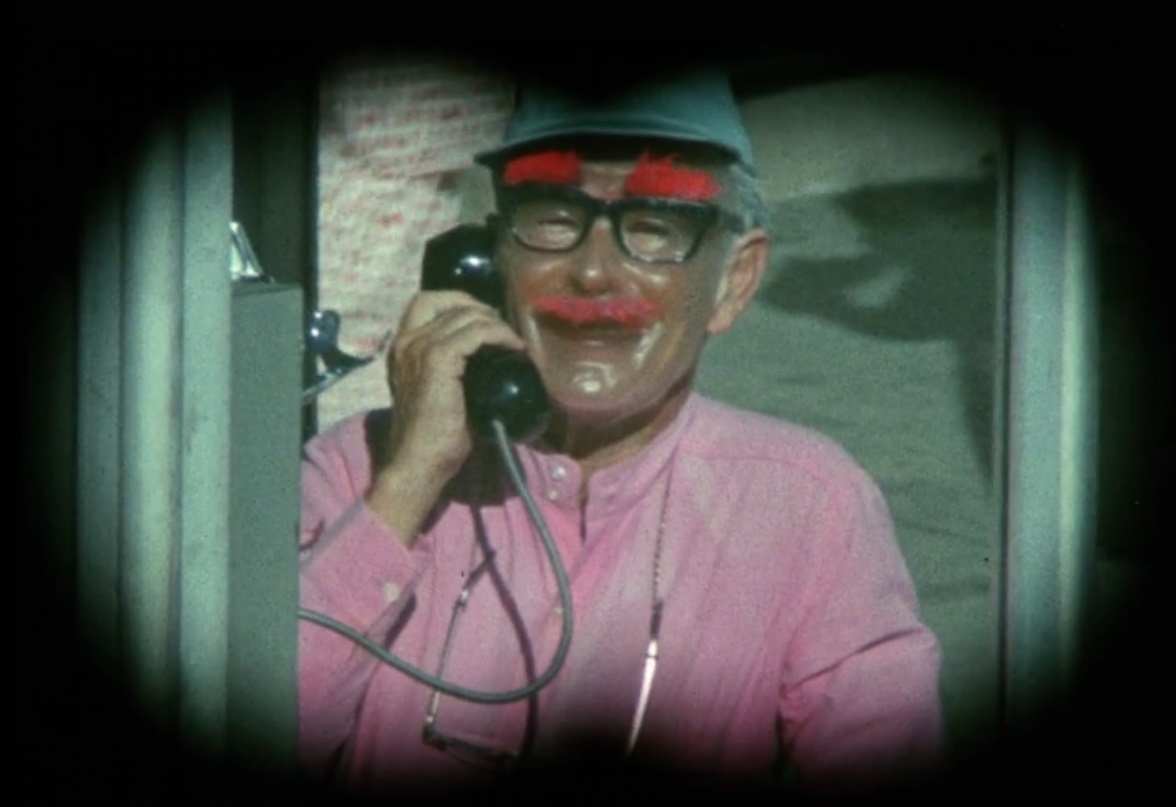
Or else this Lewis Avery Filer disguise will haunt your dreams.

lewis avery filer

Rerun Junkie Confession–I Love to See My Faves in Peril

One of my favorite episodes of The A-Team is the Season 2 finale “Curtain Call”. In it, Murdock is shot during a job and the team has to figure out how to get him help while being pursued by Decker. It’s actually just an excuse to have a clip show. But the whole time, Murdock is bleeding to death and I love it.

See also: Hawaii Five-O Season 1 episode “King of the Hill” (Yaphet Kotto has a psychotic episode which leads to Danny being shot and held hostage); Starsky and Hutch Season 1 episode “Shootout” (Starsky is shot as a killers take everyone in an Italian restaurant hostage); and The Green Hornet episode “Bad Bet on 459-Silent” (Britt Reid is shot while being The Green Hornet and they have to figure out how to get him help while he’s preoccupied with catching the bad guys).

I know. It sounds sick and cruel and while I am both of these things, there is actually a very good, less evil reason for my enjoyment.

What it boils down to is that it’s an emotional extreme happening in a fictional context. Like watching horror movies. You can be terrified, but in the end, it’s a safe environment. You’re never in any real danger. Same deal. I and my faves are being put through it emotionally, but in the end, everybody’s okay!

Take “Home From the Sea” for example, the Season 4 premier of Magnum PI. Probably my favorite episode of the series; the ending is an absolutely gut punch. But the whole thing hinges on the fact that Magnum is stranded in the middle of the ocean, caught in a dangerous current pushing him further out to sea. At one point, he’s even bumped by a shark. Ultimate peril that we all know that he’ll survive, but it’s the getting there that we love. Okay, maybe I love it.

Another one is Adam-12 Season 4 episode “The Search”. Reed and Malloy are called to a robbery in progress. Reed catches one suspect while Malloy chases the other in the squad. However, the squad has a dodgy mic so dispatch and other officers have trouble keeping up with Malloy’s location, which proves to be a problem when he rolls the car and is badly hurt. Obviously, Malloy is going to be found in time, but you still hold your breath when he’s found first by someone with less than honorable intentions.

The peril doesn’t even have to be that immediately deadly either. Take for instance the Season 2 Gilligan’s Island episode “Quick Before It Sinks”. It looks like the castaways are in for a watery doom because the island is apparently sinking. Obviously, not the case because the show went on for another season and a half and a few TV movies. And as per show rules, it was a Gilligan goof that led to the incorrect assessment. Now, it’s a sitcom, so the danger is amusing at best, but there’s still something about watching first the men try to keep it from the women, and then the women coming up with a solution (build an ark!) and everyone working together before the inevitable. The inevitable being finding out that Gilligan is the cause of everyone thinking they’re about to bite it.

“The Sniper” episode of M*A*S*H is another good example. Though the dramedy had its serious moments, in this Season 2 episode, there’s more laughs despite the impending threat of being gunned down by a sniper. Though we know nobody is going to be shot and/or killed, there’s still something about watching the doctors, nurses, and patients cope with a situation that’s out of the life or death scenarios in the operating room that they’re used to. The show would do several episodes like this, including another favorite of mine, “The Army-Navy Game” in Season 1.

Whether light or dark, watching my faves in peril is a favorite of mine. It’s almost like a bonding experience in a way, living through that dangerous episode with these fictional characters and coming out on the other side closer than ever.

In case you’re wondering how sadistic I am, when I was watching Tales of the Gold Monkey and got to the episode “Escape from Death Island”, I saw that Corky was going to be bitten by a poisonous snake and actually rubbed my hands in glee. By this point in the series, I adored Corky, so to see that he was going to be in peril thrilled me.

Sure I knew he was going to be okay.

But for a little bit, I got to fret over him.

And then feel that rush of relief when he lived to see another day.

Book ’em, Danno–Episode 31

This episode of Book ’em, Danno is full of twists!

In “The Late John Louisiana”, two lovers are on the run after they kill a man who was following them. But it turns out there’s more to this couple than meets the eye. A lot more.

In “The Last Eden”, Jimmy Nuanu, nightclub singer and loud mouth environmentalist, apparently gets drunk and blows up a sewage plant after one of his shows. But he swears he’s innocent. The fix is in and it’s a new take on corporate greed.

Listen on Soundcloud, iTunes, Spotify, and Stitcher.

Fair warning, Ray Danton plays Jimmy Nuanu in “The Last Eden”, so if you’ve seen the Secret Agent Super Dragon episode of Mystery Science Theater 3000, you will be singing the theme song Joel and the bots perform during the episode. It’s not a bad thing. Just a thing.

Also a thing, this disguise. It’s 1970. Nobody even looked twice.

Book ’em, Danno–Episode 30

Season 3 of Book ’em, Danno and Hawaii Five-O chugs right along with two more episodes.

In “Force of Waves”, Steve is blown up, but survives, a show tradition. However, his companion isn’t so lucky and Danno takes the lead while Steve is supposed to be recuperating. This episode also features a shirtless John Vernon, if you ever needed that in your life.

In “The Reunion”, a businessman being terrorized by an unknown stalker coincides with a World War II veterans reunion in the worst way. What seems like a crime born of opportunity and mistaken identity turns out to be the greatest long game ever played.

Listen on Soundcloud, iTunes, Spotify, and Stitcher.

Mild trigger warning for both episodes as each deals with mental illness and PTSD. While the former happens towards the end of the episode so I really don’t talk about it much, the latter deals with PTSD and the horrors of war heavily and I do discuss it quite a bit. Gird your loins accordingly.

In conclusion, John Vernon shirtless everybody.

Also, just a couple of pics of Steve’s outfits (which I forgot to include when I originally posted this…oops). Like I said, he was in all of his off-duty glory in this episode. The ascots!

steve in white

steven in green

The Addict’s Morality Tale

Cautionary tales and morality tales have evolved from stories and plays to television and movies. Makes sense. Go where the people are. And in theory, the tales themselves should also evolve to fit the current times. However, sometimes that doesn’t happen. Sometimes, they stagnate.
When it comes to depictions of drug use and addiction on TV, it can be argued that there has been progress. Addiction is recognized now as a complicated disorder rather than just a conscious bad choice. There are shows out there willing to depict the complexities of addiction now, and even some reruns that took to tackling the topic with the humanity and understanding it deserves.

However, that hasn’t always been -and isn’t always- the case. There’s still a certain stigma around addiction, a residue left behind by the old thinking of previous times, much of which was propagated by television back in the day.

A lot of these episodes were presented as cautionary tales. Drugs are bad and if you do drugs, bad things will happen to you. Over the years, these cautionary tales became morality tales, with only one possible redemption for the addict.

Death.

Obviously, overdose or some other death by drug-induced misadventure would be the ultimate bad thing that could happen. But it also became the only possible outcome to totally free a person struggling with addiction from that fight. Rehab is nice, but that whole relapse thing…not the nice neat ending one requires in 30 to 60 minutes of television.

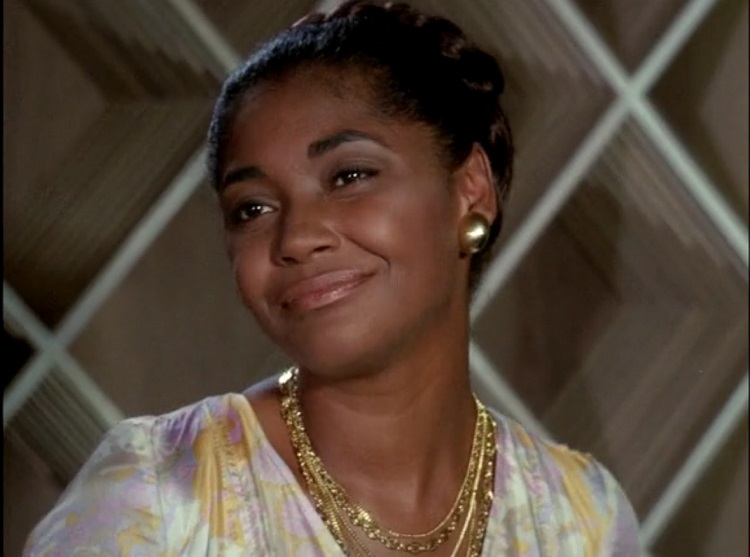
For example, in the Season 3 Hawaii Five-O Episode “Trouble in Mind”, there’s some tainted heroin going around the islands and it’s believed that pianist Mike Martin is in the cross hairs. He’s been picked up for heroin before and did some time in rehab. However, it’s later revealed that Mike took the fall for his love, singer Eadie Jordan. She’s got the problem.

Eadie isn’t depicted like the typical addicts that you’d see on TV (and even on the show). She’s not some hippie looking for a high or some stupid kid who thinks drugs are fine and they’re immortal. It’s implied that it’s her job in show business that’s gotten her hooked and she functions quite well as an addict. Steve never suspected her being a heroin user until it was too late.

The depiction of Eadie’s addiction as something sinister. One lapse in judgment condemns an otherwise good person. And even though Mike is trying to help her quit, she still needs it just to keep the edge off of the withdrawal, which the episode doesn’t shy away from depicting.

But this is an addict’s morality tale and as much as we like Eadie, and as much as we want Steve to save the day, there’s only one way this ends.

Perhaps an even more tragic example is that of the story arc of Lt. Aiden Ford on Stargate: Atlantis. During the three-part Season 1 finale/Season 2 opener “The Siege”, Lt. Ford nearly dies while battling a Wraith. The Wraith attempts to feed on Ford just before they plunge into the icy ocean waters. The two of them are recovered in a dormant state with the Wraith still attached to Ford. Dr. Beckett is able to successfully separate them and save Ford, but unfortunately, Ford has received a massive dose of a Wraith enzyme that strengthens their victims so they don’t die too quickly during the feeding.

As a result, Ford becomes addicted to the enzyme. Similar to a person becoming addicted to pain killers after a horrific accident, Ford had no say in this suddenly being thrust upon him. This wasn’t a conscious choice. However, like an addict in denial, Ford is convinced that the enzyme is soldier’s little helper.

The result is him abandoning his friends and his life on Atlantis (and any life and family he might have on Earth). Obviously, the Atlantis crew go looking for him in an attempt to get him help, but in the end Ford escapes. He falls in with (or creates) a group of fellow enzyme addicts and their constant need of the enzyme leads them to riskier and riskier plots, endangering his old friends, which ultimately leads to his downfall, after a brief glimpse at redemption.

Given that this arc played out in the mid-2000’s, it would have been much more interesting to see Ford’s arc resolve in a different way, allowing him to come to terms with his addiction and get the help he needed. But I suppose, there’s fewer explosions in that.

As you may have noticed, the two examples I cited involve people of color portraying the addicts. I don’t think it’s necessarily a coincidence as race plays a part in the stigma of addiction and the portrayal of it. After all, the crack epidemic resulted in a lot of people going to prison and the opioid epidemic generated a lot of discussion about rehab and the nature of addiction. That wasn’t just because we learned something about addiction in the ensuing years.

However, being white doesn’t always save you from the inevitable fate of an addict in TV land. Just think of “Blue Boy” in “The LSD Story” episode of Dragnet.

I have no problem accurately portraying the struggles of addiction. Overdosing or relapsing after rehab is a very real danger. But death is not the only redemption available to an addict.

Our morality tales should reflect that.

Book ’em, Danno–Episode 29

It’s a tale of two ransoms!

First, a priceless violin is inadvertently stolen in “The Guanerius Caper”. The missing instrument has major political implications, but it’s the thieves that are perhaps the most interesting aspect of the episode, especially since they never intended to steal the violin in the first place.

And then our beloved Kono gets taken in “The Ransom”. It’s a standard kidnapping case until the ransom drop goes all wrong and Kono ends up joining our missing boy. Kono is the hero, but man does he go through hell.

Listen on Soundcloud, iTunes, Spotify, and Stitcher.

Fun connection with “The Ransom” (okay, fun for me): In the Season 1 NCIS: Hawai’i episode “The Tourist”, the NCIS team ends up going undercover looking for a woman in the same place that Five-O has staked out for the ransom drop: the dolphin show at Sea Life Park.

The NCIS team wasn’t sporting the undercover aloha shirts, though. Disappointing.

Let Steve show you how it’s done.

Book ’em, Danno–Episode 28

“The Second Shot” is an interesting political assassination plot episode that features an incredibly intense plan. It also pulls from the current events of the time as the focus of the plot is a leader of the opposition party in Greece, which at the time had undergone a right-wing coup.

And we are in flashback city when it comes to “Time and Memories” because for Steve there are a lot of memories with his ex, Cathy. There are several people who had motive to kill her husband, but she’s the one with the weakest alibi. Come and watch be Steve conflicted.

Or at least listen to me talk about it.

Soundcloud iTunes Spotify Stitcher

And as a parting gift, I give you Eric Braeden’s shirtless anatomy lesson. Because that really does require a visual.

eric braeden second shot

Object: Female

Women.

I happen to be one. I know several. I’ve even kissed a few. In general, they are plentiful and varied, all sorts of looks, ethnicities, sexualities, and personalities.

However, the depiction of women in television over the course of decades has been…shall we say, less than adequate, particularly in the case of anything outside of a sitcom, like my favorites, action and police shows.

Ah, yes. It’s going to be one of those posts. Now I’m not claiming to be an expert in any of this; after all, I’m a three-time community college drop out. These are just my observations from the shows I’ve watched. Now stop whining. It’s unattractive.

When I wrote about Magnum PI, I said something to the effect of the women being written by men who’d never met a woman, but had only heard about them from other men who’d never met a woman either. That’s how women were typically written (and still are in some cases). They were usually written as objects: romantic interest, harpy, siren, nanny, etc., convenient plot devices for our male mains, fitted with re-hashed, stereotypical personalities that seldom reflected any actual woman you’d encounter in your own bits of reality.

Going back to Magnum PI, many of the women who showed up in episodes typically filled one of four roles: romantic interest, helpless innocent, duplicitous helpless innocent, or annoying hindrance. I’m not saying that every woman fills one (sometimes more than one) of those roles, but it happens often enough that I feel compelled to comment on it in a blog post. The annoying hindrance is my least favorite (see Kathleen Lloyd as Bridget Archer in “Almost Home”, Annie Potts as Tracy Spencer in “Legacy from a Friend”, and Lee Purcell as Goldie Morris in “Old Aquaintance”). Women who insist on helping and end up creating a bigger mess usually because they don’t listen to Magnum and/or because they’re not being entirely truthful. No offense to any of the actresses involved because they were (and are) excellent at their jobs and did what they could with what they were given, but what they were given were bad Lucy Ricardo impersonations doing a variation of “Why can’t I be in the show?”.

(Given my disliked of I Love Lucy, perhaps I’m being a little more than biased in this case, but the basic assessment of the prevalence of cardboard cutout women stands.)

The Wild Wild West is another example. Every woman Jim West and Artemus Gordon met either needed to be rescued or kissed or sometimes both. Only a few were allowed the personality enough to be villains. And if you’d like to argue with me that the show was set in the late 1800s and so women had limited roles, I’ll just point out that it’s a steampunk Western. If I can suspend my disbelief that some madman has created a device that makes earthquakes, then you can buy into a woman saving herself once in a while and not falling in love with Jim West every time (Artemus Gordon is a different story, of course).

Hawaii Five-O did feature women police officers from time to time, usually for undercover work, and they were mostly competent (and all named Joyce for some reason), though they were typically bailed out of some sticky situation at the very end by McGarrett and cavalry riding in for the final gunfight/arrest, which the ladies rarely seemed to participate in. One Joyce in particular ended up getting hypnotized by Eric Braeden, but I suppose that’s understandable. It wasn’t until the later seasons that they even had female cops not named Joyce as recurring characters (Amanda McBroom played Officer Sandi Wells for four episodes in Season 8; Sharon Farrell played Lori Wilson for ten episodes in Season 12). However, more than one woman passed through Honolulu for a single episode whose sole purpose was to make Steve or Danno feel things. Spoiler alert: dead girlfriends.

Naturally, it could be argued that this is the ultimate purpose of a guest star, to be that plot device for that episode to help propel the story, the fire of the inciting incident. And this is absolutely true.

But that the women were most often only a guest star -not part of the main cast- is part of the problem. Rarely did police or action shows have a woman in the main cast. And on the off-chance that it did, then they were typically relegated to non-action roles if possible.

One shining example of this is Amy Allen on The A-Team. A journalist who begins as a client before becoming addicted to the “jazz” and blackmailing her way onto the team, Amy proves herself to be an asset by not only finding and vetting clients, but by also getting her hands dirty: helping with builds, going undercover, handling firearms, and even blowing up a thing or two. She wasn’t always in the midst of the action, but she was at the very least close by pretty often. However, when Melinda Culea pushed for her character to develop more skills -which would have made sense given the fact that she’s affixed herself to an elite military team, so it stands to reason she SHOULD learn a thing or two- the fellas on the show, in particular George Peppard, loudly disagreed as this was a “man’s” show (just ignore the popularity of Mr. T and the large kid audience, thank you), which resulted in Melinda Culea’s departure. She was replaced by Marla Heasley as Tawnia Baker (a strategically weaker-written version of Amy) to finish out the second season, but once that character was married off at the beginning of the third season (to Barry van Dyke no less!), there wouldn’t be another female member of the cast until Season 5 when Judith Ledford played recurring character Carla, Stockwell’s personal assistant.

Are there exceptions? Naturally. Get Christy Love. Police Woman. Cagney and Lacey. Three women-led police shows. One other notable mention is Sgt. Dee Dee McCall (Stepfanie Kramer) on Hunter, as she was paired with a man who treated her as a partner and didn’t take it as an offense to his manhood that he was working with a woman. The Stargate: Atlantis expedition was led by two smart, kick-ass women, first Dr. Elizabeth Weir (Tori Higginson) and then Col. Samantha Carter (Amanda Tapping), and had Teyla (Rachel Luttrell) as an integral part of Col. Sheppard’s team, often kicking the most ass, but who was also from a race of humans that didn’t consider showing emotion and affection a weakness.

It’s been a slow evolution.

Today, women as people in action and police shows are nearly commonplace. Shows even have more than one! The Equalizer reboot is a fab example of this because not only do you have Queen Latifah as badass justice-getter Robyn McCall (I’m seeing a trend with the last name here) and her super cool sniper bestie Melody (Liza Lapira), you also have Robin’s Aunt Vi (Lorraine Toussaint) and daughter Delilah (Laya DeLeon Hayes), who aren’t necessarily in the thick of the action, but are fully formed humans in their own right. There is an emotional weight to the show that is either absent from many action shows or poorly executed and so much of it’s success is due to the realness of the characters. Robyn McCall isn’t your twenty-something, dainty gymnast action hero running around in belly shirts showing off her perfect abs (not knocking them, but they are the default, aren’t they?). She’s a woman, a mom, who has seen some shit, done some shit, dressed to best you in a fight or an argument, and has an astounding wig collection. She’s that “don’t play me” mom in the carpool who just happens to be able to disarm a man with only a clipboard. She’s a complex human with a complex life who is totally relatable despite the fact that she spends her time taking on the injustices of the world in vigilante fashion.

Even the Magnum PI reboot has gotten onboard with Juliet Higgins (Perdita Weeks) and Kumu (Amy Hill), both of whom are badass, yet also written to be actual people. Kumu is my favorite in regards to this because she could have easily been relegated to the role of the show’s Aunty, dispensing advice and island wisdom, but instead they gave her life experience that she wields like a sword and principles she’ll defend until they put the cuffs on her (am I biased? Yes. She’s my favorite).

The show has had its slips back into the ’80s mindset, though, most notably in the Season 3 finale in which Higgins finds herself separated from her boyfriend and unsure if their relationship will continue. TC and Rick’s answer to her heartbreak is to…try to push Magnum into making his move for her. Because ignoring the fact that she’s an actual person going through an emotionally difficult time in order to get your boy laid is what friends do, right? Yeah. They later doubled-down when she got back together with her boyfriend and the couple was going to Kenya for six months, telling Magnum that he shouldn’t have let her go, as if Higgins had absolutely no autonomy in the situation whatsoever. And Magnum had to be the voice of reason in all of this. Magnum, of all people! He was the only one who even considered Higgins’s feelings and what she wanted. It was obviously written as a way to show how much he loves her because he was willing to let her go be happy with her boyfriend, once again, implying that if he didn’t want her to go then she’d have no choice but to stay and not, say, roundhouse kick him in the face and bounce.

The show conveniently reverted back to the good ol’ ways of reducing a woman to her role as an object of affection in order to push the tried and true het narrative and ignored three seasons worth of establishing Higgins as a person of her own. Because when in doubt, center the male.

He’s a human being, after all.

Book ’em, Danno–Episode 27

Welcome to Season Three!

Wo Fat is back in “…And a Time to Die”. In “Trouble in Mind”, Nancy Wilson is singing more blues than jazz.

We’re gifted with Gerald O’Loughlin’s last appearance in the series, being an absolute thorn in the side of Jack Lord as a State Department Prick.

Also, if you do enjoy music, there’s a lot of it in this episode. I was very liberal with the song sound clips. After all Nancy Wilson is a Grammy winner and it shows.

Tune in on Soundcloud, iTunes, Spotify, and Stitcher.

Listen and enjoy.

And enjoy this picture of our favorite Wo Fat, the adorable Ellen, and the pants I desperately wish came in fat women’s size.

***

Sadly, 2021 has not been kind to the Hawaii Five-O ‘ohana.

In early July, we lost William Smith, who joined the cast in Season 12 as Det. James “Kimo” Carew.

And just recently, on September 21st, we lost Al Harrington, who appeared on the show five times as different characters before joining the cast as Ben Kokua in Season 5. He also had a recurring role as Mamo Kahike on the 2010 reboot.

We’ll be seeing Al Harrington a couple of times in Season 3. In fact, the day I heard of his passing, I was scheduled to record an episode he was in. I’m heartbroken to say the least.

May both men have safe travels beyond the horizon.

Aloha.

kimoben